





Want More? Hiring Fleet Drivers — When Drivers Hold the Cards
U.S. Department of Labor Clarifies Employees vs. Contractors
The new rule will preserve essential worker rights and provide consistency for entities covered by the Fair Labor Standards Act.
January 10, 2024
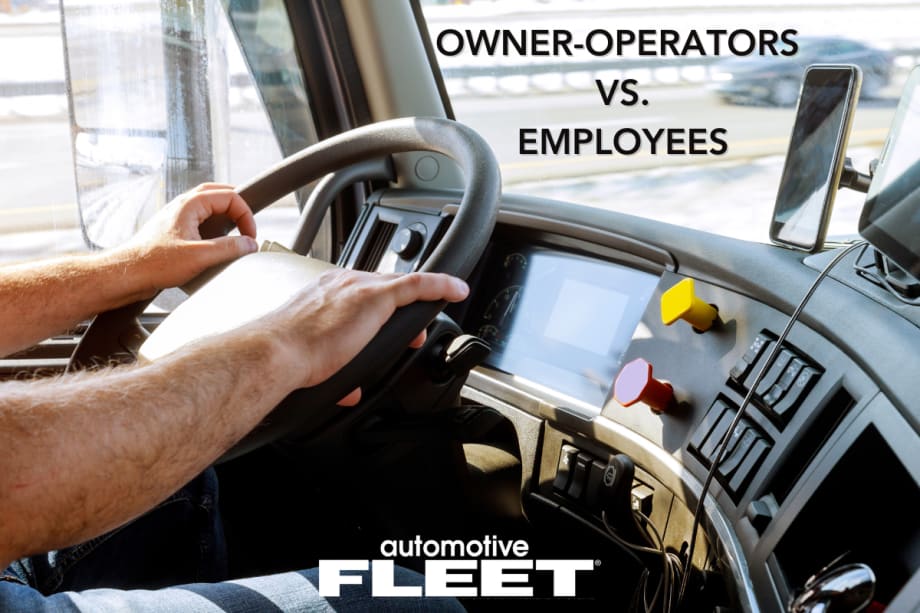
The U.S. Department of Labor's final rule affirms that a worker is not an independent contractor if they are, as matter of economic reality, economically dependent on an employer for work.
Photo: Canva/Automotive Fleet
3 min to read
The U.S. Department of Labor has laid the ground work to help employers distinguish workers as employees versus independent contractors under the Fair Labor Standards Act.
This can help commercial fleet managers determine which category their drivers fall into. Many larger commercial fleets rely on independent contractors — or owner-operators as they're often referred to in the fleet industry — for things like last-mile deliveries and other services.
Some fleets also use independent contractors for mechanic work.
Why the Rule is in Place
The final rule provides guidance on proper classification and seeks to combat employee misclassification, which impacts workers’ rights to minimum wage and overtime pay, facilitates wage theft, allows some employers to undercut their law-abiding competition, and hurts the economy at-large, the department stated in a press release.
“Misclassifying employees as independent contractors is a serious issue that deprives workers of basic rights and protections,” Acting Secretary of Labor Julie Su said. “This rule will help protect workers, especially those facing the greatest risk of exploitation, by making sure they are classified properly and that they receive the wages they’ve earned.”
This final rule rescinds the 2021 Independent Contractor Rule which the department believes is not consistent with the law and precedent.
The guidance provided by the final rule aligns with longstanding judicial precedent on which employers have previously relied to determine a worker’s status as either an employee or independent contractor.
The new rule will preserve essential worker rights and provide consistency for entities covered by the Fair Labor Standards Act.
The new “independent contractor” rule restores the multifactor analysis used by courts for decades, ensuring that all relevant factors are analyzed to determine whether a worker is an employee or an independent contractor.
About the Final Rule
This final rule affirms that a worker is not an independent contractor if they are, as matter of economic reality, economically dependent on an employer for work.
The final rule applies the following six factors to analyze employee or independent contractor status under the Fair Labor Standards Act:
Any opportunity for profit or loss a worker might have.
The financial stake and nature of any resources a worker has invested in the work.
The degree of permanence of the work relationship.
The degree of control an employer has over the person’s work.
Whether the work the person does is essential to the employer’s business.
A factor regarding the worker’s skill and initiative.
The new rules may have a huge effect on the drayage trucking industry. Read about one association's vow to challenge the rules.
What About State Labor Laws?
Per the U.S. Constitution, federal law supersedes state laws. The exception is when state laws offer more rights and protections. This is often the case with labor laws.
The final rule takes effect on March 11, 2024.
Topics:contractorslabor lawsDepartment of LaborFair Labor Standards ActEmployee MisclassificationEmployee vs. Independent ContractorSmall Fleet
Originally posted on Automotive Fleet
More Small Fleet


Developing Budget-Friendly Driver Safety Programs
From driver training and safety meetings to one-on-one coaching and incentive programs, several small fleets share how they have developed a safety culture with their drivers using low- to no-cost resources.
Read More →
Sponsored•March 9, 2026
Boosting Last-Mile Fleet Uptime, Safety, and Value with AI Vehicle Inspections
AI-powered inspections are transforming last-mile fleets by replacing manual checks with highly accurate automated scans that detect defects in seconds. By giving fleet operations visibility into the daily condition of their vehicles, you can identify trends over the vehicle’s lifecycle that enable improved procurement decisions, route management, driver training and accountability.
Read More →

Five Ways Seat Belts Help Prevent Injuries
There are five ways seat belts protect occupants from injuries, according to the Tennessee Department of Safety and Homeland Security.
Read More →
Sponsored•January 19, 2026
Basic Tracking vs Next Generation Fleet Technology
Fleet software is getting more sophisticated and effective than ever, tying big data models together to transform maintenance, safety, and the value of your existing tech stack. Fleet technology upgrades are undoubtedly an investment, but updated technology can offer a much higher return. Read how upgrading your fleet technology can increase the return on your investment.
Read More →
Sponsored•January 14, 2026
It’s here: The 2026 Fleet Technology Trends Report
What does AI mean for fleets? Get the answer — and learn other top tech trends.
Read More →
Small Fleets, Big Impact: How Independent Drivers Power Wreaths Across America
Check out how small fleets and independent drivers power Wreaths Across America each December and why their impact matters more than ever.
Read More →
VMS Survey Finds 65% of Small Fleet Managers Run Operations Alone
A new VMS survey shows small fleet managers are stretched thin, with most handling operations solo and eager to adopt digital tools for relief.
Read More →
Tips for Driving Safely on Halloween Night
This video features a reminder from the Connecticut Department of Transportation (DOT) and the Connecticut Police Chiefs Association, urging drivers to prioritize safety this Halloween.
Read More →
AI, Access, and Uptime: VMS’s Next Chapter with David Prusinski
VMS’s new Co-CEO, David Prusinski, shares how an AI-first approach will give small fleets and repair shops the tools to compete like big players.
Read More →