




IRS Updates 2024 Business Mileage Standard Rate to 67 Cents
Vehicle ownership and operating cost analyses reveal inflation, fuel prices, and acquisition costs underpin new mileage rate.


The IRS determines the annual rate, an essential benchmark for deducting business vehicle expenses.
Photo: Work Truck
The Internal Revenue Service (IRS) revealed the 2024 business mileage standard rate of 67 cents, leveraging data provided by Motus, a mobile workforce reimbursement solutions provider.
Motus harnesses data from the world’s largest pool of retained drivers. By analyzing automotive trends from the preceding year, the IRS determines the annual rate — an essential benchmark for deducting business vehicle expenses.
For over four decades, the cost data and analysis provided by Motus have been the cornerstone of the IRS business mileage standard.
Factors That Changed Driving Costs
The 2024 business mileage standard rate increased to 67 cents from the 2023 mid-year adjustment of 1.5 cents and will go into effect January 1, 2024.
Driving costs have changed in 2023 due to some key factors and trends, including:
Decreases in fuel prices: Fuel prices spiked in summer of 2022 and have fallen more than 20% since that time.
Increases to vehicle acquisition costs: Vehicle acquisition costs continue to increase slightly, but not to the extent seen in previous years. While the average cost of a new vehicle is at an all-time high, that cost has only risen about 1.5% year-over-year, which is the lowest increase in the past 7 years.
Increases in depreciation: Concerns over inflation, coupled with the high cost of new vehicles and the lingering impact of supply chain issues, have created a higher demand for used vehicles. This results in lower residual values for new vehicles, and the corresponding higher depreciation increases the overall cost of vehicle ownership.
Fine-Tuning Employee Compensation
In addition to individual tax deductions, the IRS business mileage standard rate establishes a tax-free threshold for reimbursements made by U.S. employers to their employees.
Organizations must compensate their mobile workforce for the business use of personally owned assets, such as vehicles, essential for fulfilling work-related responsibilities.
The IRS rate can be applied in a cents-per-mile (CPM) program, designed for low-mileage drivers covering fewer than 5,000 business miles annually.
However, for mid- and high-mileage drivers, reimbursements must consider variations in vehicle ownership and operating costs, which can vary throughout the year and are specific to geographical locations to ensure compliance.
Relying solely on the IRS rate for reimbursing mid- and high-mileage workers may result in providing reimbursements that do not accurately reflect actual driving costs.
Treating all employees' expenses uniformly, irrespective of location or individual circumstances, creates disparities by either overcompensating or undercompensating employees for their expenses.
For high-mileage drivers, the IRS-recommended Fixed and Variable Rate (FAVR) reimbursement method is the most suitable, as it offers fair and accurate reimbursements based on the costs of vehicle ownership and fuel expenses, localized to employees' residential and work areas.
Combining a FAVR and CPM program enables companies to implement compliant and equitable reimbursement solutions for all drivers, regardless of their annual driving mileage.
More Fuel

The Smart Way to Build a Mixed-Energy Fleet Isn’t About Picking a Side
Mixed-energy fleets aren’t about picking a winning fuel. Sarah Booth of WEX explains how vehicle data, duty cycles, charging strategy, and real-world costs can help fleets choose the right energy source for each job.
Read More →
Ignoring This Dashboard Warning Could Cost Your Fleet Thousands in Fuel
New research suggests neglected diesel aftertreatment systems could waste up to $30 in fuel per vehicle each day. Here's why vocational fleets should pay attention.
Read More →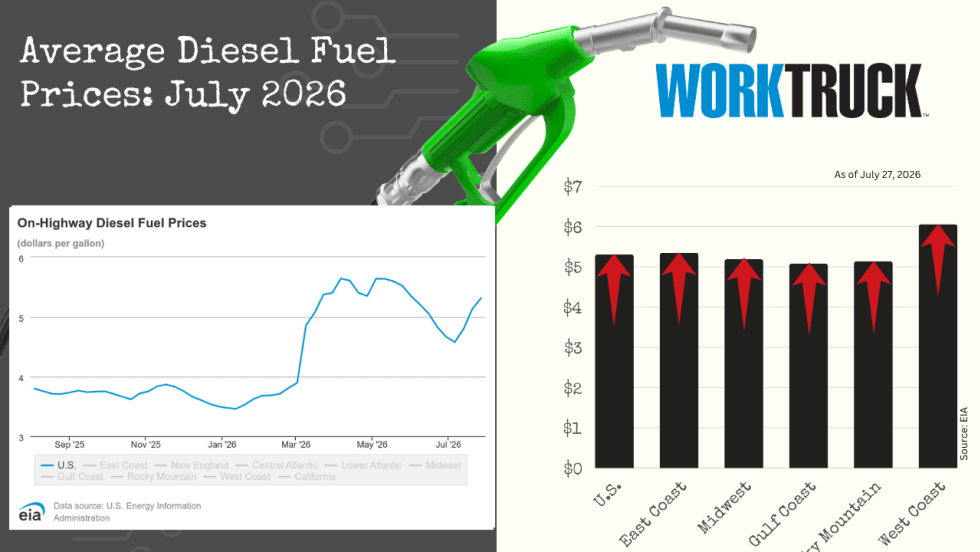
July Diesel Trends Update
The average price of a gallon of diesel increased again this week, and the EIA reported a new national average of $5.31 at the start of the week.
Read More →

WEX Brings Standard Fleet's Connected Vehicle Platform to Fleet Customers
This week’s product launch with Standard Fleet’s connected vehicle platform reflects WEX Venture Capital's strategy of turning startup innovation into customer solutions. Standard Fleet is now available to WEX fleet customers.
Read More →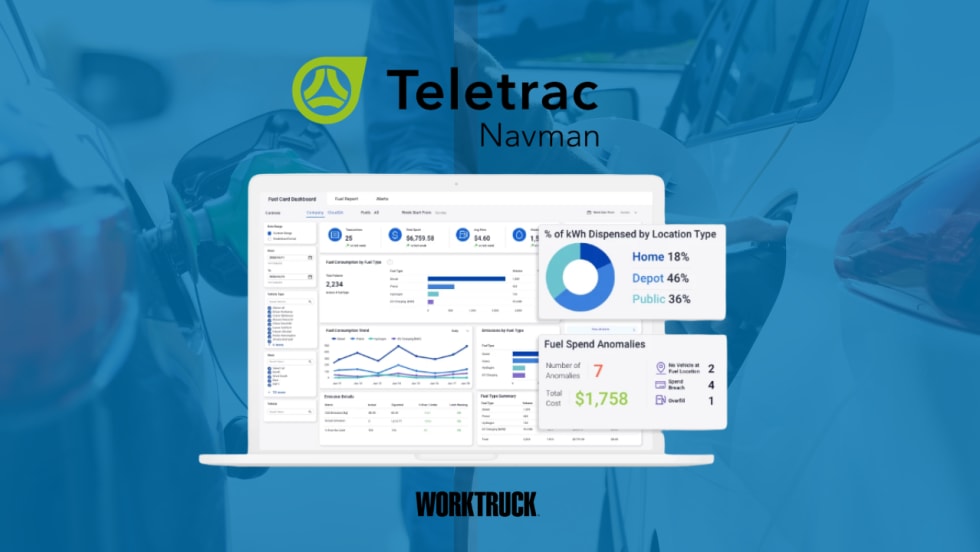
Teletrac Navman Adds Mixed-Energy Fleet Tools to TN360
The new Energy Hub combines fuel transactions, EV charging data, vehicle range, and energy costs in one dashboard for fleets operating multiple vehicle and energy types.
Read More →
WEX DriverDash adds CITGO, Expands Nationwide Access for Fleets
The DriverDash mobile payment app, by WEX, has been integrated into the CITGO merchant network, which means WEX has expanded its U.S. station footprint with the addition of approximately 4,000 CITGO locations.
Read More →
Mixed Energy Fleet Tips for Balancing EVs, Gas and Diesel Vehicles
Mixed energy fleets are becoming the new normal. Learn how fleet managers are balancing EVs, gas and diesel vehicles while controlling costs and planning for the future.
Read More →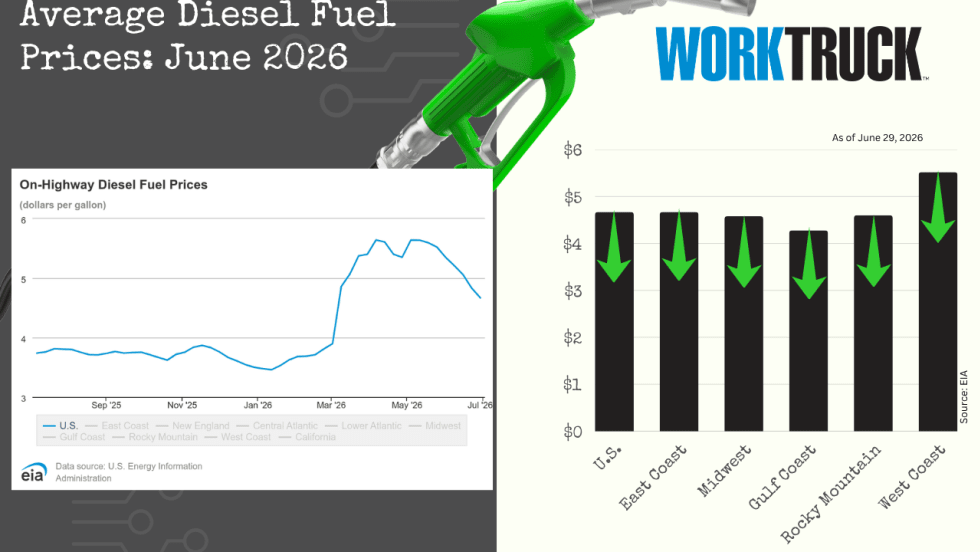
June Diesel Trends Update
The national average price of a gallon of diesel has dropped again, this week by more than 16 cents. All five regions reported lower average prices, ranging from almost 13 cents to more than 28 cents cheaper than a week ago.
Read More →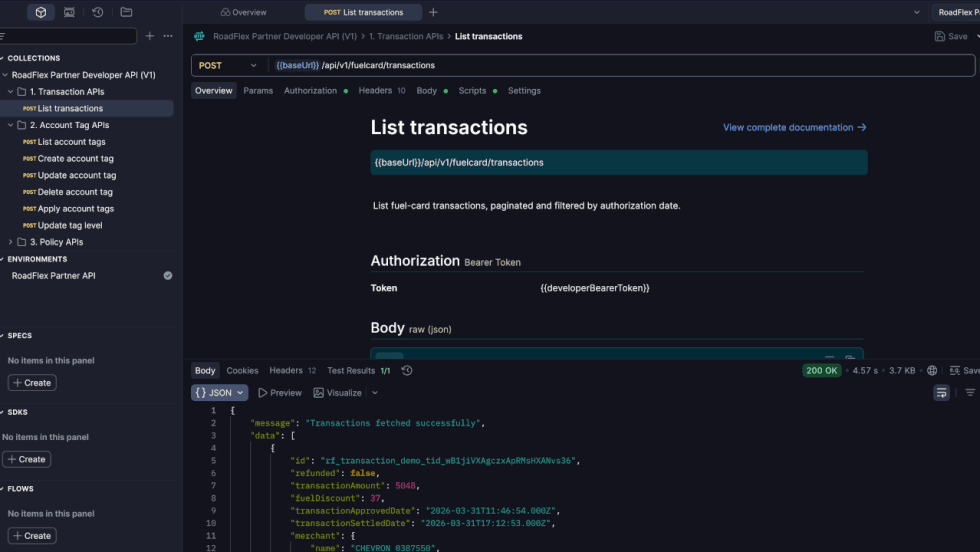
RoadFlex Launches RoadFlex Direct Open API Platform
RoadFlex Direct connects fuel cards, controls, and data to the telematics and fleet management systems fleets already run, from Geotab and Samsara to Fleetio and RTA, with no separate dashboard or double data entry.
Read More →
The Key to Fuel Efficiency Sits in the Cab
Learn how driver behavior, telematics, coaching, and fuel data can help fleets improve fuel efficiency, lower costs, and reduce emissions.
Read More →