





Related News: 5 Kia Vehicles Earn Top Marks for Quality
Kia's First Plug-In Hybrid Sportage Debuts
The new 2023 Kia Sportage PHEV joins the Sportage lineup as the brand's first electrified SUV.
February 9, 2022
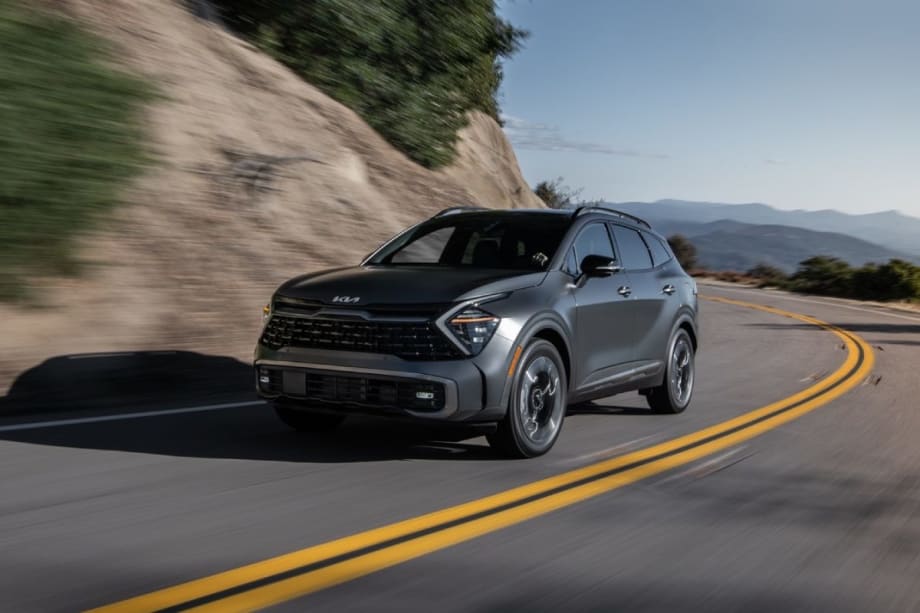
The upcoming vehicle comes with 32 miles of all-electric range and Advanced Driver Assistance Systems.
Photo courtesy of Kia
4 min to read
On Feb. 8, Kia unveiled its new 2023 Sportage PHEV, the brand's latest electrified SUV model. The vehicle builds upon the foundation laid by the Sportage HEV, the turbocharged Sportage PHEV is efficient with a 13.8-kWh battery and targeted all-electric range (AER) of 32 miles, the company said in an announcement.
“The first Sportage PHEV to be introduced in the U.S. demonstrates that Kia is listening to our consumers who are asking for electrified solutions and super-efficient powertrains, and Sportage delivers on that promise in a sophisticated, refined package,” said Sean Yoon, president and CEO, Kia America and Kia North America. “As Kia continues to implement our Plan S strategy and push toward carbon neutrality, models like Sportage PHEV are paving the way.”
The Sportage is the longest running nameplate from the Kia brand, with the fifth generation unveiled in November 2021. Developed as part of Kia’s new global brand transformation, “Movement that Inspires,” The Sportage PHEV augments the Kia subcompact SUV lineup with two design-focused X-Line trim levels that come standard with all-wheel drive. The Sportage PHEV is planned to go on sale in the third quarter of this year and pricing will be announced closer to the vehicle’s on-sale date.
2023 Kia Sportage Details
Power for the 2023 Sportage PHEV is supplied by a 1.6L, 177-hp turbocharged four-cylinder engine, supplemented by a 66.9-kW electric motor and 13.8 kWh lithium polymer battery. A 6-speed automatic transmission with selectable drive modes is standard, as is Downhill Brake Control (DBC).
Charging is accomplished courtesy of a 7.2 kW high-efficiency on-board charger, with the power density at 1.53 kW/ℓ. When connected to a Level-2 charger, the Sportage PHEV will take approximately two hours to fully replenish its battery. Integrated Electronic Brake (IEB), standard on the Sportage PHEV, combines hydraulic pressure generation and control functions. Linear braking feel is realized by the electronic control using the motor, and the Sportage PHEV offers a higher recovery rate of regenerative braking versus its competitors, Kia said in the announcement. EPA fuel economy ratings for the Sportage PHEV will be announced closer to the vehicle’s on-sale date.
Underpinned by the “N3” platform found in the Sorento, the Sportage PHEV chassis comprises hot-stamped parts and ultra-high-strength steel for increased average tensile strength and torsional stiffness. Sound absorbing and insulating materials minimize road, wind, and engine noise. The driver's areas comes with available dual panoramic curved display, connecting two screens for nearly 25-inches of viewing (12.3-inch digital instrument cluster, 12.3-inch infotainment screen).
Available Kia Connect services provide advanced embedded connectivity, including the ability to remotely charge from the Kia Access smartphone app. Kia Connect introduces a Wi-Fi Hotspot that can connect as many as five devices to 4G LTE-based internet, over-the-air map updates, stolen vehicle tracking and immobilization capability, and Connected Routing: a cloud-based system calculates the optimal route using real-time maps and predicted traffic info based on historical information and AI to learn the preferred routes of users.
Sportage PHEV models are fitted with numerous standard ADAS features, including:
Driver Attention Warning: Analyzes the driver attention level and provides a warning if a break is recommended. It may also provide a leading vehicle departure alert if the leading vehicle departs from a stop and the driver does not react within a certain time period.
LED Headlights with High Beam Assist: Engineered to automatically dim the headlights when an oncoming or leading vehicle is detected, then return to high beams when vehicles are no longer detected.
Lane Following Assist: Helps detect lane markings and vehicles ahead and provides steering inputs to help center the vehicle in the lane.
Lane Keeping Assist: Helps detect lane markings and provides steering inputs to help prevent the vehicle from leaving the lane while driving.
Forward Collision Avoidance with Cyclist detection capability: Warns if there is risk of a collision with a vehicle, pedestrian, or cyclist in front of the vehicle while driving and may automatically assist with braking.
Rear Occupant Alert: Provides a warning to the driver to check the rear seat before exiting the vehicle.
Rear View Monitor with Dynamic Parking Guidance: Provides view of behind the vehicle, with guidelines that adjust to follow the direction the vehicle is turning.
Reverse Parking Distance Warning: Detects certain objects behind the vehicle, issuing an audible warning when an obstruction is detected. The warning tone chimes faster as the vehicle gets closer to the detected object.
Blind Spot Collision Avoidance with Parallel Exit: May help avoid collisions with rear-side vehicles when exiting parallel parking spot by automatically assisting with braking.
Rear Cross-Traffic Collision Avoidance-Assist: Helps detect approaching cross traffic when in reverse. When approaching cross traffic is detected, the system alerts the driver and may apply brakes.
Safe Exit Warning: Provides a warning when a vehicle is approaching from the rear-side while someone is exiting the vehicle.
Intelligent Speed Limit Assist: Uses speed limit information detected through the front camera or GPS navigation information (when activated) and issues warning if the speed is over the speed limit.
Originally posted on Automotive Fleet
More Small Fleet


Developing Budget-Friendly Driver Safety Programs
From driver training and safety meetings to one-on-one coaching and incentive programs, several small fleets share how they have developed a safety culture with their drivers using low- to no-cost resources.
Read More →
Sponsored•March 9, 2026
Boosting Last-Mile Fleet Uptime, Safety, and Value with AI Vehicle Inspections
AI-powered inspections are transforming last-mile fleets by replacing manual checks with highly accurate automated scans that detect defects in seconds. By giving fleet operations visibility into the daily condition of their vehicles, you can identify trends over the vehicle’s lifecycle that enable improved procurement decisions, route management, driver training and accountability.
Read More →
Five Ways Seat Belts Help Prevent Injuries
There are five ways seat belts protect occupants from injuries, according to the Tennessee Department of Safety and Homeland Security.
Read More →
Sponsored•January 14, 2026
It’s here: The 2026 Fleet Technology Trends Report
What does AI mean for fleets? Get the answer — and learn other top tech trends.
Read More →
Small Fleets, Big Impact: How Independent Drivers Power Wreaths Across America
Check out how small fleets and independent drivers power Wreaths Across America each December and why their impact matters more than ever.
Read More →
VMS Survey Finds 65% of Small Fleet Managers Run Operations Alone
A new VMS survey shows small fleet managers are stretched thin, with most handling operations solo and eager to adopt digital tools for relief.
Read More →
Tips for Driving Safely on Halloween Night
This video features a reminder from the Connecticut Department of Transportation (DOT) and the Connecticut Police Chiefs Association, urging drivers to prioritize safety this Halloween.
Read More →
AI, Access, and Uptime: VMS’s Next Chapter with David Prusinski
VMS’s new Co-CEO, David Prusinski, shares how an AI-first approach will give small fleets and repair shops the tools to compete like big players.
Read More →
Fleet Managers Share Winter Prep Tips: It's Never Too Early!
Three fleets share best practices to prep vehicles for winter and prevent downtime when the cold sets in.
Read More →