




Women In Trucking Index Reveals Progress and Challenges in Gender Diversity
WIT's 2024-25 Index tracks women's roles in trucking, highlighting leadership growth, driver declines, and diversity gaps in key industry positions.

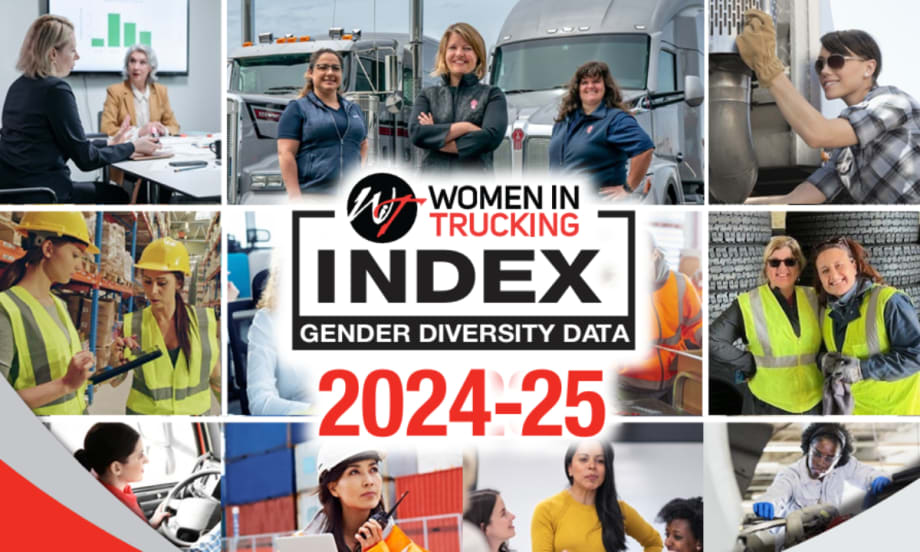
As the industry faces ongoing workforce shortages, leveraging the skills, leadership, and talent of women in trucking will be essential for continued growth and success.
Photo: Women in Trucking
The Women In Trucking Association (WIT) has released its 2024-25 WIT Index, offering a deep dive into gender diversity across the North American transportation industry. The report tracks the percentage of women in leadership, operational, and technical roles, highlighting both advancements and areas that still need improvement.
With an ongoing driver shortage, increasing fleet demands, and an evolving workforce, gender diversity has become a key topic in the transportation and trucking sectors. The latest WIT Index provides valuable insights into where the industry stands ... and where it's headed.
More Women in Leadership, But Still Work to Do
One of the most significant findings from this year’s index is the continued growth of women in executive roles. Women now represent:
28% of C-suite executives (e.g., CEOs, CFOs, and COOs)
34.5% of company leaders with supervisory responsibilities
29.5% of board members across participating companies
These numbers reflect a growing recognition of the importance of diverse leadership. Research consistently shows that companies with more women in decision-making roles tend to outperform their competitors financially and operationally. However, there is still room for improvement, as many organizations still struggle to achieve a 50/50 balance.
Professional Driver Representation Declines
One of the more concerning trends in this year’s report is the drop in the number of female professional drivers. Women now account for just 9.5% of CDL-holding truck drivers, down 2.5% from the previous year.
Industry experts suggest that several factors are contributing to this decline, including:
Lack of affordable childcare options, making long-haul driving less feasible for women with families
Safety concerns, particularly for women who drive solo or in unfamiliar areas
Aging workforce. Many veteran female drivers are reaching retirement age, and recruiting efforts haven’t fully offset these departures
Misperceptions about trucking careers. Many women remain unaware of the opportunities available in trucking, from local delivery to specialized freight
Despite these challenges, companies actively working to recruit and retain female drivers have found success by offering more flexible schedules, providing mentorship programs, and addressing safety concerns through technology and improved workplace policies.
Technician Roles See Slow Growth in Female Representation
A major ongoing challenge in the transportation industry is the severe shortage of diesel technicians—a critical role for keeping work trucks on the road. Yet, women account for just 4% of technicians, making it one of the most male-dominated roles in the field.
While the numbers remain low, there is a modest trend toward improvement. WIT data suggests that more women are entering technician training programs than in previous years, though recruitment efforts need to be strengthened to make a significant impact.
With the American Trucking Associations (ATA) projecting a need for 200,000 additional diesel technicians over the next decade, the industry must focus on expanding outreach, providing training scholarships, and improving workplace culture to attract more women into these critical positions.
Diversity & Inclusion Policies Are Increasing
The WIT Index also tracks the prevalence of formal Diversity & Inclusion (D&I) policies within companies.
52.5% of organizations surveyed now have a formal D&I policy, up from 45.5% in 2022.
An additional 19% are actively working on developing a policy.
Only 25.5% reported that they do not have a formal D&I policy.
This upward trend suggests that more companies recognize the importance of creating inclusive workplaces that support gender diversity and equity. A well-structured D&I policy can help companies attract top talent, reduce turnover, and foster a more engaged workforce.
Women Hold Strong in HR, Safety, and Dispatch Roles
While certain positions still see low female representation, women continue to dominate in other key areas:
74.5% of HR and Talent Management professionals in transportation are women, reflecting the industry-wide trend of HR being a female-led field.
38.5% of safety professionals are women, showing a growing presence in an area that has traditionally been male-dominated.
38.5% of dispatchers are women, reinforcing their important role in keeping fleet operations running smoothly.
As fleets continue modernizing safety programs and optimizing logistics, these roles will remain critical in shaping the future of fleet management.
Why This Matters for the Trucking Industry
The 2024-25 WIT Index serves as an important benchmark for gender diversity in trucking and logistics. While leadership representation is growing, the decline in female drivers and the shortage of women in technician roles highlight areas that require immediate attention.
Work truck and trucking fleets looking to recruit and retain more women should consider:
Flexible scheduling and family-friendly policies
Improved safety measures and mentorship programs
Scholarships and training opportunities for technicians
Strong D&I initiatives to foster an inclusive company culture
As the industry faces ongoing workforce shortages, leveraging the skills, leadership, and talent of women in trucking will be essential for continued growth and success.
For more details on the 2024-25 WIT Index, visit Women In Trucking.
More Operations
Family Ties Inside the Fleet Families Building Careers Across Generations
Three fleet families share what it really takes to work together, learn across generations, and keep business from following them home.
Read More →
Shades of Fleet Call for Voices: Fleet's Hidden Heroes
Fleet’s hidden heroes are often the ones keeping everything moving behind the scenes. September’s Shades of Fleet is looking for dispatchers, coordinators, parts specialists, and other support pros to share their stories.
Read More →
Truck Centers, Inc. Celebrates National Truck Driver Appreciation Week with $1,000 Fuel Card Giveaways
During National Truck Driver Appreciation Week, Truck Centers, Inc. is offering customers a chance to fuel up for free. Customers at all Truck Centers locations can enter to win one of four $1,000 fuel cards from Sept. 14 - 18.
Read More →
Fleet Guides, AI Time-Savers, Truck Tariffs & Fuel Strategy Lead the News
This week’s Truck Chat Cheat Sheet covers new fleet vehicle guides, practical AI use cases, U.S.-Canada truck production, mixed-energy strategy, and more.
Read More →
What Fleet Employers Are Missing When Hiring Veterans
What if some of the strongest candidates for fleet are already out there, but their experience is written in a language our industry does not always recognize?
Read More →
Automotive Fleet Opens 2026 Personal Use Survey for Commercial Fleet Managers
Less than two weeks left! Commercial and corporate fleet managers are invited to share how their organizations handle company vehicle personal-use policies, charges, and driver eligibility.
Read More →
What Resilient Fleets Do Differently When Conditions Change
Fleet resilience is about more than reacting to disruption. Lauren Fletcher talks with AP Fleet’s Alex Coveney about flexibility, planning, scaling, and what helps fleets adapt when business conditions shift.
Read More →
If We Want the Next Generation in Automotive, We Have to Give Them a Reason to Care
The automotive industry talks constantly about its workforce shortage. But before we can recruit the next generation, we may need to do a better job giving kids a reason to care about automotive in the first place.
Read More →
Ram ProMaster City Under $40K, Truck Tariffs, and AI Maintenance Lead the News
A sub-$40K commercial van, tariff questions, AI-powered maintenance, and a new EV production strategy headline this week’s Truck Chat Cheat Sheet.
Read More →
Bob Adamsky Shares the Fleet Lessons You Usually Learn the Hard Way
After more than 30 years in fleet, Arrow International’s Bob Adamsky has learned that the job is about far more than vehicles. He shares the lessons he wishes every fleet manager could learn a little earlier.
Read More →