




Toyota Announces Confirmed EPA Fuel Economy Estimates For Prius Hybrid Mid-Size Sedan
The Environmental Protection Agency (EPA) has announced confirmed fuel economy estimates for the all-new 2004 Toyota Prius hybrid vehicle. When Prius goes on sale this week it will carry an EPA fuel economy rating of 60 MPG in the city and 51 MPG on the highway with a combined city/highway rating of 55 MPG. The estimated mileage ratings represent a significant increase over the previous-generation Prius, which registered a combined fuel economy rating of 48 MPG. And like the previous model, Prius never needs to be plugged in for recharging. "The completely redesigned Prius will provide the best fuel efficiency rating of any mid-size vehicle in America," said Don Esmond, Toyota Motor Sales senior vice president and general manager. "What's more, with these EPA ratings the mid-size Prius will return an even higher combined mileage rating than any compact sedan sold in America." In addition to its best-in-class fuel economy, the new Prius emits 30 percent fewer emissions than the previous model. That equates to producing nearly 90 percent fewer smog-forming emissions than a conventional internal combustion engine vehicle. For example, driving a Prius from Anchorage, Alaska to Miami, Florida produces fewer smog-forming emissions than using a whole can of air freshener, Toyota said. Or, driving a Prius 150,000 miles will produce fewer smog-forming emissions than if you were to latex paint a 500-square-foot room, according to Toyota. Prius has been certified as a Super Ultra Low Emission Vehicle (SULEV) and an Advanced Technology Partial Zero Emission Vehicle (AT-PZEV) category vehicle in California and those states adopting California standards. The Prius launches Toyota's second-generation of gas-electric hybrid technology and, according to the company, "is the first hybrid vehicle available to provide the room, comfort and features of a midsize sedan." The second-generation Prius is the first Toyota product to employ Toyota's Hybrid Synergy Drive, gas-electric hybrid powertrain technology. In addition to the improved fuel economy and lower emissions, Hybrid Synergy Drive produces more power from both the gasoline engine and electric motor, giving the new Prius acceleration comparable to the four-cylinder Toyota Camry sedan. Like the previous-generation Prius, the all-new 2004 Prius has been certified by the Internal Revenue Service (IRS) as eligible for a $2,000 clean-burning fuel tax deduction. Prius is one of the few mass-produced vehicles to qualify for this important federal tax benefit. Purchasers can use or take this certification to their individual tax advisors to determine how they can take advantage of this deduction. Toyota dealers in the U.S. are experiencing an overwhelming response to the new Prius as nearly 12,000 orders have already been taken for the popular hybrid, the company said. Pricing for the new Prius carries over unchanged for the fourth-consecutive model year with a base MSRP of $19,995.
More Small Fleet


Developing Budget-Friendly Driver Safety Programs
From driver training and safety meetings to one-on-one coaching and incentive programs, several small fleets share how they have developed a safety culture with their drivers using low- to no-cost resources.
Read More →
Boosting Last-Mile Fleet Uptime, Safety, and Value with AI Vehicle Inspections
AI-powered inspections are transforming last-mile fleets by replacing manual checks with highly accurate automated scans that detect defects in seconds. By giving fleet operations visibility into the daily condition of their vehicles, you can identify trends over the vehicle’s lifecycle that enable improved procurement decisions, route management, driver training and accountability.
Read More →
Five Ways Seat Belts Help Prevent Injuries
There are five ways seat belts protect occupants from injuries, according to the Tennessee Department of Safety and Homeland Security.
Read More →
It’s here: The 2026 Fleet Technology Trends Report
What does AI mean for fleets? Get the answer — and learn other top tech trends.
Read More →
Small Fleets, Big Impact: How Independent Drivers Power Wreaths Across America
Check out how small fleets and independent drivers power Wreaths Across America each December and why their impact matters more than ever.
Read More →
VMS Survey Finds 65% of Small Fleet Managers Run Operations Alone
A new VMS survey shows small fleet managers are stretched thin, with most handling operations solo and eager to adopt digital tools for relief.
Read More →
Tips for Driving Safely on Halloween Night
This video features a reminder from the Connecticut Department of Transportation (DOT) and the Connecticut Police Chiefs Association, urging drivers to prioritize safety this Halloween.
Read More →
AI, Access, and Uptime: VMS’s Next Chapter with David Prusinski
VMS’s new Co-CEO, David Prusinski, shares how an AI-first approach will give small fleets and repair shops the tools to compete like big players.
Read More →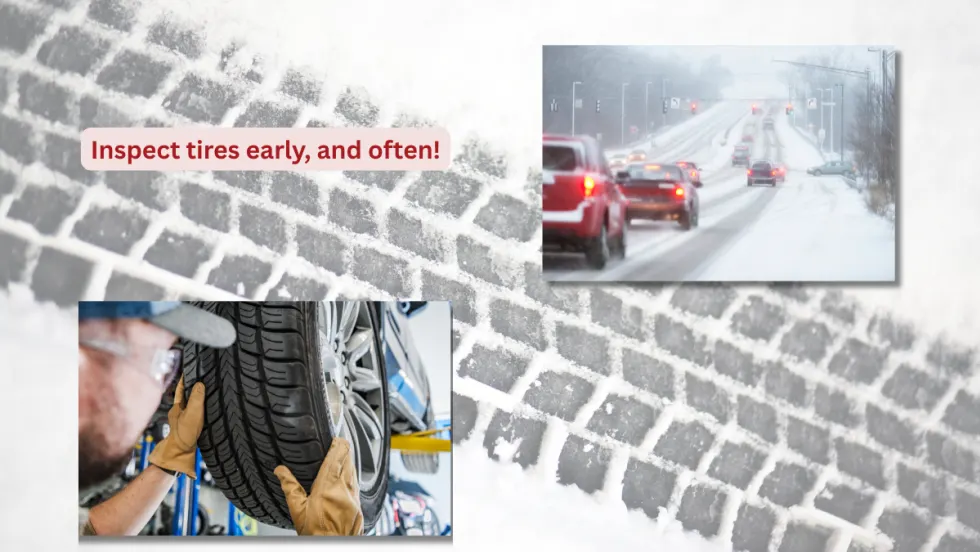
Fleet Managers Share Winter Prep Tips: It's Never Too Early!
Three fleets share best practices to prep vehicles for winter and prevent downtime when the cold sets in.
Read More →