




Toyota and Nissan Conclude "Basic Agreement" for Long-term Transaction of Hybrid Systems
Toyota Motor Corporation (Toyota) and Nissan Motor Co., Ltd. (Nissan) announced that they have concluded a basic agreement on the long-term, continuous transaction of hybrid systems including technical cooperation. According to both companies, this agreement was made possible by both companies having found common ground in terms of philosophy and outlook in their discussion on the future popularization of hybrid vehicles. This agreement, aiming for a long-term business relationship of 10 years or longer, calls for Toyota to supply hybrid system components to Nissan. In addition, aiming for long-term technological cooperation, both companies have also agreed to start exchanging information and discussing joint development of components related to hybrid systems that both Toyota and Nissan are currently developing independently. According to the company, as an initial project, Nissan will be installing a hybrid system currently under development by Toyota in Nissan's vehicles to be sold in the United States in 2006. Volume is expected to reach approximately 100,000 units within a five-year period starting in 2006. The components for the hybrid system, such as the transaxle and inverter, will be developed by Toyota, while Nissan will conduct development of its own engine and application of the hybrid system on its own vehicle, which will have a direct impact on Nissan’s product. Toyota says it was among the first automakers to introduce hybrid vehicles to its lineup, with the launch of the Prius in 1997. It is now the world’s biggest seller of hybrid vehicles, with cumulative sales of 120,000 units of the Prius, Coaster Hybrid (since 1997), Estima Hybrid (since 2001) and Crown Mild Hybrid (since 2001). With the strong belief that environmentally friendly technologies, such as hybrid systems, should be widely available, Toyota has been developing and expanding the use of such technologies in its product lineup, and, at the same time, has stated its intentions to make such technologies available to other car manufacturers upon request. Nissan claims it has also been actively promoting effective environmental related technologies in its products, such as the promotion of Ultra Low-Emission Vehicles (U-LEV), which were first introduced in its Bluebird Sylphy and Sentra CA models. As for hybrid vehicles, the company sold a limited number of Tino Hybrid models in 2000 and created a department to deal exclusively with the improvement of fuel efficiency, including hybrid technology, in February 2001. The companies say the major advantages of hybrid vehicles as environmentally friendly vehicles are low CO2 emission and cleaner exhaust gas. With the ongoing improvement in driving performance, the demand for hybrid vehicles as attractive vehicles for the 21st century is expanding. The two companies expect that this collaboration will contribute further decreasing the cost of hybrid-vehicle components, which should lead to boosting the sales of hybrid vehicles around the world.
More Small Fleet


Developing Budget-Friendly Driver Safety Programs
From driver training and safety meetings to one-on-one coaching and incentive programs, several small fleets share how they have developed a safety culture with their drivers using low- to no-cost resources.
Read More →
Boosting Last-Mile Fleet Uptime, Safety, and Value with AI Vehicle Inspections
AI-powered inspections are transforming last-mile fleets by replacing manual checks with highly accurate automated scans that detect defects in seconds. By giving fleet operations visibility into the daily condition of their vehicles, you can identify trends over the vehicle’s lifecycle that enable improved procurement decisions, route management, driver training and accountability.
Read More →
Five Ways Seat Belts Help Prevent Injuries
There are five ways seat belts protect occupants from injuries, according to the Tennessee Department of Safety and Homeland Security.
Read More →
It’s here: The 2026 Fleet Technology Trends Report
What does AI mean for fleets? Get the answer — and learn other top tech trends.
Read More →
Small Fleets, Big Impact: How Independent Drivers Power Wreaths Across America
Check out how small fleets and independent drivers power Wreaths Across America each December and why their impact matters more than ever.
Read More →
VMS Survey Finds 65% of Small Fleet Managers Run Operations Alone
A new VMS survey shows small fleet managers are stretched thin, with most handling operations solo and eager to adopt digital tools for relief.
Read More →
Tips for Driving Safely on Halloween Night
This video features a reminder from the Connecticut Department of Transportation (DOT) and the Connecticut Police Chiefs Association, urging drivers to prioritize safety this Halloween.
Read More →
AI, Access, and Uptime: VMS’s Next Chapter with David Prusinski
VMS’s new Co-CEO, David Prusinski, shares how an AI-first approach will give small fleets and repair shops the tools to compete like big players.
Read More →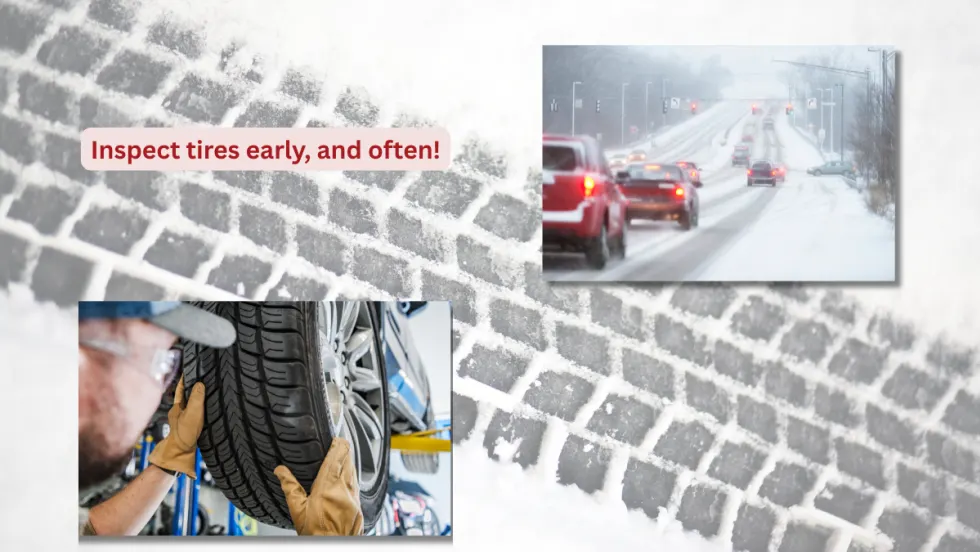
Fleet Managers Share Winter Prep Tips: It's Never Too Early!
Three fleets share best practices to prep vehicles for winter and prevent downtime when the cold sets in.
Read More →