




Sales of Large Pickups and SUV Models Revive as Gas Prices Drop
The recent decline in gas prices has brought an increase in owner loyalty rates for pickup trucks and SUVS, according to real-time retail transaction data from the Power Information Network (PIN).
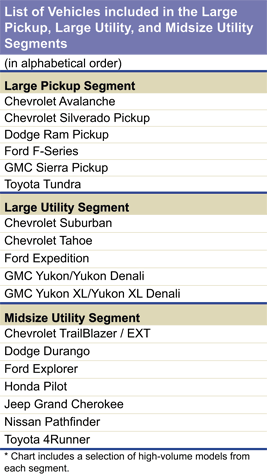
The recent decline in gas prices has brought an increase in owner loyalty rates for pickup trucks and SUVS, which had been adversely impacted by higher fuel prices earlier in the year, according to real-time retail transaction data from the Power Information Network (PIN), a division of J.D. Power and Associates. To better reflect consumer demand for new vehicles, PIN data includes retail transactions only and does not include fleet sales. Owner retention rates for the large pickup, large utility and midsize utility segments have all risen in the seven-week period from mid-August to early October—the time period during which gas prices steadily dropped and averaged $2.66 per gallon—when compared to the prior seven weeks, when gas prices averaged $3.04 per gallon. Owner retention is measured by the percent of owners in any given category who trade for another vehicle in the same category. PIN data shows that at the model level, four of six high-volume large pickup models, four of five large utilities and seven midsize utilities all have experienced increases in owner retention during the same time period (mid-August to early October). The large pickup, large utility and midsize utility segments account for almost one-quarter of new-vehicle sales—a combined 23.5 percent year to date through September. They also include some of the most profitable models in the industry, such as the Chevrolet Suburban, Ford Expedition, Jeep Grand Cherokee and Toyota 4Runner.
More Small Fleet


Developing Budget-Friendly Driver Safety Programs
From driver training and safety meetings to one-on-one coaching and incentive programs, several small fleets share how they have developed a safety culture with their drivers using low- to no-cost resources.
Read More →
Boosting Last-Mile Fleet Uptime, Safety, and Value with AI Vehicle Inspections
AI-powered inspections are transforming last-mile fleets by replacing manual checks with highly accurate automated scans that detect defects in seconds. By giving fleet operations visibility into the daily condition of their vehicles, you can identify trends over the vehicle’s lifecycle that enable improved procurement decisions, route management, driver training and accountability.
Read More →
Five Ways Seat Belts Help Prevent Injuries
There are five ways seat belts protect occupants from injuries, according to the Tennessee Department of Safety and Homeland Security.
Read More →
It’s here: The 2026 Fleet Technology Trends Report
What does AI mean for fleets? Get the answer — and learn other top tech trends.
Read More →
Small Fleets, Big Impact: How Independent Drivers Power Wreaths Across America
Check out how small fleets and independent drivers power Wreaths Across America each December and why their impact matters more than ever.
Read More →
VMS Survey Finds 65% of Small Fleet Managers Run Operations Alone
A new VMS survey shows small fleet managers are stretched thin, with most handling operations solo and eager to adopt digital tools for relief.
Read More →
Tips for Driving Safely on Halloween Night
This video features a reminder from the Connecticut Department of Transportation (DOT) and the Connecticut Police Chiefs Association, urging drivers to prioritize safety this Halloween.
Read More →
AI, Access, and Uptime: VMS’s Next Chapter with David Prusinski
VMS’s new Co-CEO, David Prusinski, shares how an AI-first approach will give small fleets and repair shops the tools to compete like big players.
Read More →
Fleet Managers Share Winter Prep Tips: It's Never Too Early!
Three fleets share best practices to prep vehicles for winter and prevent downtime when the cold sets in.
Read More →