




Navigating the First Year as a Fleet Manager: NAFA Session Highlights
New to fleet management? At NAFA 2025, experts shared tips for mastering data, PM, and relationships in year one — here's what you need to know.
by Rachael Plant, Fleetio
April 28, 2025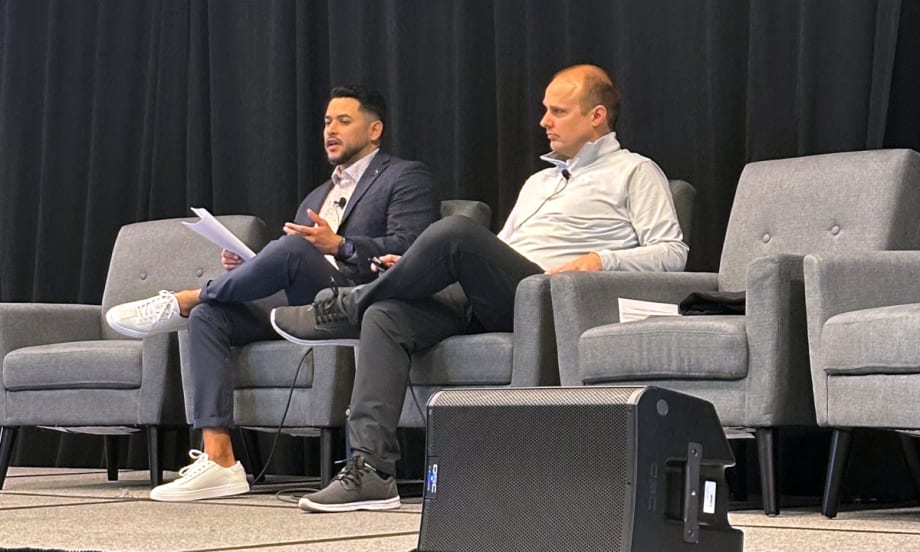
Jon Hinkle and Ernie Garcia shared tips and lessons learned from navigating the challenging first year as a fleet manager during NAFA I&E 2025.
Photo: Lauren Fletcher
5 min to read
On April 28, at the 2025 NAFA Institute and Expo, Fleetio’s Jon Hinkle, Senior Manager, Onboarding Services, and Ernie Garcia, Director of Fleet Management and Business Systems at Gothic Landscape took the stage for a speaking session to discuss navigating the first year as a fleet manager.
The first year can be especially tricky as you learn to manage not just assets, but data, people, and processes as well. Yet what you learn in the first year is critical for building a foundation that sets the tone for long-term success. Let’s go over some of the highlights of the session.
Knowledge Gathering
At the start of the session, Hinkle and Garcia emphasized that in the first year, your initial focus should be on understanding your operation inside and out.
A fleet manager oversees everything from asset procurement to safety and compliance, often acting as a leader to — and advocate for — drivers and technicians. The duo broke down the knowledge-gathering process into the following steps:
Learn your fleet: Get to know the make-up of your fleet — asset types, ages, and conditions. Are you managing specialized equipment like bucket trucks? Knowing asset details is a key factor in Our Al; and replacement decisions.
Learn your organizational structure: Understand how your fleet aligns with the company. Are assets dedicated to specific departments or shared across operations? Clarify reporting lines and whether you collaborate with other teams, such as operations or finance.
Talk to your stakeholders: Encourage drivers, technicians, and leadership to identify and communicate pain points — whether it has to do with poor processes or high costs.
Learn your responsibilities: Determine the scope of your role as fleet manager. Do you own entire asset lifecycles from procurement to disposal, or do you rely on others for tasks like budgeting? Clarity prevents overreach and helps ensure accountability.
Know your numbers: Track key metrics like scheduled versus unscheduled downtime costs, cost per mile (CPM), and asset utilization to reveal inefficiencies and help guide future budgeting.
Pick your “Big Three”: Select three achievable focus areas to maximize impact. For example, prioritize reducing fuel costs, improving preventive maintenance (PM) compliance, and streamlining driver assignments, then write down other ideas — like adopting new technologies — for future exploration.
“I advise anyone in the fleet industry to learn as much as possible. Understand best practices, compliance requirements, and industry standards, and apply this knowledge to the unique needs of your specific fleet,” Garcia advises. “Fleets vary greatly, and no two are the same. Not every best practice will work for every situation, so it’s essential to implement creative solutions within a collaborative environment.”
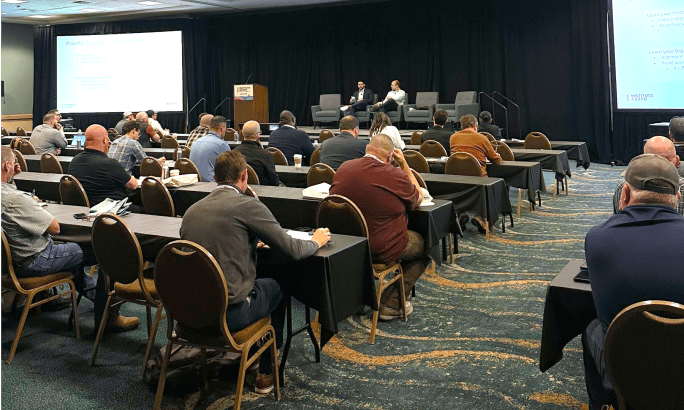
The NAFA session led by Fleetio’s Jon Hinkle and Gothic Landscape’s Ernie Garcia focused on the essentials new fleet managers need to succeed early on.
Photo: Lauren Fletcher
Master Preventive Maintenance
Proper PM is critical for a reliable fleet and helps reduce breakdowns while extending asset life. Preventable breakdowns can cost significantly more than consistent maintenance. Hinkle and Garcia discussed steps new managers can take to get a handle on their fleet’s PM:
Start with something: Begin with OEM-recommended schedules to establish a baseline. You may find that more specialized equipment — or assets operating under more demanding conditions — may require more frequent PM. This type of performance data allows you to iterate on a process for efficiency improvements.
Use reliable data: Rely on fleet technologies to automate data collection for more reliable data and real-time insights into mileage, fault alerts, and asset health.
Gamification: Incentivize shop performance to boost morale and accountability. Recognize top technicians for high PM completion rates and quality repairs. Rewarding technicians fosters a culture of excellence.
Keep it simple: Focus on key metrics like PM compliance, downtime, and repair turnaround time. Over-engineering processes with too many KPIs risks overwhelming your team.
Ongoing PM management: Improve PM over time by setting specific goals — such as reducing repair spend by 15% over a quarter — and benchmark your progress.
Leverage Data for Decision-Making
Data-driven decision-making can help new fleet managers prioritize needed changes more efficiently while enabling them to clearly articulate the fleet’s needs to leadership or other stakeholders outside of fleet. The session addressed several ways new fleet managers can lean on data to better understand the state of their fleet:
Misuse of equipment: Use telematics and routine inspections to detect asset abuse or neglect, like harsh braking or speeding. Try implementing an internal “chargeback” system to hold departments accountable, encouraging responsible asset use.
Scheduled vs. unscheduled downtime: Unscheduled downtime disrupts operations, so identify recurring issues — like faulty components — and address them proactively. Regular service data analysis can help you strengthen PM practices and reduce unscheduled downtime events over time.
Total cost of ownership (TCO): Calculate TCO for each asset, factoring in acquisition expenses as well as fuel, maintenance, depreciation, and administrative costs. Set acceptable TCO thresholds to inform repair-or-replace decisions.
Build Key Relationships with Internal and External Stakeholders
The session closed with a discussion about the importance of building relationships in fleet management. Fleet managers rely on a network of stakeholders to keep operations running smoothly, making collaboration essential. Hinkle and Garcia discussed best practices for building these relationships:
Rely on others: Work toward establishing trust with technicians, drivers, operations managers, parts vendors, repair facilities, and other fleet managers. Technicians ensure timely repairs, drivers provide on-the-ground insights, and vendors supply critical parts. Each relationship strengthens your operation.
Communication is key: Prioritize open dialogue and clear communication and be sure to seek buy-in. Don’t strain vendors with unrealistic demands — fair partnerships yield better results. Perform regular check-ins with drivers to help uncover concerns, and try to avoid communication breakdowns, which can lead to wasted time.
While the first year as a fleet manager may seem like a proving ground of sorts, you can quickly find your groove by mastering your fleet’s details, prioritizing PM, and building strong relationships.
And, with access to a wealth of fleet data, you can more easily tackle challenges like rising costs, driver shortages, and regulatory shifts, giving you the flexibility to adapt with the added benefit of improved operational efficiency.
More Operations
Family Ties Inside the Fleet Families Building Careers Across Generations
Three fleet families share what it really takes to work together, learn across generations, and keep business from following them home.
Read More →
Shades of Fleet Call for Voices: Fleet's Hidden Heroes
Fleet’s hidden heroes are often the ones keeping everything moving behind the scenes. September’s Shades of Fleet is looking for dispatchers, coordinators, parts specialists, and other support pros to share their stories.
Read More →
Truck Centers, Inc. Celebrates National Truck Driver Appreciation Week with $1,000 Fuel Card Giveaways
During National Truck Driver Appreciation Week, Truck Centers, Inc. is offering customers a chance to fuel up for free. Customers at all Truck Centers locations can enter to win one of four $1,000 fuel cards from Sept. 14 - 18.
Read More →
Fleet Guides, AI Time-Savers, Truck Tariffs & Fuel Strategy Lead the News
This week’s Truck Chat Cheat Sheet covers new fleet vehicle guides, practical AI use cases, U.S.-Canada truck production, mixed-energy strategy, and more.
Read More →
What Fleet Employers Are Missing When Hiring Veterans
What if some of the strongest candidates for fleet are already out there, but their experience is written in a language our industry does not always recognize?
Read More →
Automotive Fleet Opens 2026 Personal Use Survey for Commercial Fleet Managers
Less than two weeks left! Commercial and corporate fleet managers are invited to share how their organizations handle company vehicle personal-use policies, charges, and driver eligibility.
Read More →
What Resilient Fleets Do Differently When Conditions Change
Fleet resilience is about more than reacting to disruption. Lauren Fletcher talks with AP Fleet’s Alex Coveney about flexibility, planning, scaling, and what helps fleets adapt when business conditions shift.
Read More →
If We Want the Next Generation in Automotive, We Have to Give Them a Reason to Care
The automotive industry talks constantly about its workforce shortage. But before we can recruit the next generation, we may need to do a better job giving kids a reason to care about automotive in the first place.
Read More →
Ram ProMaster City Under $40K, Truck Tariffs, and AI Maintenance Lead the News
A sub-$40K commercial van, tariff questions, AI-powered maintenance, and a new EV production strategy headline this week’s Truck Chat Cheat Sheet.
Read More →
Bob Adamsky Shares the Fleet Lessons You Usually Learn the Hard Way
After more than 30 years in fleet, Arrow International’s Bob Adamsky has learned that the job is about far more than vehicles. He shares the lessons he wishes every fleet manager could learn a little earlier.
Read More →