




Hydrogen-Fueled Vehicles Available For Fleet This Summer – But They Ain’t Cheap
SACRAMENTO, Ca – As the global oil crisis continues hydrogen-fueled vehicles have become a political and economic hot topic. Secretary of Energy Spencer Abraham announced on April 26 grants of $350 million to Detroit’s Big 3 automakers, the first installment of President Bush's $1.2 billion commitment to fuel-cell research. Last week California Gov. Arnold Schwarzenegger signed an order to establish a public-private partnership that would create hydrogen-fueling stations – a ‘hydrogen highway’ – across the state. Yet Toyota Motor Co.’s Bill Reinert says the auto industry is not even close to solving storage technology issues. How does one separate reality from hydrogen hype? Toyota and Honda have leased a handful of vehicles to a few universities and the cities of Los Angeles and San Francisco. General Motors is testing vehicles in Washington, DC and two FedEx trucks in Tokyo. Those are research & development vehicles. They cost about $3 or 4 million, and are about 90 percent subsidized. Yet a California based company called Anuvu Incorporated will sell you a hydrogen-powered pickup truck today, and will have the modified vehicle delivered to you by the summer. These will be the first hydrogen fuel cell vehicles for the consumer market, said Rex Hodge, CEO of Anuvu. The vehicle, a modified Nissan Frontier pickup, will set you back a shade under six figures - $99,995 to be exact – not including tax and title. With that price tag business owners need to really, really love the environment. Hodge, who got into hydrogen-fueled vehicles after designing rocket engines, said the attraction for business owners is being on the cutting-edge of technology. Anuvu’s present customer base is organizations that have a mandate internally to promote zero emissions vehicles: municipalities, other government agencies, universities, and power utilities. But Hodge is talking to corporations that want to publicize the fact that they’re doing something about the environment. “Obviously no one is doing it to save money,” he said. Hydrogen fuel itself isn’t very expensive, costing about $25.00 to fill up a tank that lasts for 250 miles. That’s more than regular unleaded gas, but the issue by far is building the fuel-dispensing equipment, the stations and the transporters to dispense the fuel on-site, said Hodge. There are now 22 permanent hydrogen-fueling stations in California, up from 13 at the beginning of 2004. Hodge sees fleets as the ideal initial users of his vehicles. Anuvu’s CUV, or Clean Urban Vehicle, has a range of 250 miles. “What we found is that the vast majority of all fleet vehicles fall under a duty cycle in which they never leave a greater metropolitan area,” Hodge said. “Typically those vehicles come back to a common parking lot, where a hydrogen fueling station would be located.” Anuvu is able to produce a much more inexpensive vehicle on a consumer level by using a hybrid hydrogen/electric engine tailored to the needs of the end-user. “We could equip the trucks for more highway range, but it would then cost about $150,000,” Hodge said. “We found when we were talking to fleet buyers they preferred a car that will complete their mission for $99,000 rather than $150,000.” Critics of the hydrogen fuel bandwagon say that developing petroleum substitutes like ethanol and gas-electric hybrid engines can reduce our reliance on fossil fuels much more cheaply and immediately. Fleet managers have a much bigger concern regarding hydrogen-fueled vehicles – how in the world do you calculate residual value?
More Small Fleet

Developing Budget-Friendly Driver Safety Programs
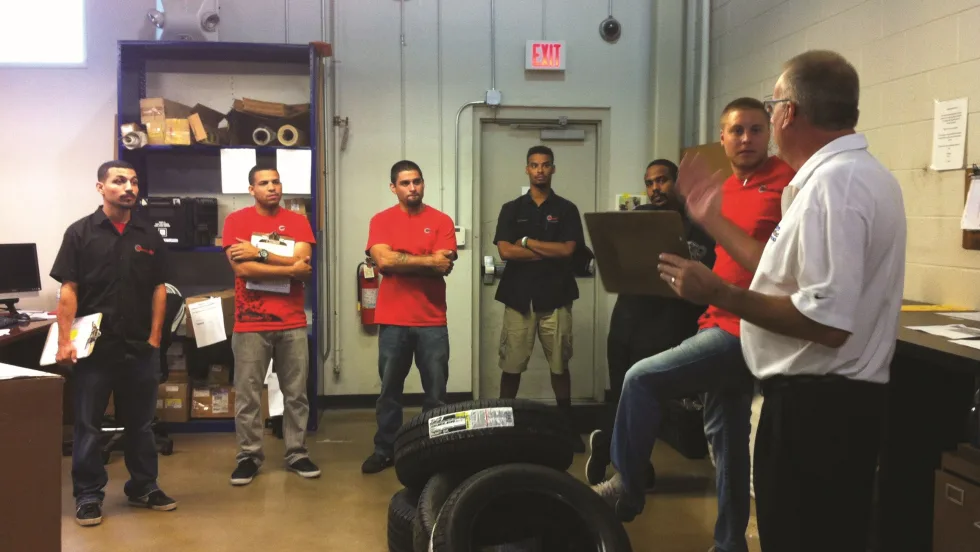
From driver training and safety meetings to one-on-one coaching and incentive programs, several small fleets share how they have developed a safety culture with their drivers using low- to no-cost resources.
Read More →
Boosting Last-Mile Fleet Uptime, Safety, and Value with AI Vehicle Inspections
AI-powered inspections are transforming last-mile fleets by replacing manual checks with highly accurate automated scans that detect defects in seconds. By giving fleet operations visibility into the daily condition of their vehicles, you can identify trends over the vehicle’s lifecycle that enable improved procurement decisions, route management, driver training and accountability.
Read More →

Five Ways Seat Belts Help Prevent Injuries
There are five ways seat belts protect occupants from injuries, according to the Tennessee Department of Safety and Homeland Security.
Read More →
Basic Tracking vs Next Generation Fleet Technology
Fleet software is getting more sophisticated and effective than ever, tying big data models together to transform maintenance, safety, and the value of your existing tech stack. Fleet technology upgrades are undoubtedly an investment, but updated technology can offer a much higher return. Read how upgrading your fleet technology can increase the return on your investment.
Read More →
It’s here: The 2026 Fleet Technology Trends Report
What does AI mean for fleets? Get the answer — and learn other top tech trends.
Read More →
Small Fleets, Big Impact: How Independent Drivers Power Wreaths Across America
Check out how small fleets and independent drivers power Wreaths Across America each December and why their impact matters more than ever.
Read More →
VMS Survey Finds 65% of Small Fleet Managers Run Operations Alone
A new VMS survey shows small fleet managers are stretched thin, with most handling operations solo and eager to adopt digital tools for relief.
Read More →
Tips for Driving Safely on Halloween Night
This video features a reminder from the Connecticut Department of Transportation (DOT) and the Connecticut Police Chiefs Association, urging drivers to prioritize safety this Halloween.
Read More →
AI, Access, and Uptime: VMS’s Next Chapter with David Prusinski
VMS’s new Co-CEO, David Prusinski, shares how an AI-first approach will give small fleets and repair shops the tools to compete like big players.
Read More →