




Related: Harvey Nearly Halts Commercial Fleet Activity in Houston
Hurricane Harvey Could Create 1M Salvage Vehicles
While market watchers agree that Hurricane Harvey's impact stretches beyond Houston-area automotive business, estimates on exactly how many vehicles will need to be replaced vary between half a million and million vehicles, including as many as 18,500 fleet vehicles.
by Gregory Arroyo
August 31, 2017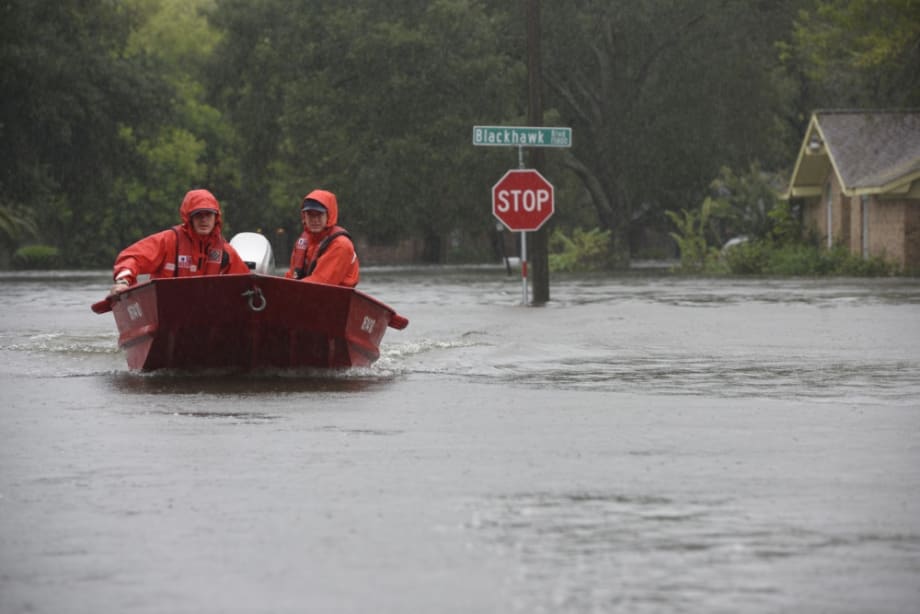
Photo courtesy of U.S. Coast Guard.
4 min to read
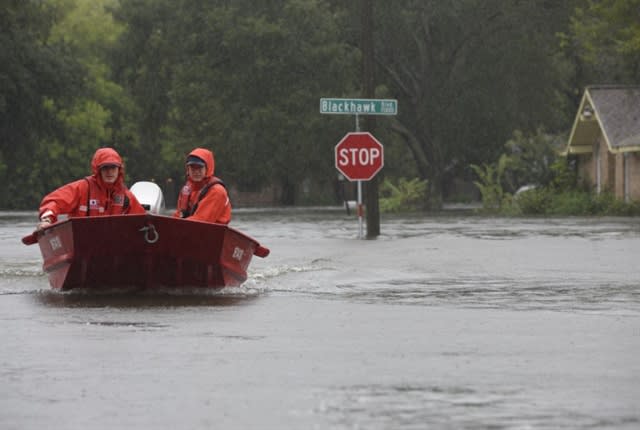
Photo courtesy of U.S. Coast Guard.
While market watchers agree that Hurricane Harvey's impact stretches beyond Houston-area automotive business, estimates on exactly how many vehicles will need to be replaced vary between half a million and a million vehicles, including as many as 18,500 fleet vehicles.
Earlier this week, Cox Automotive Chief Economist Jonathan Smoke estimated that the storm, which made landfall along the southeast coastline of Texas on Aug. 25, took out a half a million vehicles. Smoke told Automotive Fleet, commercial, government, and rental fleet losses could be between 11,000 and 18,500.
On Thursday, Black Book analysts said the total loss could be as a high as a million cars, trucks, and SUVs.
"Black Book expects the impact of the hurricane to have far-reaching effects, not only on Houston-Area automotive businesses, such as dealerships and wholesale auctions, but also throughout the South and Midwest," the company said on Thursday, noting that early reports put the number of dealership impacted in the Greater Houston area at more than 500 stores. "Somewhere between 500,000 and a million vehicles will have to be replaced in the area. We believe there is enough new inventory in the U.S. to supply the consumers' needs and the timing may actually be good with new-car stores looking to deplete the 2017 models at model-year changeover."
Forecasts remain fluid, however, with Harvey coming ashore near the Texas-Louisiana border on Wednesday after swinging out into the Gulf of Mexico. AccuWeather called the storm "the costliest and worst natural disaster in American history," and estimated its impact on the nation's gross domestic product to be $190 billion. The GDP currently stands at $19 trillion.
With Texas being the auto industry's second largest market behind California — the state accounting for 14% of U.S. truck sales — Black Book said the market should be strong for both new and used vehicles, especially pickup trucks and SUVs, in the coming month as residents in the affected areas begin replacing damaged vehicles.
The new-vehicle seasonally adjusted annual rate (SAAR), which has been on the decline this year, should also see a lift.
"Online buying will be a significant ingredient in the dealers' ability to source vehicles since they don't have a local option," Black Book said. "The inventory will come from many other parts of the U.S., with cars and trucks being transported to the effected regions."
Cox Automotive revised its August forecast of 16.6 million SAAR to 16.3 million, noting that between 20,000 and 40,000 new-vehicle sales could be delayed in Texas based on Harvey's impact so far. September is likely to register a mild boost in sales as a result.
"The process will likely last months, pushing higher sales in the region in Q4," read a statement from Cox Automotive's Smoke. "We are looking at impact to full-year SAAR; initial estimates indicate a potential net improvement on full-year sales once replacement sales pick up in earnest."
Since the storm came ashore, Dealer.com websites in the affected markets have experience an almost 40% drop in shopping activity compared to the previous weekends in August. Dealer.com, according to the Cox Automotive, powers more than 60% of dealer websites.
Houston ranks eighth in registered vehicles with 5.6 million units in operation — the market accounting for 2.3% of U.S. total sales, according to Cox Automotive estimates.
When Hurricane Sandy struck the Northeastern United States in October 2012, New York's designated market area (DMA) experienced a 49% increase in new-vehicle sales the following month. The sales spike lasted two months, according to Cox Automotive. The uptick was less dramatic for used vehicles, the firm noted. This was due to tight supply of recent new vehicles following the Great Recession, which limited the potential for used-vehicles to fill the need.
Pricing trends should follow suit. Cox noted that wholesale prices strengthened in the three months following Sandy.
The Houston designated market area, the seventh largest by population in the United States, claims a vehicle ownership rate of 94.4%. That's higher than New York's 71% ownership rate and the U.S. rate of 91%.
"Given what we know so far and recognizing that the effects of the flooding are still ongoing, Houston looks bad. Considering Katrina damage and Sandy damage, and comparing vehicles in operation in Houston, and taking into account vehicle dependency and what the damage in Houston looks like from the reporting, we estimated the range to between 300,000 and 500,000," Smoke said. "If Houston indeed lost 300,000 vehicles, it's sobering to note that the entire Houston DMA has seen 325,000 new-vehicle sales in the last 12 months."
Editor's note: Paul Clinton, AutomotiveFleet.com web editor, contributed to this story.
Originally posted on Automotive Fleet
More Operations

Family Ties Inside the Fleet Families Building Careers Across Generations
Three fleet families share what it really takes to work together, learn across generations, and keep business from following them home.
Read More →
Shades of Fleet Call for Voices: Fleet's Hidden Heroes
Fleet’s hidden heroes are often the ones keeping everything moving behind the scenes. September’s Shades of Fleet is looking for dispatchers, coordinators, parts specialists, and other support pros to share their stories.
Read More →
Truck Centers, Inc. Celebrates National Truck Driver Appreciation Week with $1,000 Fuel Card Giveaways
During National Truck Driver Appreciation Week, Truck Centers, Inc. is offering customers a chance to fuel up for free. Customers at all Truck Centers locations can enter to win one of four $1,000 fuel cards from Sept. 14 - 18.
Read More →
Fleet Guides, AI Time-Savers, Truck Tariffs & Fuel Strategy Lead the News
This week’s Truck Chat Cheat Sheet covers new fleet vehicle guides, practical AI use cases, U.S.-Canada truck production, mixed-energy strategy, and more.
Read More →
What Fleet Employers Are Missing When Hiring Veterans
What if some of the strongest candidates for fleet are already out there, but their experience is written in a language our industry does not always recognize?
Read More →
Automotive Fleet Opens 2026 Personal Use Survey for Commercial Fleet Managers
Less than two weeks left! Commercial and corporate fleet managers are invited to share how their organizations handle company vehicle personal-use policies, charges, and driver eligibility.
Read More →
What Resilient Fleets Do Differently When Conditions Change
Fleet resilience is about more than reacting to disruption. Lauren Fletcher talks with AP Fleet’s Alex Coveney about flexibility, planning, scaling, and what helps fleets adapt when business conditions shift.
Read More →
If We Want the Next Generation in Automotive, We Have to Give Them a Reason to Care
The automotive industry talks constantly about its workforce shortage. But before we can recruit the next generation, we may need to do a better job giving kids a reason to care about automotive in the first place.
Read More →
Ram ProMaster City Under $40K, Truck Tariffs, and AI Maintenance Lead the News
A sub-$40K commercial van, tariff questions, AI-powered maintenance, and a new EV production strategy headline this week’s Truck Chat Cheat Sheet.
Read More →
Bob Adamsky Shares the Fleet Lessons You Usually Learn the Hard Way
After more than 30 years in fleet, Arrow International’s Bob Adamsky has learned that the job is about far more than vehicles. He shares the lessons he wishes every fleet manager could learn a little earlier.
Read More →