





Related: Battling Distracted Driving
How Fleets Can Boost Safety In the Field
Utility fleets often have workers stationed along the side of the road or off-road. But a few strategically placed lighting options can help increase safety. Does your fleet use all of them?
December 14, 2019
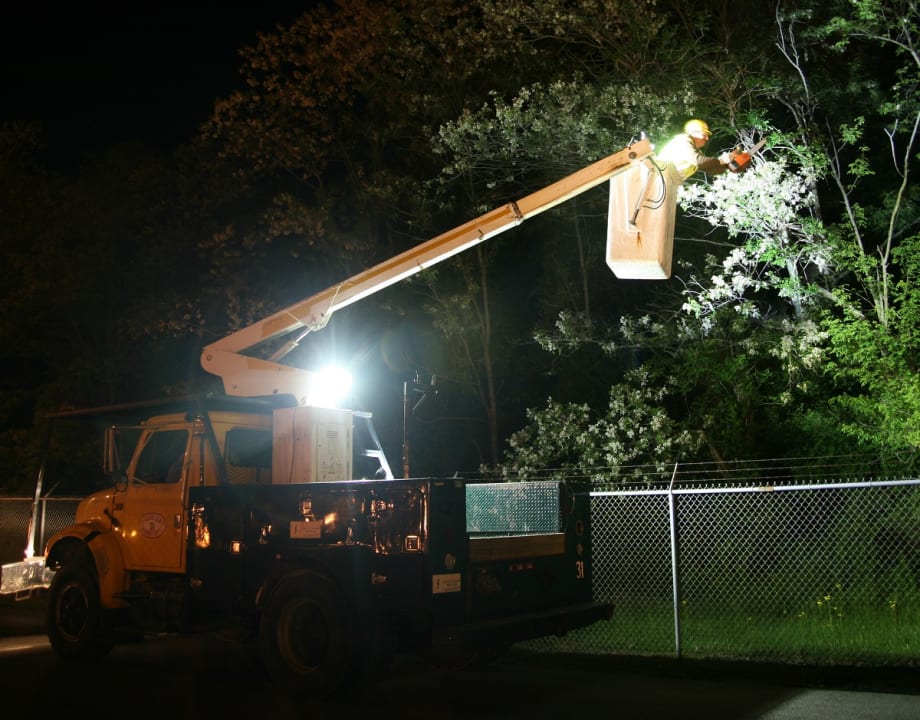
Lighting should be tailored to meet the needs of the job and the operator.
Photo courtesy of Grote Industries
3 min to read
For fleets where drivers work along the side of the road or off-road — such as field mechanics, linemen, farmers, service workers, and other contractors — driver safety is a major factor. Luckily, there are options to mitigate some of the risk while working in a risky area. And evolving vehicle technology can help enhance visibility.
Of course, all vehicles are equipped with some form of lighting. But Grote Industries notes that safety is determined not just by using bright lights on the vehicle, but by producing optimal light quality to fully illuminate the environment and attract the attention of those nearby.
Commonly Used Truck Lighting
Hazard/strobe lights are a common addition to many service vehicles and can be used to warn nearby drivers to keep their distance. Typically, SAE Class 2 warning lights are used for utility vehicles that work along roadsides, while Class 1 warning lights (with four times the intensity of Class 2 lights) are used for emergency vehicles like fire, police, and ambulances. This is often accompanied with a variety of colors such as red or amber.
“To alert other drivers, when service vehicles may unexpectedly stop, turn, or move out of regular traffic flow, it is easy to incorporate strobe lights in hideaway areas such as in headlamp, tail, turn, or back up lamps that do not require additional mounting. Beacons or bar strobes can also be added. There are many options,” said Kevin Cornelius, global marketing manager – Trailer and Body Builders at Grote Industries, a U.S.-based manufacturer and expert in vehicle lighting and safety systems.
Enhanced lighting can make the ground a little brighter to ensure the driver sees the road (or lack thereof) in front of the vehicle. All ground lights should also be mounted below the vehicle shining downward, typically at a -40-degree inclination, so the actual light source is not visible to the vehicle driver or others on the scene.
“You don’t want to directly view the light source providing the ground lighting, or it can dilate your pupils, so your eyes are no longer adjusted for nighttime viewing,” explained Cornelius.
Scene lighting comes in handy while on the job, and can be deployed when high-powered, long-range illumination is required from a service vehicle. It usually takes the form of work lamps. This can help to eliminate stumbles, trips, falls, and work-related errors due to poor visibility. However, there are different types of scene lighting, some of which are better suited for specific tasks.
“When work area lights are used on the rear of the vehicle, flood or wide flood LED lights cover the broadest area,” Cornelius continued. “To light up an area at a distance, we recommend trapezoid or combination light patterns. For the longest distance viewing, a spotlight or pencil beam type pattern is usually the best choice.”
When it comes to working in or around the vehicle, surface lighting is typically used for walking up steps or accessing to tools and equipment in compartments or truck beds.
While this can be accomplished by mounting LED lamps on the side of steps, or at the ends of compartments, an increasingly popular alternative is to install LED light strips wherever needed. Advances in thin-film LED technology not only produce brighter illumination, but do so using paper-thin, ultra-light strips that can be easily installed into the existing lighting power system.
The most rugged options are resistant to damage from impacts, waterproof, able to withstand pressure washing with hot water, and resistant to the most common chemicals associated with vehicles in the event of exposure or spills, including motor oil, diesel fuel, battery acid, gasoline, and brake fluid. Installation usually involves just peeling off doubled-sided tape and pressing the LED strips into place.
Those who consult with a lighting specialist can not only optimize such choices, but also save dramatically on maintenance, repair and replacement over the service life of the vehicle fleet.
More Utility Fleet
Reduce Noise & Idling with Viatec’s ePTO
Viatec's Workforce ePTO lets utility trucks power booms, outriggers, and auxiliary equipment using battery power instead of idling the engine. Learn how this technology helps reduce fuel use, noise, engine wear, and emissions while improving operator comfort.
Read More →
Why Utility Fleets Choose the Kenworth T380
The Kenworth T380 is engineered for utility fleets with custom chassis layouts, optimized frame rails, 4x4 capability, and improved driver visibility. See how its design helps maximize upfit flexibility and field performance.
Read More →
PALFINGER PB 38 AT P: Purpose-Built for Telecom Fleets
Purpose-built for telecommunications crews, the PALFINGER PB 38 ATP combines a 43-foot working height, flexible basket stowage, integrated cameras, and operator communication systems to improve productivity and safety during fiber and overhead cable installation.
Read More →
Inside Terex Utilities' Latest Work Truck Innovations
Terex Utilities is advancing utility fleet operations with its new TRX aerial platforms, Flex Pro controls, and AI-powered 3rd Eye safety technology. See how these innovations are helping fleets work safer, smarter, and more productively.
Read More →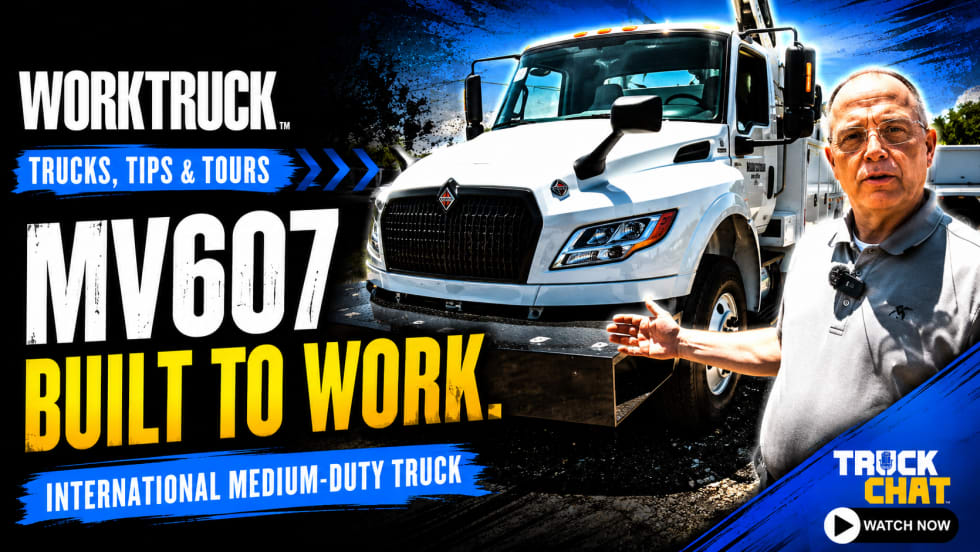
Walkaround of International MV607 Digger Derrick
The International MV607 combines advanced safety technologies, excellent visibility, vocational flexibility, and seamless body integration to create a powerful platform for utility fleet operations. Take a closer look at this Altec digger derrick configuration from EUFMC.
Read More →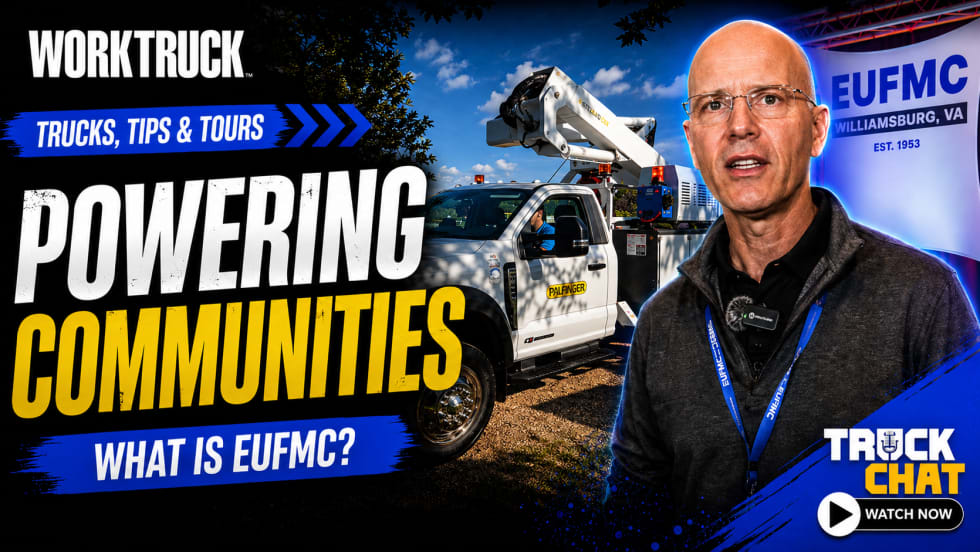
Inside the Electric Utility Fleet Managers Conference
What is EUFMC? For more than seven decades, the Electric Utility Fleet Managers Conference has served as a hub for collaboration, education, and innovation within the utility fleet industry. In this video, Work Truck talks to EUFMC President Greg Loew to learn more.
Read More →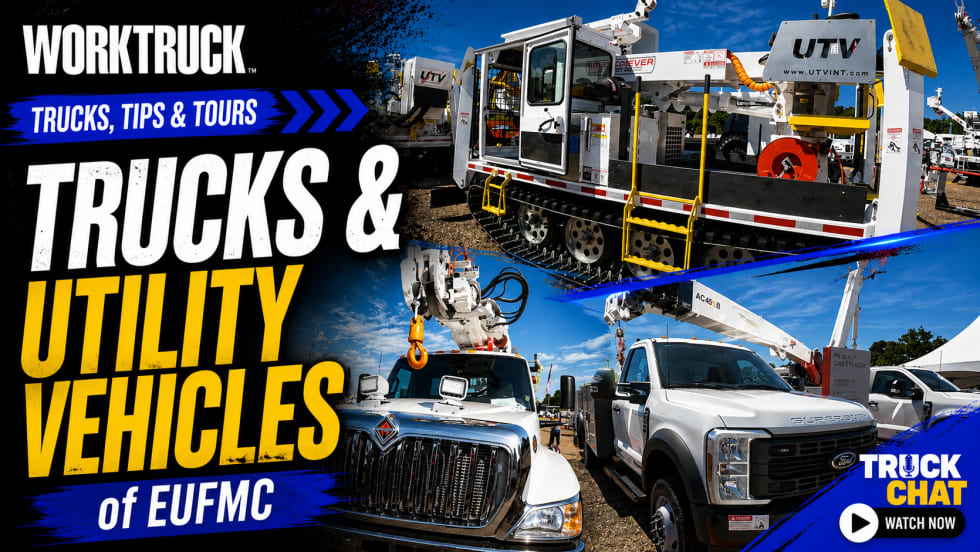
Inside the EUFMC Equipment Expo & Drive-Through
Follow Work Truck as we check out the trucks and other vehicles that were showcased at the Electric Utility Fleet Managers Conference in Williamsburg, Virginia. Whether looking for something on tires or treads, it was there for fleet managers to see.
Read More →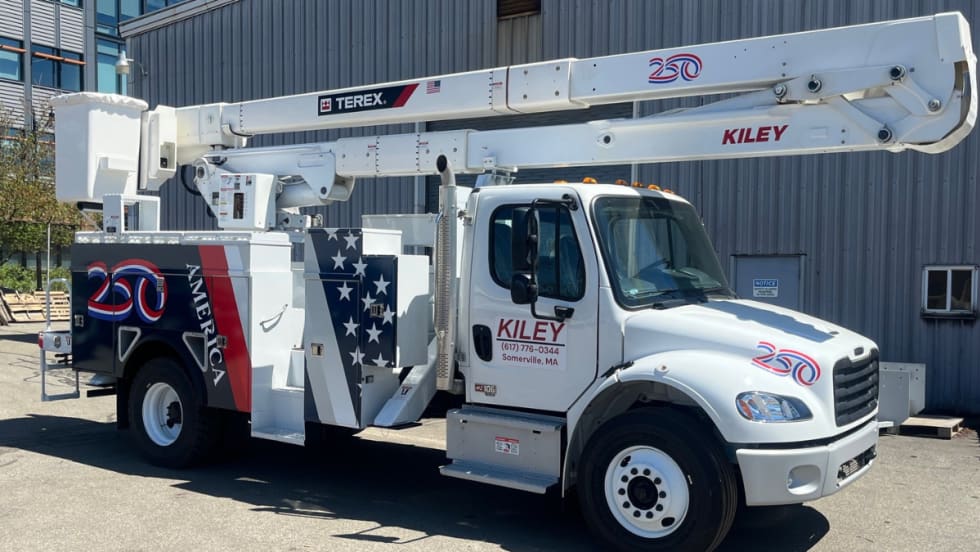
Terex Utilities & Kiley Unveil Custom America 250 Bucket Trucks at EUFMC 2026
Terex Utilities showcased a patriotic spirit in its booth this week during the Electric Utility Fleet Managers Conference in Williamsburg, Virginia, by debuting two custom-wrapped bucket trucks celebrating America’s upcoming 250th anniversary.
Read More →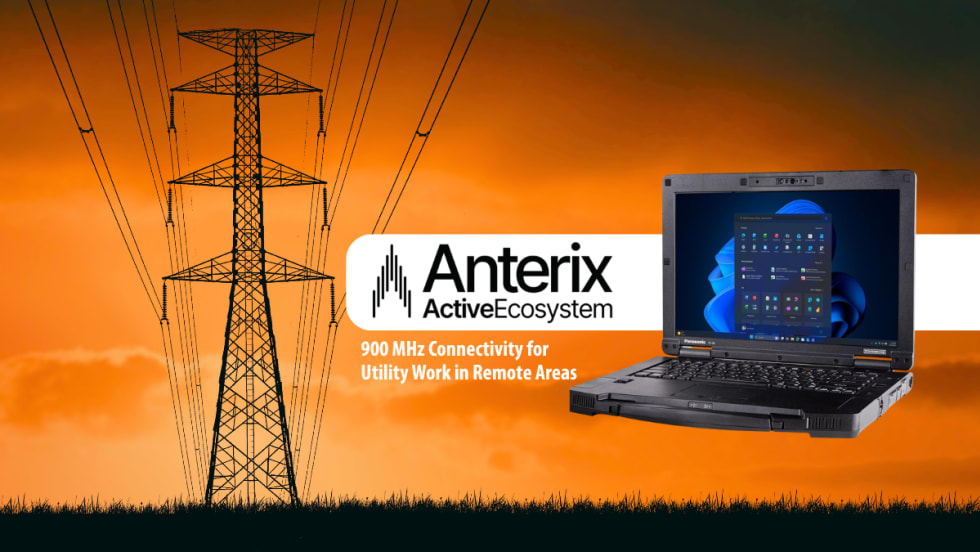
Panasonic Connect & Anterix Strengthen Connectivity Options for Utilities and Field Workers
The Panasonic Connect Toughbook 56 is the first Toughbook to earn the AnterixActive badge, which means it can connect to and operate on Anterix’s 900 MHz network even in the most remote locations.
Read More →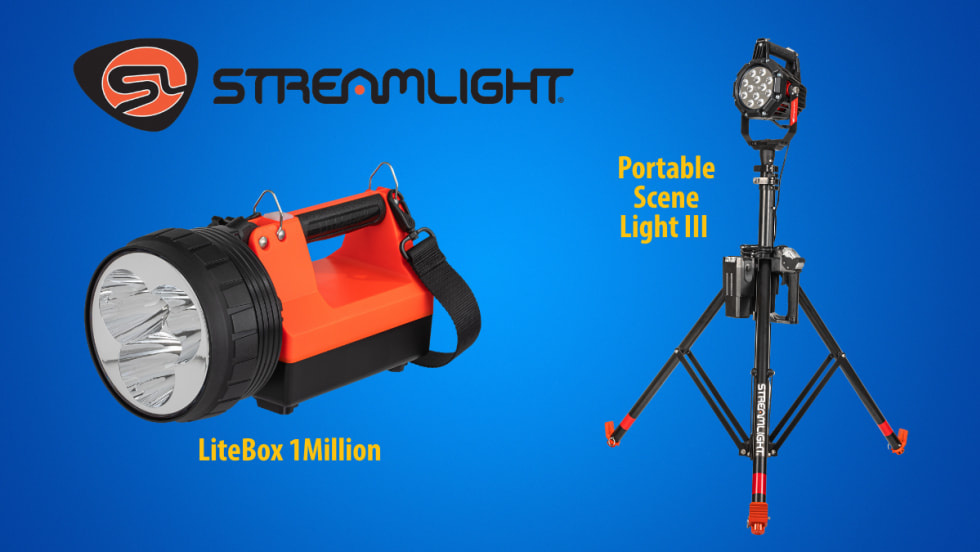
Streamlight Launches Portable Scene Light III & LiteBox 1Million
Streamlight has launched its Portable Scene Light III (PSL III), which delivers up to 10,000 lumens, and the LiteBox 1Million, a long-range search light that delivers one million candela.
Read More →