




Honda to Boost Standard Safety Equipment
American Honda Motor Co., Inc., on Oct. 29 announced plans to apply advanced safety technologies to the full range of Honda and Acura products over the next several years. In keeping with its "Safety for Everyone" commitment to provide high levels of safety protection for all its customers and for all road users, the company said it will undertake the following actions:
All Honda and Acura vehicles, with the exception of a small number of specialty vehicles, will get front side airbags, side curtain airbags and anti-lock brakes as standard equipment before the end of calendar year 2006.
All Honda and Acura light trucks, including all SUVs and minivans, will be equipped with Vehicle Stability Assist (VSA) and rollover sensors for side curtain airbag deployment before the end of calendar year 2006.
Honda's Advanced Compatibility Engineering body structure, offering enhanced occupant protection with reduced aggressiveness toward other vehicles, will be applied to all new vehicle platforms in the U.S. and globally over the next six to seven years. The 2005 model Honda Odyssey minivan and Acura RL sedan will be the first U.S. models to carry this new technology.
In its efforts to improve safety for all road users, Honda said it will further expand the use of features designed to reduce injuries to pedestrians from the current industry-leading eight models.
According to Honda, these new initiatives represent the next logical step in the evolution of its "Safety for Everyone" concept, an approach to vehicle safety that, according to the company, "seeks to provide high levels of occupant protection for all Honda and Acura vehicles regardless of size or price, along with reduced aggressivity toward other vehicles and improved safety for pedestrians." "We want to provide all our customers with top level safety for all vehicles, regardless of size or price," said Koichi Kondo, president of America Honda Motor Co, Inc. "This new commitment puts Honda in a clear leadership position on a number of safety fronts." ABS, Front Side Airbags and Side Curtain Airbags The Honda-developed side-curtain airbag system features what Honda says is the world's fastest deploying side-curtain system. Working in conjunction with the front side airbags, the system offers improved protection in side impact collisions. Anti-lock brakes, already standard equipment on most Honda and all Acura models, provide enhanced steering control under hard braking and in slippery conditions. VSA and Rollover Sensor Honda's Vehicle Stability Assist technology uses braking and throttle control to improve the vehicle's dynamic stability in situations such as emergency handling maneuvers or on slippery surfaces, while side curtain airbags provide added protection in side impacts or in the event of a rollover. The system also employs sensors that trigger airbag deployment in the event of a rollover. This advanced supplemental restraint system is already featured as standard equipment on the 2004 Acura MDX. Advanced Compatibility Engineering Body Structure In answer to the growing popularity of pickup trucks and sport utility vehicles and the subsequent rise in injuries and fatalities resulting from collisions between vehicles of different sizes, Honda said it has worked to improve occupant protection while improving the compatibility between vehicles of different sizes. The Advanced Compatibility Engineering body structure, which represents a further evolution of Honda's proprietary "G-Force Control" (G-CON) collision safety body technology, employs a new front-end frame structure that reduces the potential concentrated force of an impact by dispersing and absorbing crash energy over a larger area. The design also helps reduce the potential for misalignment with the frame of the opposing vehicle. "Taken together, these features result in improved compatibility between vehicles of different sizes with significantly enhanced occupant protection and reduced aggressivity toward other vehicles in a collision," the company said in a prepared statement. Even before the application of this new compatibility design, a number of Honda and Acura light truck models - including the Honda Pilot and Acura MDX - employ unibody structures designed to reduce aggressiveness toward other vehicles, along with front bumper brackets that reduce the chance of bumper override that can occur in frontal collisions between vehicles of differing heights. Pedestrian Safety Design In keeping with Honda's "Safety for Everyone" concept, future Honda models will also incorporate Honda's latest thinking in pedestrian-friendly body design, taking advantage of industry-leading pedestrian safety research conducted at Honda's crash test facilities in Tochigi, Japan. Honda developed the world's first crash test dummy designed for the study of pedestrian safety. Already, nearly two million U.S. Honda and Acura vehicles including the current models of Accord, Civic, CR-V, Element and Pilot, along with the Acura RSX, TSX and TL are equipped with a number of these features including specially designed hood structures, hood hinges, front frame construction and breakaway wiper pivots. Honda Safety Leadership Honda said it has a well-established history of leadership in the development and application of advanced safety technologies and the real world safety performance of all its products. "Based on its commitment to offering 'Safety for Everyone' through technology and innovation, Honda is improving safety for drivers and passengers of small and large vehicles as well as for riders of motorcycles and ATVs, and for pedestrians," the company said in a prepared statement. Honda said that ss a result of its commitment to automotive safety, an industry leading five Honda models have earned the U.S. federal government's top Five Star safety rating for the driver and front passenger in front-impact and front and rear seat passenger in side impact testing. This includes the Civic Coupe, the only compact class vehicle ever to earn the government's highest safety rating. Only 12 vehicles in the entire industry have achieved this level of safety performance, according to Honda. Honda said its research into airbag technology led to the first upwardly deploying front passenger airbags and the first use of front side airbags with occupant position detection sensors to reduce the risk of injuries caused by airbag deployment. Honda said it has also been a leader in the adoption of dual stage, dual threshold air bags that utilize both crash severity and seat belt use to optimize airbag deployment. Original research conducted by Honda at its state-of-the art indoor safety testing facility in Tochigi, Japan, played a critical role in the development of Honda's G-CON body frame structure for improved management of crash energy in a collision. Elements of G-CON technology are currently employed on the vast majority of Honda and Acura products globally.
More Small Fleet

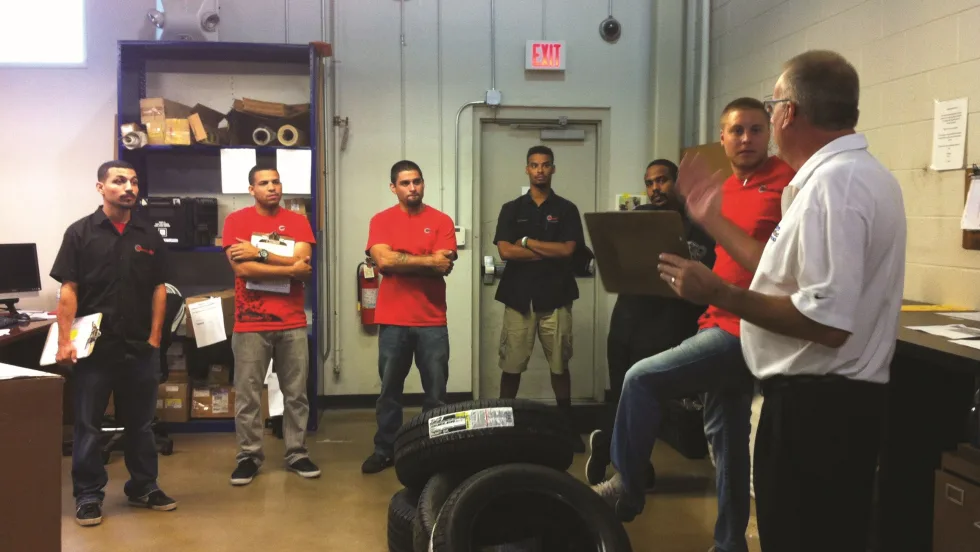
Developing Budget-Friendly Driver Safety Programs
From driver training and safety meetings to one-on-one coaching and incentive programs, several small fleets share how they have developed a safety culture with their drivers using low- to no-cost resources.
Read More →
Boosting Last-Mile Fleet Uptime, Safety, and Value with AI Vehicle Inspections
AI-powered inspections are transforming last-mile fleets by replacing manual checks with highly accurate automated scans that detect defects in seconds. By giving fleet operations visibility into the daily condition of their vehicles, you can identify trends over the vehicle’s lifecycle that enable improved procurement decisions, route management, driver training and accountability.
Read More →

Five Ways Seat Belts Help Prevent Injuries
There are five ways seat belts protect occupants from injuries, according to the Tennessee Department of Safety and Homeland Security.
Read More →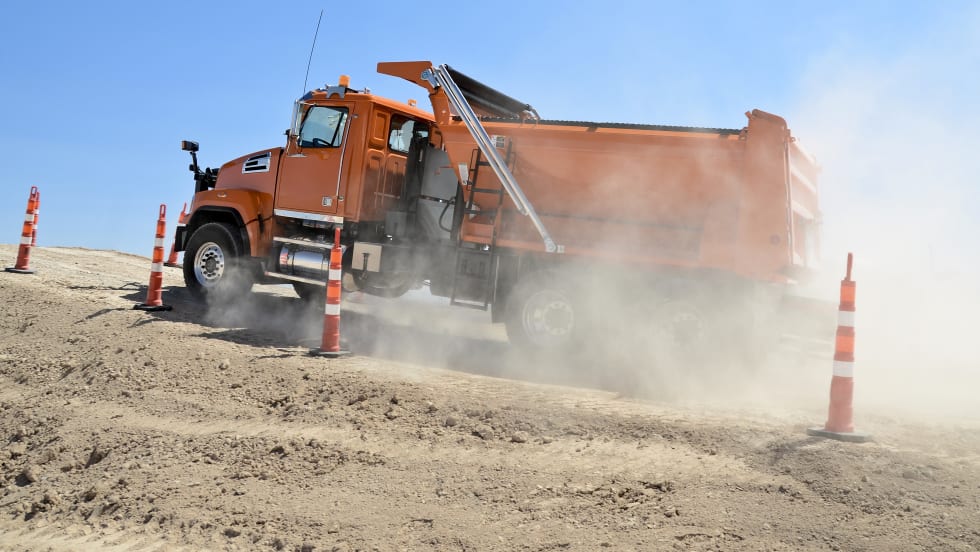
Basic Tracking vs Next Generation Fleet Technology
Fleet software is getting more sophisticated and effective than ever, tying big data models together to transform maintenance, safety, and the value of your existing tech stack. Fleet technology upgrades are undoubtedly an investment, but updated technology can offer a much higher return. Read how upgrading your fleet technology can increase the return on your investment.
Read More →
It’s here: The 2026 Fleet Technology Trends Report
What does AI mean for fleets? Get the answer — and learn other top tech trends.
Read More →
Small Fleets, Big Impact: How Independent Drivers Power Wreaths Across America
Check out how small fleets and independent drivers power Wreaths Across America each December and why their impact matters more than ever.
Read More →
VMS Survey Finds 65% of Small Fleet Managers Run Operations Alone
A new VMS survey shows small fleet managers are stretched thin, with most handling operations solo and eager to adopt digital tools for relief.
Read More →
Tips for Driving Safely on Halloween Night
This video features a reminder from the Connecticut Department of Transportation (DOT) and the Connecticut Police Chiefs Association, urging drivers to prioritize safety this Halloween.
Read More →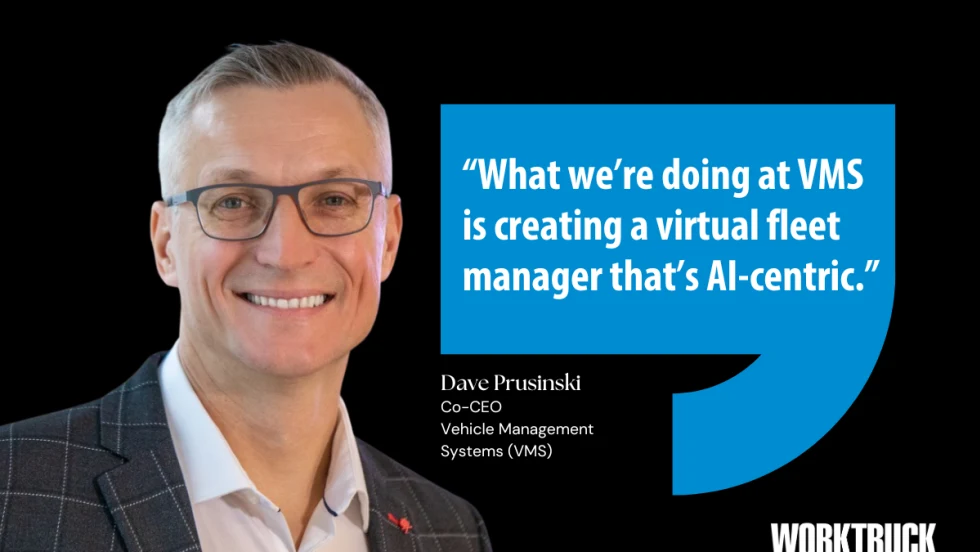
AI, Access, and Uptime: VMS’s Next Chapter with David Prusinski
VMS’s new Co-CEO, David Prusinski, shares how an AI-first approach will give small fleets and repair shops the tools to compete like big players.
Read More →