




Highway Users President Delivers 'State of U.S. Highways' Address
In a wide ranging discussion aimed at dispelling popular myths about roads and promoting the benefits of needed highway improvements, Bill Fay, president of American Highway Users Alliance recently delivered a "State of U.S. Highways" address to "The Transportation Table," a twice-monthly luncheon of D.C.-based transportation reporters. "Highway opponents have done an excellent job manufacturing and promoting myths about highways and highway use," Fay said at the July 13 luncheon. Fay particularly highlighted three pervasive myths: Myth 1) New road capacity will completely fill up with new drivers. "Road use has grown without increased capacity," Fay said. "Since 1970, total U.S. road mileage has grown by a scant 6 percent and lane-mile capacity by around 15 percent, but our population has grown by 63 percent, the number of vehicles by 90 percent and vehicle miles traveled by 132 percent!" Myth 2) Transit use is growing faster than highway use. "Even if transit use increased by 4.5 percent and highway use only grew by 2.3 percent, percentage increases can be deceiving," Fay said. "Nationwide, there were 9 billion transit boardings in 1999, but there were over 1 trillion trips by private vehicle! A 2.3 percent increase in private vehicle trips is 23 billion additional trips, 2-1/2 times the total number of transit boardings with or without the 4.5 percent increase!" Myth 3) The costs of highways exceed their benefits. "Academics who [claim this] count intangible costs, like environmental costs, but seldom offset them with the intangible benefits of highways, such as the benefit of having a mobile society, having speedy emergency services, and having an economy that can boost productivity by replacing warehouses with productive space, and make reliable in-time deliveries of raw materials, supplies, and finished products," Fay said. Fay went on to advocate establishing a national congestion relief program that would focus on unclogging the nation's worst traffic bottlenecks. Citing a 1999 report by Cambridge Systematics, he argued that improving traffic flow at these chokepoints would produce tremendous safety, environmental, fuel-saving, and time-saving benefits. Such benefits should be weighed as the President and Congress consider action on the Kyoto Protocol, a national energy policy, and a possible increase in fuel economy standards, according to Fay. The full text of Fay's remarks to The Transportation Table is available on the Highway Users' Web site, www.highways.org. About The American Highway Users Alliance The American Highway Users Alliance is a nonprofit advocacy organization whose membership includes more than 350 national trade associations, corporations, small businesses and state and local nonprofit organizations representing more than 45 million highway users in the United States. Known as The Highway Users, the group has been serving since 1932 as the united voice of the transportation community on highway safety and mobility.
More Small Fleet


Developing Budget-Friendly Driver Safety Programs
From driver training and safety meetings to one-on-one coaching and incentive programs, several small fleets share how they have developed a safety culture with their drivers using low- to no-cost resources.
Read More →
Boosting Last-Mile Fleet Uptime, Safety, and Value with AI Vehicle Inspections
AI-powered inspections are transforming last-mile fleets by replacing manual checks with highly accurate automated scans that detect defects in seconds. By giving fleet operations visibility into the daily condition of their vehicles, you can identify trends over the vehicle’s lifecycle that enable improved procurement decisions, route management, driver training and accountability.
Read More →

Five Ways Seat Belts Help Prevent Injuries
There are five ways seat belts protect occupants from injuries, according to the Tennessee Department of Safety and Homeland Security.
Read More →
Basic Tracking vs Next Generation Fleet Technology
Fleet software is getting more sophisticated and effective than ever, tying big data models together to transform maintenance, safety, and the value of your existing tech stack. Fleet technology upgrades are undoubtedly an investment, but updated technology can offer a much higher return. Read how upgrading your fleet technology can increase the return on your investment.
Read More →
It’s here: The 2026 Fleet Technology Trends Report
What does AI mean for fleets? Get the answer — and learn other top tech trends.
Read More →
Small Fleets, Big Impact: How Independent Drivers Power Wreaths Across America
Check out how small fleets and independent drivers power Wreaths Across America each December and why their impact matters more than ever.
Read More →
VMS Survey Finds 65% of Small Fleet Managers Run Operations Alone
A new VMS survey shows small fleet managers are stretched thin, with most handling operations solo and eager to adopt digital tools for relief.
Read More →
Tips for Driving Safely on Halloween Night
This video features a reminder from the Connecticut Department of Transportation (DOT) and the Connecticut Police Chiefs Association, urging drivers to prioritize safety this Halloween.
Read More →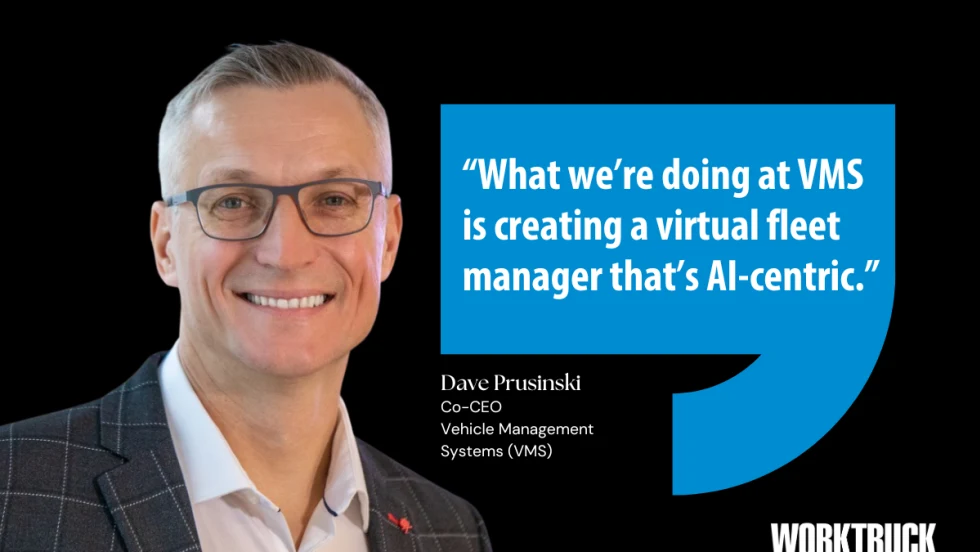
AI, Access, and Uptime: VMS’s Next Chapter with David Prusinski
VMS’s new Co-CEO, David Prusinski, shares how an AI-first approach will give small fleets and repair shops the tools to compete like big players.
Read More →