




Highway Bill in Home Stretch
The highway bill passed by the House on Nov. 5 and the highway bill passed by the Senate in July are headed to a conference committee charged with working out any differences between the two measures.


Image: Penske

Image: Penske
The highway bill (STRR Act) passed by the House on Nov. 5 and the highway bill passed by the Senate (DRIVE Act) in July are now headed to a conference committee charged with working out any differences between the two measures.
The conference committee will hammer out a compromise bill that will go to the House and Senate for a final vote. At that point, it will not be open to further amendment so the conference process affords the last opportunity to modify any element of what appears will be, with President Obama’s signature, the first highway bill passed in ten years that funds projects beyond two years.
Congress has to complete conferencing and pass a final long-term bill or slap on yet another patch by Nov. 20, as that's when the current short-term funding extension expires. Fortunately, it appears that with the legislation at last in the home stretch, the pace is quickening to get it done.
For one thing, Speaker of the House Paul Ryan (R-WI) is being credited with quickly shepherding through the STRAA Act and that accomplishment puts the onus on the conference committee to keep the ball rolling.
Another positive, per a Politico blog post. is that “staffers in both chambers have already been pre-conferencing for the last few weeks, trying to reach agreement on as many of the policy provisions as possible before heading into formal negotiations.” Politico also reported on Nov. 6 that Senate Environmental and Public Works Chairman Jim Inhofe (R-OK) said “We’re going to be conferencing, I think, starting this coming week.”
And House Transportation and Infrastructure Committee Chairman Bill Shuster (R-PA) said back in October that the House Ways and Means Committee (then chaired by Rep. Ryan) had already been “working diligently” behind the scenes to come up with six years of funding. Indeed, funding is the chief difference to be ironed out between the two bills. The House and Senate bills employ different funding mechanisms. And while both bills lay out six years of policy dictates, both bills are fully funded for only three years.
There is also at least one change, based on an amendment that did not make it into the House bill, that the conference committee will be lobbied to adopt.
Rep. Jimmy Duncan (R-TN) pulled an amendment he had crafted to fix language regarded as detrimental to smaller carriers before the House passed its highway bill. But the lawmaker told HDT that he will “continue to work” to correct the wording during the conferencing process. “I will continue to work [in conference] to correct this language so that the small and independent truck companies that are the backbone of our economy will continue to thrive," Duncan stated.
Differences in the two bills over how to restrict the tolling of existing Interstate highways also remains an issue. The Alliance for Toll-Free Interstates (ATFI) applauds the U.S. House for passing a multi-year highway and transit bill, the “Surface Transportation Reauthorization and Reform Act of 2015” (STRR Act). We are pleased that the House took into account its constituents’ vocal opposition to tolling existing interstates and did not expand the number of states eligible to impose new tolls under the Interstate System Reconstruction & Rehabilitation Pilot Program (ISRRPP).
“The STRR Act differs from the Senate’s DRIVE Act passed in July in two important ways that help prevent the tolling of existing interstates: the House bill requires states to have enabling legislation before the tolling pilot can be implemented and does not allow the diversion of toll funds for purposes other than improvements to the tolled road,” the Alliance for Toll-Free Interstates said in a statement. “When the House and Senate come together to reconcile the differences between their transportation bills, ATFI urges the House to reject any tolling expansion components of the Senate’s DRIVE Act.”
ATFI also wants the conference committee to reconsider a provision in both bills that it said forces slots afforded by the Interstate System Reconstruction & Rehabilitation Pilot Program to be transferred to new states after a short period of inactivity. “The three states that hold these slots have provided 17 years’ worth of evidence that tolling existing interstates is not a viable transportation funding method,” the group said. “The ISRRPP is an outdated pilot program that should ultimately be repealed in its entirety.”
Originally posted on Automotive Fleet
More Operations
Family Ties Inside the Fleet Families Building Careers Across Generations
Three fleet families share what it really takes to work together, learn across generations, and keep business from following them home.
Read More →
Shades of Fleet Call for Voices: Fleet's Hidden Heroes
Fleet’s hidden heroes are often the ones keeping everything moving behind the scenes. September’s Shades of Fleet is looking for dispatchers, coordinators, parts specialists, and other support pros to share their stories.
Read More →
Truck Centers, Inc. Celebrates National Truck Driver Appreciation Week with $1,000 Fuel Card Giveaways
During National Truck Driver Appreciation Week, Truck Centers, Inc. is offering customers a chance to fuel up for free. Customers at all Truck Centers locations can enter to win one of four $1,000 fuel cards from Sept. 14 - 18.
Read More →
Fleet Guides, AI Time-Savers, Truck Tariffs & Fuel Strategy Lead the News
This week’s Truck Chat Cheat Sheet covers new fleet vehicle guides, practical AI use cases, U.S.-Canada truck production, mixed-energy strategy, and more.
Read More →
What Fleet Employers Are Missing When Hiring Veterans
What if some of the strongest candidates for fleet are already out there, but their experience is written in a language our industry does not always recognize?
Read More →
Automotive Fleet Opens 2026 Personal Use Survey for Commercial Fleet Managers
Less than two weeks left! Commercial and corporate fleet managers are invited to share how their organizations handle company vehicle personal-use policies, charges, and driver eligibility.
Read More →
What Resilient Fleets Do Differently When Conditions Change
Fleet resilience is about more than reacting to disruption. Lauren Fletcher talks with AP Fleet’s Alex Coveney about flexibility, planning, scaling, and what helps fleets adapt when business conditions shift.
Read More →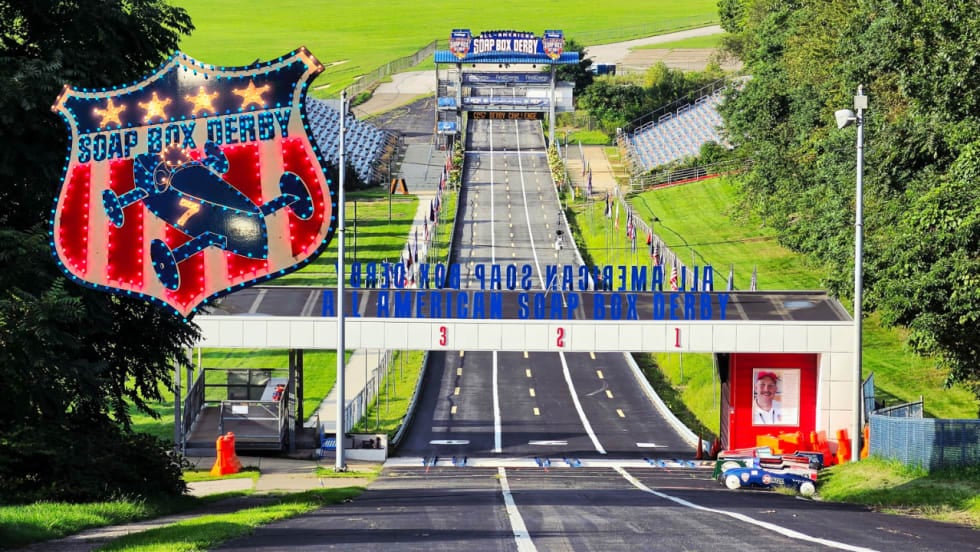
If We Want the Next Generation in Automotive, We Have to Give Them a Reason to Care
The automotive industry talks constantly about its workforce shortage. But before we can recruit the next generation, we may need to do a better job giving kids a reason to care about automotive in the first place.
Read More →
Ram ProMaster City Under $40K, Truck Tariffs, and AI Maintenance Lead the News
A sub-$40K commercial van, tariff questions, AI-powered maintenance, and a new EV production strategy headline this week’s Truck Chat Cheat Sheet.
Read More →
Bob Adamsky Shares the Fleet Lessons You Usually Learn the Hard Way
After more than 30 years in fleet, Arrow International’s Bob Adamsky has learned that the job is about far more than vehicles. He shares the lessons he wishes every fleet manager could learn a little earlier.
Read More →