




GMC Pickups 101: What’s in a Name?
DETROIT – When three truck builders – Randolph, Reliance, and Rapid – merged to become GMC in 1912, the brand’s range of gasoline- and electric-powered trucks used model numbers between 1 and 12, each denoting payload in thousands of pounds or how much weight could be loaded on the rear.
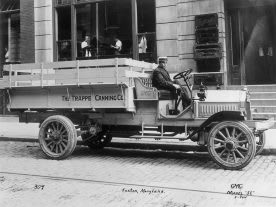
GMC pickup trucks were classified by payload ratings right in the brand’s earliest years. This 1913 2-ton model was used for deliveries by the Trappe Canning Company in Easton, Md.
DETROIT – When three truck builders – Randolph, Reliance and Rapid – merged to become GMC in 1912, the brand’s range of gasoline- and electric-powered trucks used model numbers between 1 and 12, each denoting payload in thousands of pounds, or how much weight could be loaded on the rear.
Today, the labels “½-ton”, “¾-ton” and “1-ton” are still used industry wide for fullsize pickup truck classes despite their having little connection to the trucks’ capabilities. For 2013, a GMC Sierra 1500 “½-ton” has a payload capacity that ranges from 1,550-1,940 pounds – considerably more than the 1,000 pounds once implied. A “1-ton” Sierra 3500HD can haul up to 7,215 pounds; almost four times the 2,000 pounds its moniker suggests.
“The payload-based naming convention for pickups existed right from the beginning,” said General Motors Heritage Center Manager Greg Wallace. “The ½-ton, ¾-ton, and 1-ton models became most popular with retail customers over a few decades, not just for GMC but all manufacturers. While payload capacities have grown since, those three names stuck.”
As with payload classifications, GMC helped pioneer other naming conventions for pickups. In 1967, GMC was the first company to use 1500, 2500 and 3500 to designate its three truck models, numbers that were based off the first segment of vehicle identification numbers, or VINs, and denoted hauling capability. Those numbers remain an integral part of the GMC naming strategy and every current fullsize truck sold by an American automaker uses numbers starting with 15, 25 and 35 to denote the three classifications.
The Sierra name became standard for all GMC fullsize pickups in 1989 after being used for various upscale trim packages through the ‘70s and ‘80s. The 2013 Sierra 1500 represents the core of GMC’s truck business, while the purpose-built Sierra 2500HD and 3500HD models are some of the most-capable pickups ever produced, with class-leading maximum payload.
More Operations
A buyer's guide to fleet management software in 2027
Buying fleet management software in 2027 means looking beyond features and price. As fleet operations, technology and expectations evolve, this guide explores what today’s fleet professionals should consider when choosing a system that can deliver value now and adapt to what comes next.
Read More →
How to Build a Lasting Fleet Career by Staying Curious and Connected
Tina Kourakos never planned on a career in fleet. More than 30 years later, she says curiosity, strong relationships, and a willingness to keep learning helped turn an unexpected assignment into a career spanning fleet management and OEM leadership.
Read More →
Think You Know Trucks? Take Our 19-Question Fleet Trivia Challenge
From chicken lights to diesel engines and trucking history, test your knowledge with 19 questions from the 2026 Work Truck Exchange and Heavy Duty Trucking Exchange.
Read More →From Our Partners
Basic Tracking vs Next Generation Fleet Technology
Sponsored by AT&T Business

5 Facts Every Fleet Manager Should Know About Embedded Telematics
Sponsored by Stellantis/Mobilisights
How AI Video Telematics Boosts Driver Safety and Helps to Avoid Unnecessary Costs
Sponsored by Verizon Connect

Charting the 8 Bottom-Line Benefits of Workforce Optimization
Sponsored by Verizon Connect

Where’s My Truck: Inside the Fleet Logistics Work Nobody Sees
Shades of Fleet video thumbnail featuring Lauren Fletcher beside the text “The People Behind the Process, Keeping Fleets Moving,” with fleet vehicles and logistics imagery in the background.
Read More →
Work Truck Seeks Fleet and Industry Insights on 2026 Trends and 2027 Forecasts
Work Truck is seeking insights from fleet leaders and industry partners on the trends that shaped 2026 and what commercial fleets should prepare for in 2027. Participate today!
Read More →
It's 10 p.m... Do You Know Who Has Access to Your Fleet?
Preventing cargo theft requires investment in technology, operational processes, and employee training. In an industry with tight margins, it can be difficult to justify investments whose value is measured by incidents that might never occur.
Read More →
GeoFencing Adds to Your Truck Security Arsenal
Geofencing is a familiar fleet tool today, but its early adoption marked a major shift in vehicle tracking, route monitoring, and the debate over employee privacy.
Read More →
Truckers’ Strike Rumors, New GM Engines, and Hidden Idling Costs Lead This Week’s News
Truckers’ strike rumors, GM’s new 2027 engines, hidden idling costs, racing lessons, IRP rules, and more headline this week’s Truck Chat Weekly Cheat Sheet.
Read More →
Shades of Fleet Wants to Hear From You About Building a Culture of Care
Fleet leaders, we want to hear from you. Share how empathy, trust, and creating space for people can strengthen your team, improve performance, and support retention.
Read More →
What Racing Can Teach Work Truck Fleets About the Work Nobody Sees
Race car driver and mechanical engineer Isaac Johnson shares practical lessons on preparation, relationships, setbacks, and building teams that perform when it counts.
Read More →