





Related: Genie Introduces Material Carrier Attachment for Lifts
Genie Produces Protective Gear for Hospital
To help address the need for personal protection equipment in their community, team members from Genie, a Terex brand, headquartered in Redmond, Wash., have been working on a concept that will allow them to produce medical equipment for a local hospital.
April 16, 2020
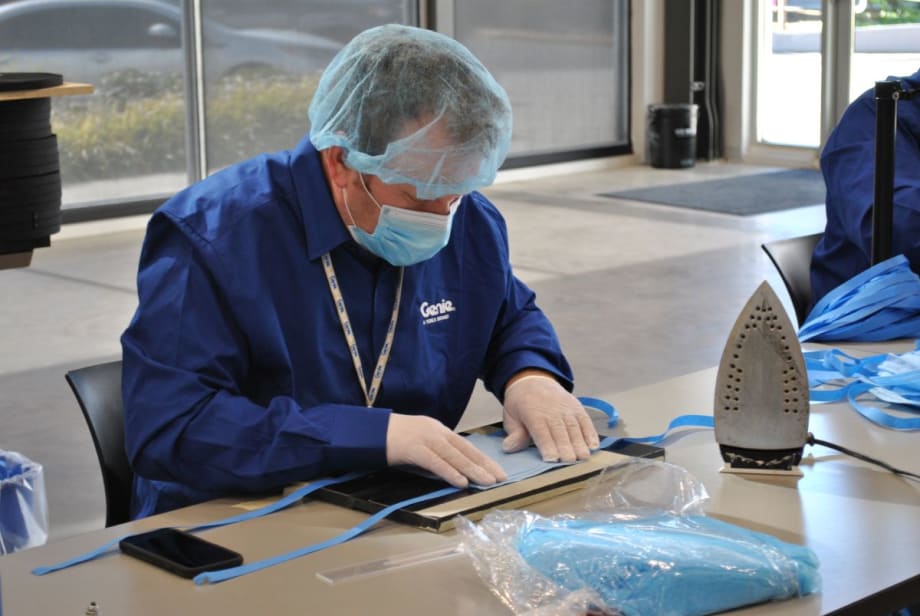
The Genie team has found other ways to help. In addition to the face shields, the Genie team developed a process for manufacturing face coverings using material provided by the hospital and a heat-sealing process to create seams and pleats.
Photo: Genie
3 min to read
As communities, states, and countries around the globe continue to address the health crisis created by COVID-19, personal protection equipment (PPE) for medical personnel and first responders remains in high demand.
To help address this need in their community, team members from Genie, a Terex brand, headquartered in Redmond, Wash., have been working on a concept that will allow them to produce medical equipment for a local hospital.
The effort began with a face shield design developed by Jim Donaldson, Genie Engineering Design Manager, Terex AWP.
“After watching a video about the types of medical equipment our hospitals needed, I thought we would be able to make the face shields that go over the N95 masks. I went to the store and bought a sponge, bungee cord and a poster that came packaged in a plastic tube. I cut up the tube to make the shield, and then I attached the sponges and bungee cord,” Donaldson explained.
Donaldson shared his idea with Matt Fearon Genie President, Terex AWP, who agreed it was a concept worth exploring. Working with team members from project management, engineering and sourcing, the initial design was refined, and long-time supplier, Allegis Corporation, stepped in to source the materials necessary, even developing a custom tool to stamp out the shield shape.
“Our supplier really helped with moving this project forward — and moving it forward so quickly,” Donaldson said.
With the design updated, Fearon, Donaldson and a small team of engineers and project managers then met with representatives from Overlake Medical Center, located in Bellevue, Wash., to gain a better understanding of the hospital’s needs, feedback on the face shield design, as well as to determine if there were any other ways the Genie team could help.
The material the team has on hand should be enough to produce an initial 4,000 to 5,000 face shields for Overlake Medical Center. Whether the Genie team will produce more than the initial donation of face shields will depend on availability of the material, as well as the need.
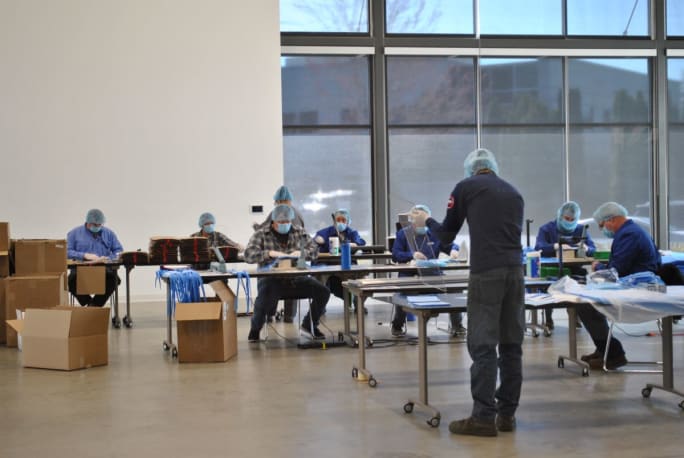
Team members from Genie have been working on a concept that will soon allow them to produce medical equipment for a local hospital in the Seattle area.
Photo: Genie
The team has found other ways to help, too. In addition to the face shields, the Genie team developed a process for manufacturing face coverings using material provided by the hospital and a heat-sealing process to create seams and pleats.
“Finding the material to create the bands that go over the ears was actually a real challenge due to the high demand,” explains Roger Bowie, Terex Business Systems (TBS) Manager. “But the team thought through that problem until they had a solution, identifying a way to use material that was readily available to make fabric strips that could be used for ties.”
Additionally, Genie engineers have used the company’s 3D printing capabilities to make some custom parts, which allowed critical hospital PPE to be put back into service quickly.
“Our Genie team was anxious to help, the Overlake team pointed us in the direction of the highest need and together, we made great things happen,” said Fearon. “I am proud of, but not surprised by, the initiative and innovation of our team members. They heard about a critical need, and they didn’t hesitate to step up to the challenge — they focused on finding solutions, and they acted quickly because they knew the need was urgent. Our team in China jumped in by air shipping 1,000 N95 masks at a time when there was a severe shortage of masks in the U.S. These are unprecedented times and overcoming the challenges we face locally, and globally, will require everyone to do what they can to help. I am excited that we have found such meaningful ways to help our local community and could not be prouder to lead this team in good times and in challenging times.”
More Utility Fleet
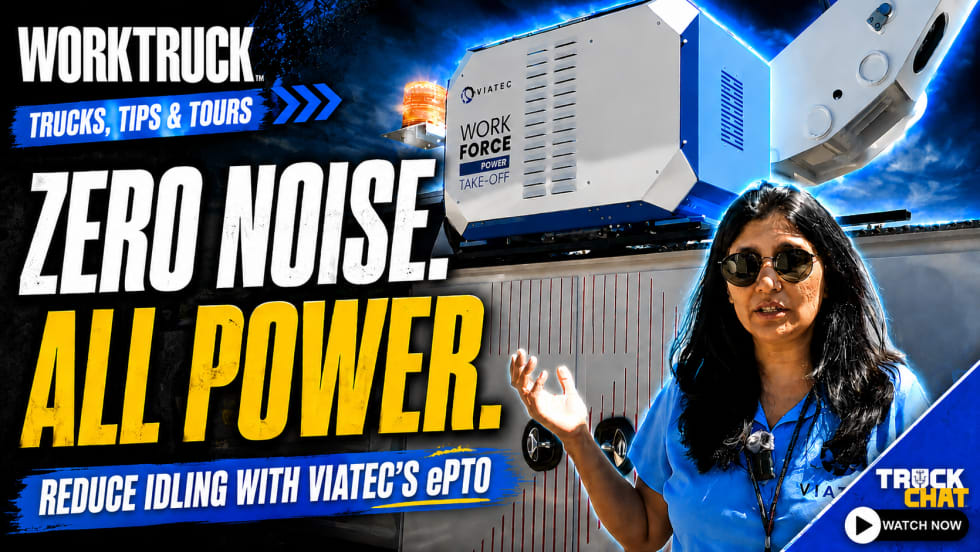
Reduce Noise & Idling with Viatec’s ePTO
Viatec's Workforce ePTO lets utility trucks power booms, outriggers, and auxiliary equipment using battery power instead of idling the engine. Learn how this technology helps reduce fuel use, noise, engine wear, and emissions while improving operator comfort.
Read More →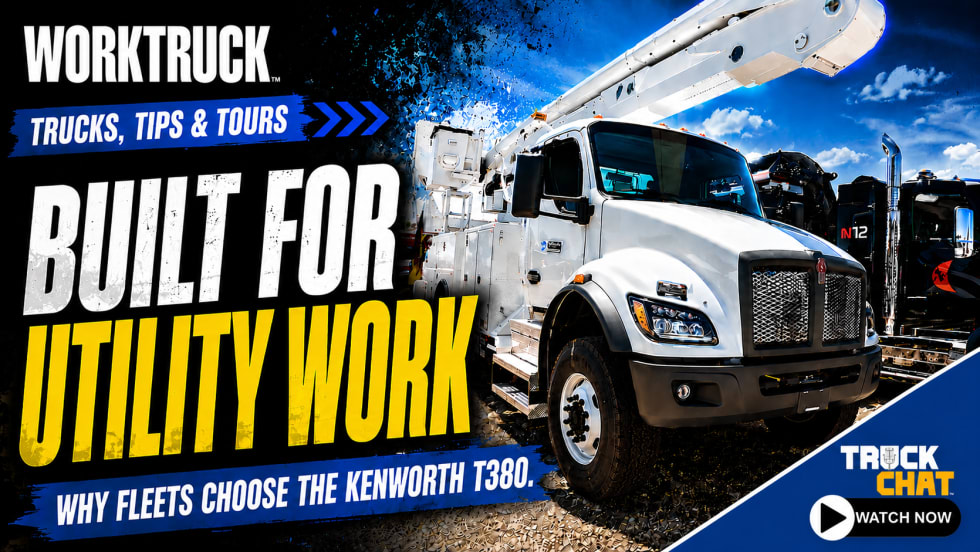
Why Utility Fleets Choose the Kenworth T380
The Kenworth T380 is engineered for utility fleets with custom chassis layouts, optimized frame rails, 4x4 capability, and improved driver visibility. See how its design helps maximize upfit flexibility and field performance.
Read More →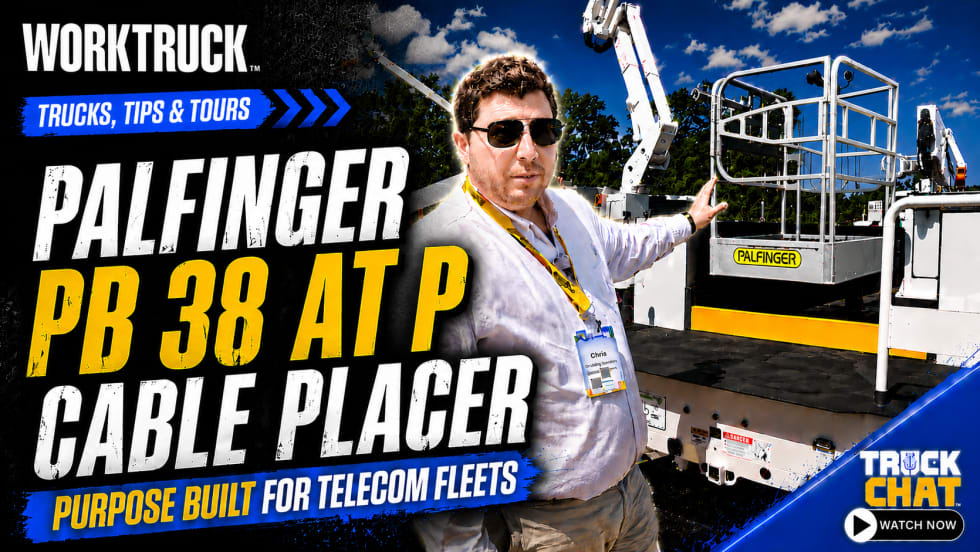
PALFINGER PB 38 AT P: Purpose-Built for Telecom Fleets
Purpose-built for telecommunications crews, the PALFINGER PB 38 ATP combines a 43-foot working height, flexible basket stowage, integrated cameras, and operator communication systems to improve productivity and safety during fiber and overhead cable installation.
Read More →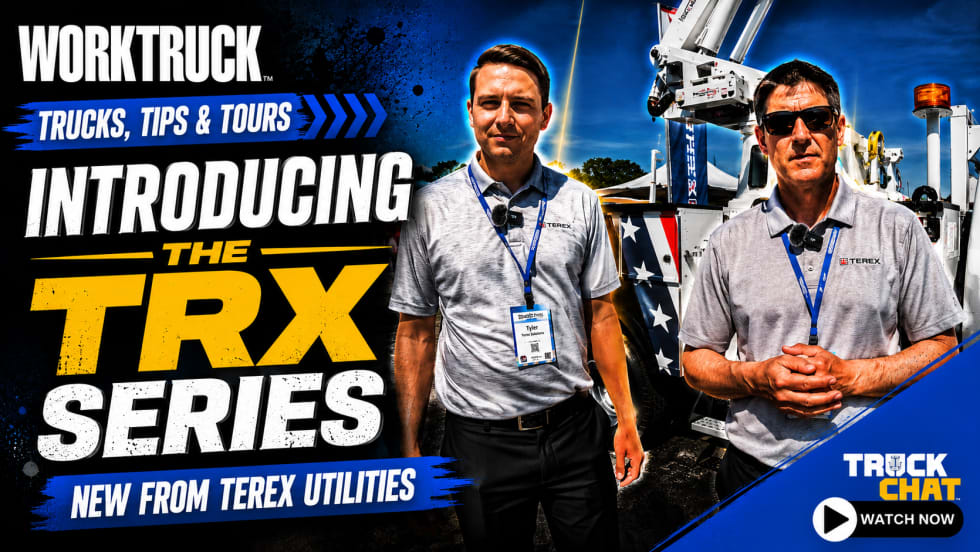
Inside Terex Utilities' Latest Work Truck Innovations
Terex Utilities is advancing utility fleet operations with its new TRX aerial platforms, Flex Pro controls, and AI-powered 3rd Eye safety technology. See how these innovations are helping fleets work safer, smarter, and more productively.
Read More →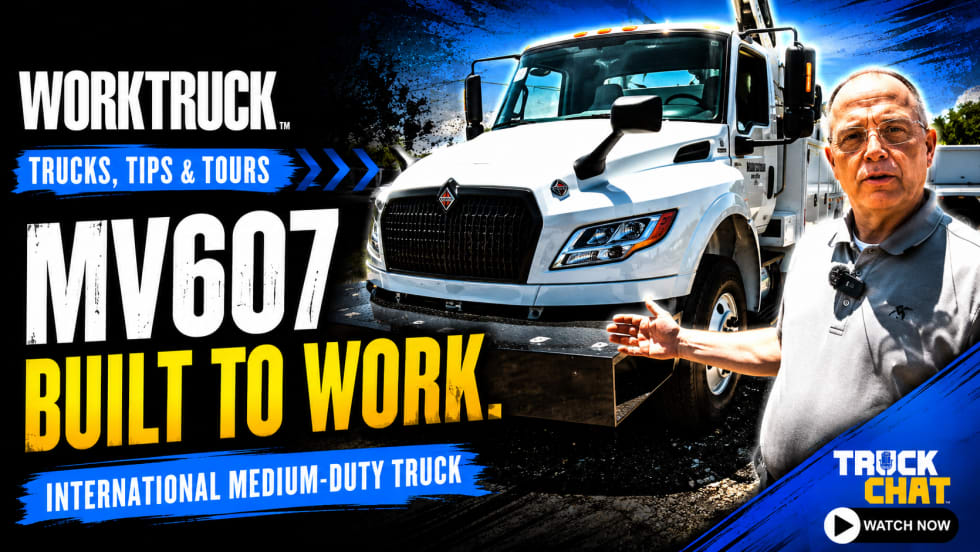
Walkaround of International MV607 Digger Derrick
The International MV607 combines advanced safety technologies, excellent visibility, vocational flexibility, and seamless body integration to create a powerful platform for utility fleet operations. Take a closer look at this Altec digger derrick configuration from EUFMC.
Read More →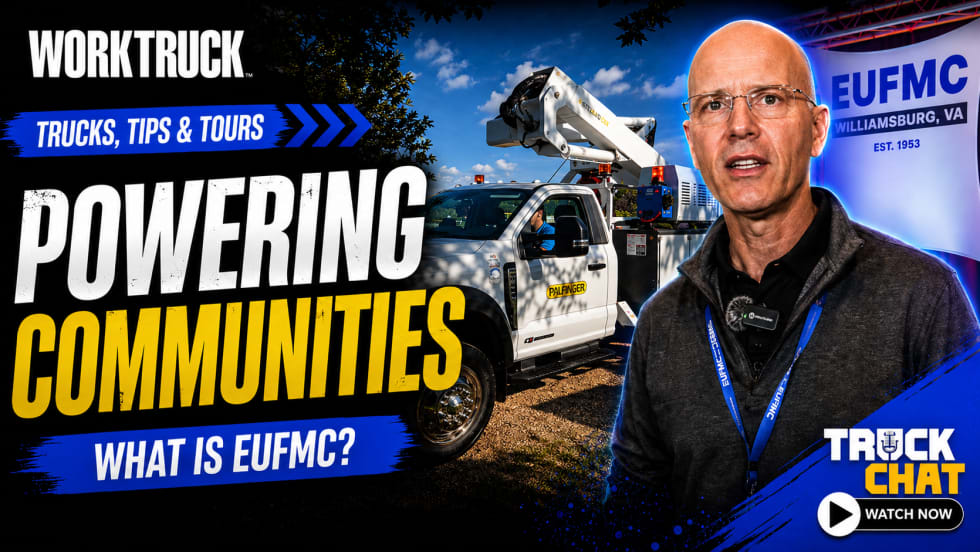
Inside the Electric Utility Fleet Managers Conference
What is EUFMC? For more than seven decades, the Electric Utility Fleet Managers Conference has served as a hub for collaboration, education, and innovation within the utility fleet industry. In this video, Work Truck talks to EUFMC President Greg Loew to learn more.
Read More →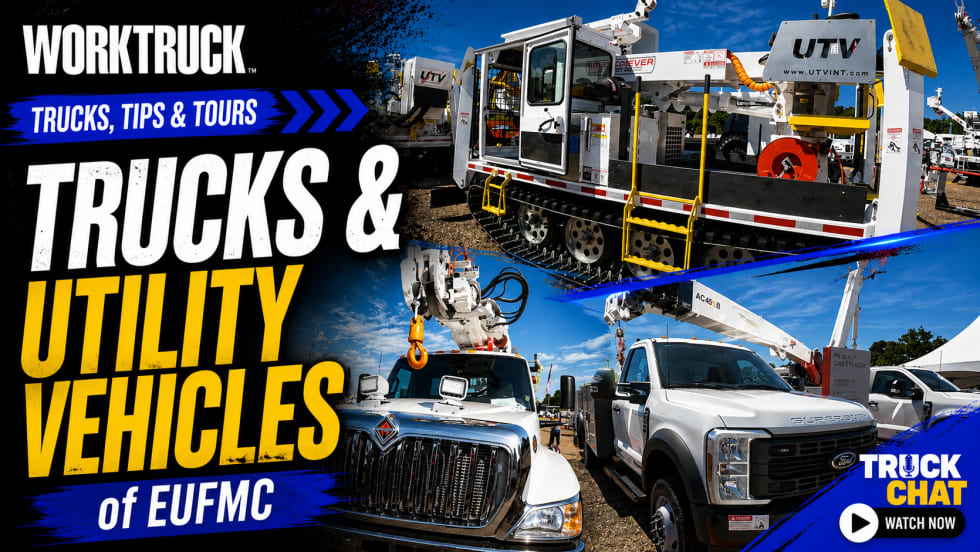
Inside the EUFMC Equipment Expo & Drive-Through
Follow Work Truck as we check out the trucks and other vehicles that were showcased at the Electric Utility Fleet Managers Conference in Williamsburg, Virginia. Whether looking for something on tires or treads, it was there for fleet managers to see.
Read More →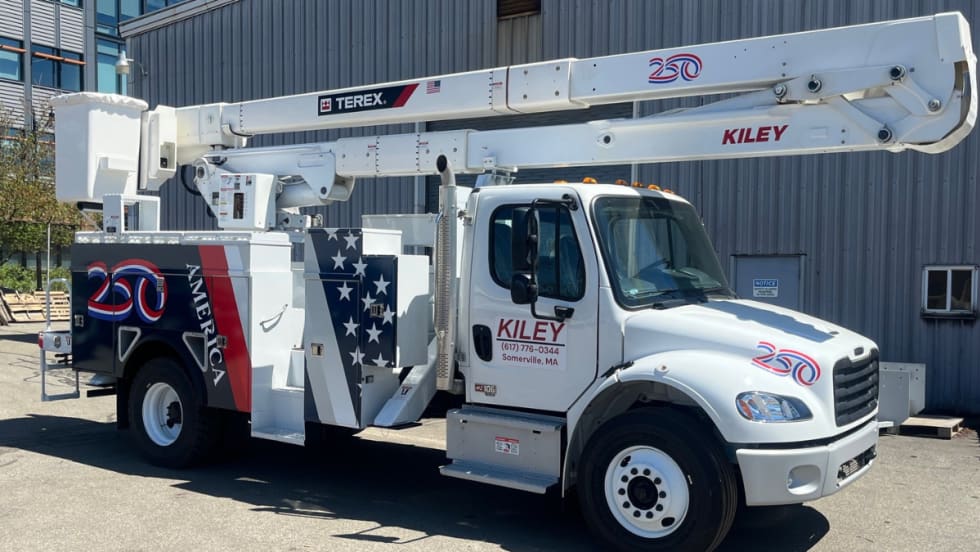
Terex Utilities & Kiley Unveil Custom America 250 Bucket Trucks at EUFMC 2026
Terex Utilities showcased a patriotic spirit in its booth this week during the Electric Utility Fleet Managers Conference in Williamsburg, Virginia, by debuting two custom-wrapped bucket trucks celebrating America’s upcoming 250th anniversary.
Read More →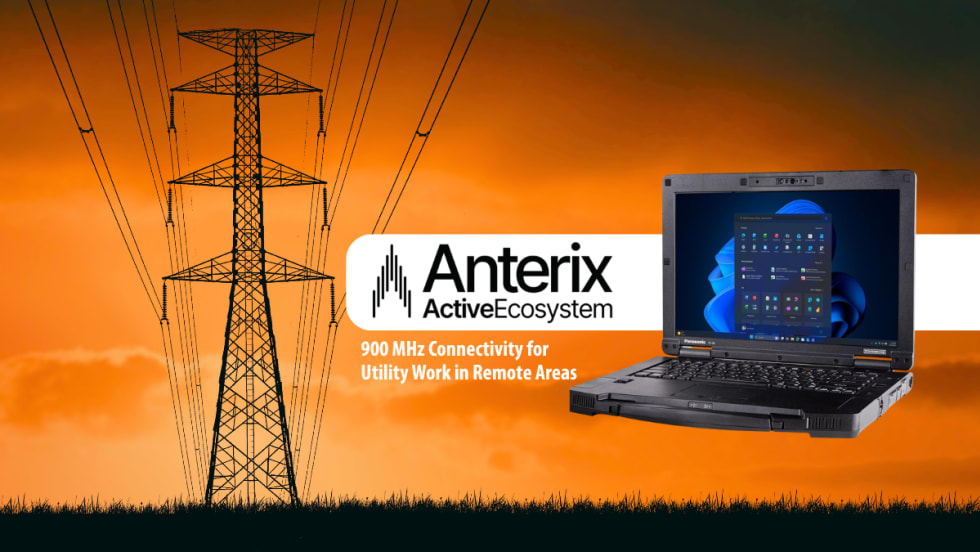
Panasonic Connect & Anterix Strengthen Connectivity Options for Utilities and Field Workers
The Panasonic Connect Toughbook 56 is the first Toughbook to earn the AnterixActive badge, which means it can connect to and operate on Anterix’s 900 MHz network even in the most remote locations.
Read More →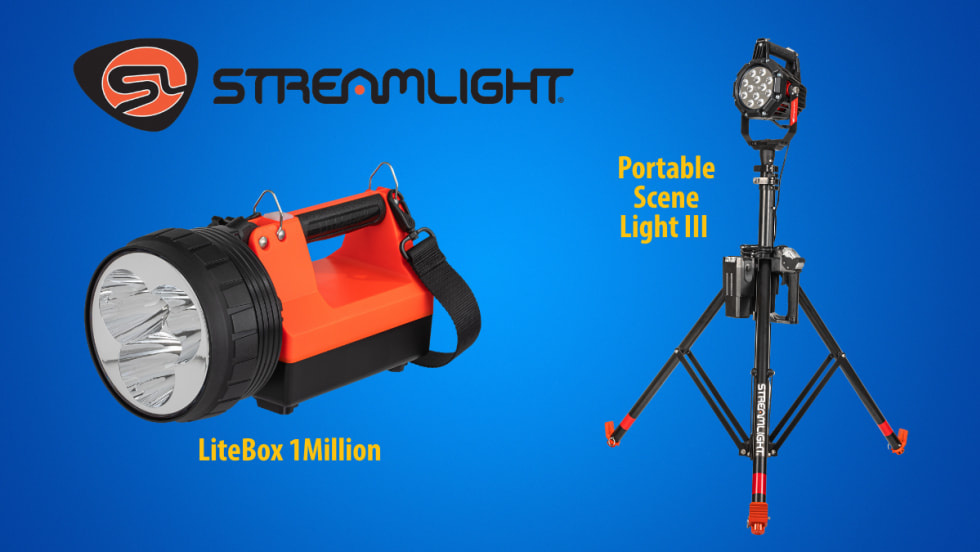
Streamlight Launches Portable Scene Light III & LiteBox 1Million
Streamlight has launched its Portable Scene Light III (PSL III), which delivers up to 10,000 lumens, and the LiteBox 1Million, a long-range search light that delivers one million candela.
Read More →