




Ford’s Atlas Concept Pickup Truck Shows Future Direction of Automaker’s Products
The Atlas Concept features a mix of technologies designed to enhance fuel economy and the vehicle’s overall functionality.
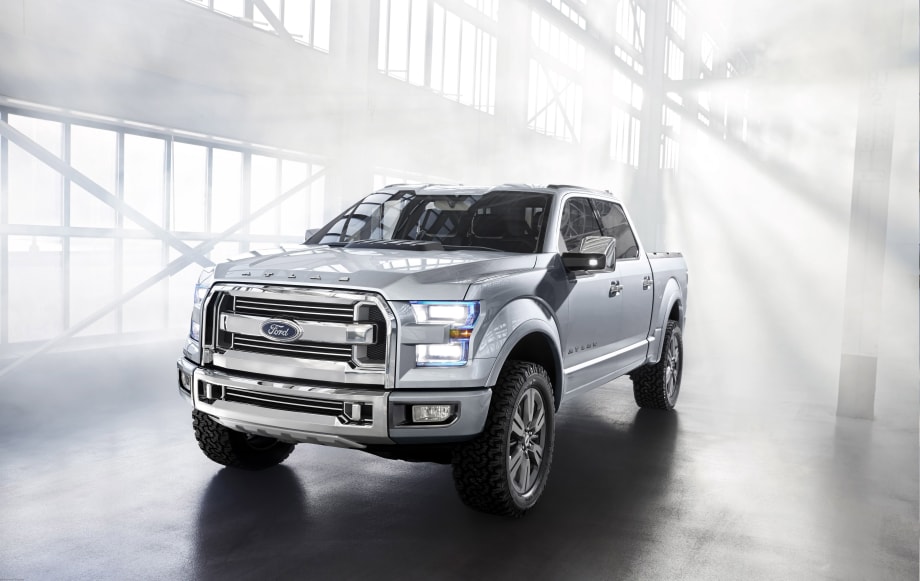
The Ford Atlas Concept is designed to show new technologies the automaker is developing for use in its pickup truck products.
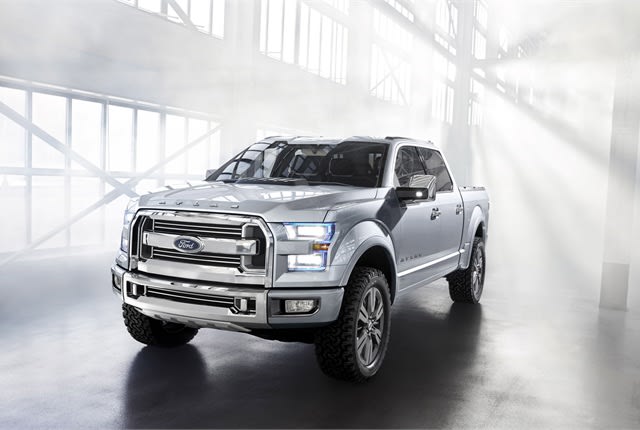
The Ford Atlas Concept is designed to show new technologies the automaker is developing for use in its pickup truck products.
Ford unveiled a new pickup truck concept, the Atlas, which the automaker says showcases design ideas and new technologies that “will define” Ford’s future pickups.
You can view a photo gallery of the Atlas Concept truck here.
“The Ford Atlas Concept previews the innovations that will transform what people expect from their pickup,” said Raj Nair, Ford group vice president, Global Product Development. “With 36 years as America’s best-selling pickup, we are absolutely committed to setting the agenda in the truck market.”
The Atlas Concept features a mix of technologies designed to enhance fuel economy and the vehicle’s overall functionality. Starting with fuel economy, the Atlas Concept features a next-generation EcoBoost powertrain that integrates auto-start-stop functionality designed to work in a pickup truck. The system in the Atlas Concept shuts off the engine when the truck is stopped on the road but can detect when the vehicle is towing so it can turn the feature off.
The next-generation EcoBoost engine uses gasoline direct injection and turbocharging to improve fuel efficiency by up to 20% and reduce CO2 emissions by up to 15% when compared with larger displacement engines, Ford said.
Beyond the next-gen EcoBoost engine, the Atlas features a number of other technologies designed to enhance fuel efficiency. They include Active Grille Shutters, which open and close depending on the vehicle’s speed in order to improve aerodynamics but provide cooling when needed; Active Wheel Shutters, which close at highway speeds to further improve aerodynamics; a Drop-Down Front Air Dam, which is a spoiler that lowers at highway speeds to improve airflow under the vehicle but raises at low speeds to provide extra ground clearance; and Power Running Boards, which auto deploy to help passengers get into the vehicle but retract when the vehicle is in motion to further improve aerodynamics and ground clearance. Ford said that when combined, these features can save more than 2 mpg on the highway without affecting towing or hauling capabilities.
The truck’s interior features lightweight seating in leather that provide added legroom for rear-seat passengers and storage for small items.
The Atlas Concept shows other features designed to improve a pickup’s functionality as a work truck. Ford added multiple tie-down points to the cargo box and load floor, and installed 110-volt electrical outlets in the cargo box for charging power tools. The truck also features an integrated roof carrying system and hidden extendable (and removable) ramps that stow below the cargo box.
For better visibility when working at night, the truck’s cargo box has integrated LED lights that don’t use as much energy as standard headlights or plug-in lights.
In the back of the truck, the tailgate can act as a cargo cradle by lifting and holding extra-long items above the truck, which frees up space in the bed. The truck also comes with what Ford calls a “Dynamic Hitch Assist,” which helps line up the truck’s hitch with a trailer coupling. For improved lighting, the truck comes with LED headlamps and taillamps.
To improve backing safety, Ford has created a new feature called Backup Assist, which allows a driver to back a trailer automatically. The truck also features a new 360-degree camera, which gives a driver a bird’s eye view of the truck in order to help him or her position the vehicle.
Originally posted on Automotive Fleet
More Operations

Family Ties Inside the Fleet Families Building Careers Across Generations
Three fleet families share what it really takes to work together, learn across generations, and keep business from following them home.
Read More →
Shades of Fleet Call for Voices: Fleet's Hidden Heroes
Fleet’s hidden heroes are often the ones keeping everything moving behind the scenes. September’s Shades of Fleet is looking for dispatchers, coordinators, parts specialists, and other support pros to share their stories.
Read More →
Truck Centers, Inc. Celebrates National Truck Driver Appreciation Week with $1,000 Fuel Card Giveaways
During National Truck Driver Appreciation Week, Truck Centers, Inc. is offering customers a chance to fuel up for free. Customers at all Truck Centers locations can enter to win one of four $1,000 fuel cards from Sept. 14 - 18.
Read More →
Fleet Guides, AI Time-Savers, Truck Tariffs & Fuel Strategy Lead the News
This week’s Truck Chat Cheat Sheet covers new fleet vehicle guides, practical AI use cases, U.S.-Canada truck production, mixed-energy strategy, and more.
Read More →
What Fleet Employers Are Missing When Hiring Veterans
What if some of the strongest candidates for fleet are already out there, but their experience is written in a language our industry does not always recognize?
Read More →
Automotive Fleet Opens 2026 Personal Use Survey for Commercial Fleet Managers
Less than two weeks left! Commercial and corporate fleet managers are invited to share how their organizations handle company vehicle personal-use policies, charges, and driver eligibility.
Read More →
What Resilient Fleets Do Differently When Conditions Change
Fleet resilience is about more than reacting to disruption. Lauren Fletcher talks with AP Fleet’s Alex Coveney about flexibility, planning, scaling, and what helps fleets adapt when business conditions shift.
Read More →
If We Want the Next Generation in Automotive, We Have to Give Them a Reason to Care
The automotive industry talks constantly about its workforce shortage. But before we can recruit the next generation, we may need to do a better job giving kids a reason to care about automotive in the first place.
Read More →
Ram ProMaster City Under $40K, Truck Tariffs, and AI Maintenance Lead the News
A sub-$40K commercial van, tariff questions, AI-powered maintenance, and a new EV production strategy headline this week’s Truck Chat Cheat Sheet.
Read More →
Bob Adamsky Shares the Fleet Lessons You Usually Learn the Hard Way
After more than 30 years in fleet, Arrow International’s Bob Adamsky has learned that the job is about far more than vehicles. He shares the lessons he wishes every fleet manager could learn a little earlier.
Read More →