




Ford's New Traction Control System Among the Best Performers
Ford Motor Company offers an innovative traction control system on 2006 model vehicles that's among the best performing systems on the road.
Ford began rolling out its patented traction control system last year as an option on the 2006 F-150, Ford Fusion, Mercury Milan and as standard on the Lincoln Zephyr and 4x2 Lincoln Mark LT. It's yet another technology to help further the automaker's goal of safer driving. "The approach Ford has taken is unique in the industry in that we took the latest Control System Design Techniques and used them to provide a new system with excellent performance, reduced time to market and lower cost," said Craig Stephens, manager, P/T Controls, Ford Research and Advanced Engineering. "These things together allow the company to make this important technology available across more of our product range." The traction control system works by momentarily decreasing engine power to help regain traction at the tires. The system is particularly helpful while accelerating on a slippery surface. Using signals from the vehicle's anti-lock brakes, a computer algorithm -- embedded in the Powertrain Control Module -- detects if the drive wheels are slipping. Then, within milliseconds, the system adjusts the engine power to allow the tires to regain traction. Ford Senior Technical Leader Davor Hrovat, an internationally recognized authority on automotive controls, invented the algorithm (a short computer program) that controls the traction control system. Hrovat's research team, facilitated by technical expert Mike Fodor, further readied the algorithm for vehicle implementation. The system is unique in that it was developed to operate using the vehicle's engine computer processor, rather than a standalone module. The team's efforts paid off with a system that works very smoothly, providing a transparent operation for drivers, said Chuck Bannon, Brake Development Supervisor, who led the application team. "While this is not the first application of traction control technology in the industry, it does represent an evolution of the technology with a level of refinement you don't see in competitive systems," he said. "Our system has a level of control and smoothness that is outstanding -- you won't find any better out there." Similar sentiments were echoed by James R. Healey in a recent USA Today article on the Ford Fusion: "Traction control on the V-6 test car was just right -- perhaps unique in all the industry," Healey wrote. "It allowed tire spin when starting forcefully on slick roads and gradually eased the spinning without trying to stop it, allowing the car to keep moving forward as traction was gained. It should be unusually effective in winter and whenever some spinning helps forward progress." The traction control system is offered in addition to Ford's AdvanceTrac® and Roll Stability Control® systems, which are standard on the Ford Explorer, Ford Edge, Lincoln MKX, Lincoln Navigator and select models of the Ford Expedition and E-series vans. These systems expand on the capabilities of traction control systems by selectively applying the vehicle's brakes to stabilize the vehicle in certain driving situations, such as a skid.
More Small Fleet


Developing Budget-Friendly Driver Safety Programs
From driver training and safety meetings to one-on-one coaching and incentive programs, several small fleets share how they have developed a safety culture with their drivers using low- to no-cost resources.
Read More →
Boosting Last-Mile Fleet Uptime, Safety, and Value with AI Vehicle Inspections
AI-powered inspections are transforming last-mile fleets by replacing manual checks with highly accurate automated scans that detect defects in seconds. By giving fleet operations visibility into the daily condition of their vehicles, you can identify trends over the vehicle’s lifecycle that enable improved procurement decisions, route management, driver training and accountability.
Read More →

Five Ways Seat Belts Help Prevent Injuries
There are five ways seat belts protect occupants from injuries, according to the Tennessee Department of Safety and Homeland Security.
Read More →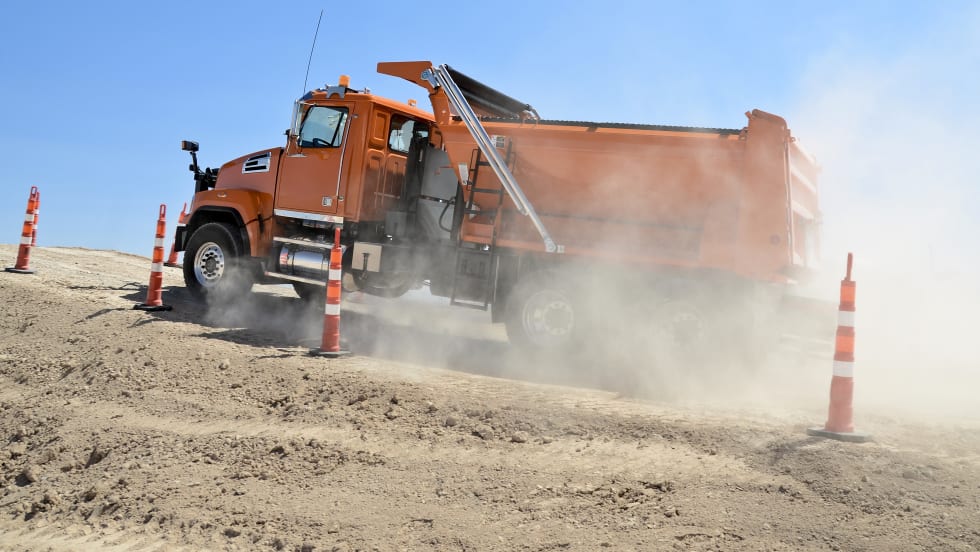
Basic Tracking vs Next Generation Fleet Technology
Fleet software is getting more sophisticated and effective than ever, tying big data models together to transform maintenance, safety, and the value of your existing tech stack. Fleet technology upgrades are undoubtedly an investment, but updated technology can offer a much higher return. Read how upgrading your fleet technology can increase the return on your investment.
Read More →
It’s here: The 2026 Fleet Technology Trends Report
What does AI mean for fleets? Get the answer — and learn other top tech trends.
Read More →
Small Fleets, Big Impact: How Independent Drivers Power Wreaths Across America
Check out how small fleets and independent drivers power Wreaths Across America each December and why their impact matters more than ever.
Read More →
VMS Survey Finds 65% of Small Fleet Managers Run Operations Alone
A new VMS survey shows small fleet managers are stretched thin, with most handling operations solo and eager to adopt digital tools for relief.
Read More →
Tips for Driving Safely on Halloween Night
This video features a reminder from the Connecticut Department of Transportation (DOT) and the Connecticut Police Chiefs Association, urging drivers to prioritize safety this Halloween.
Read More →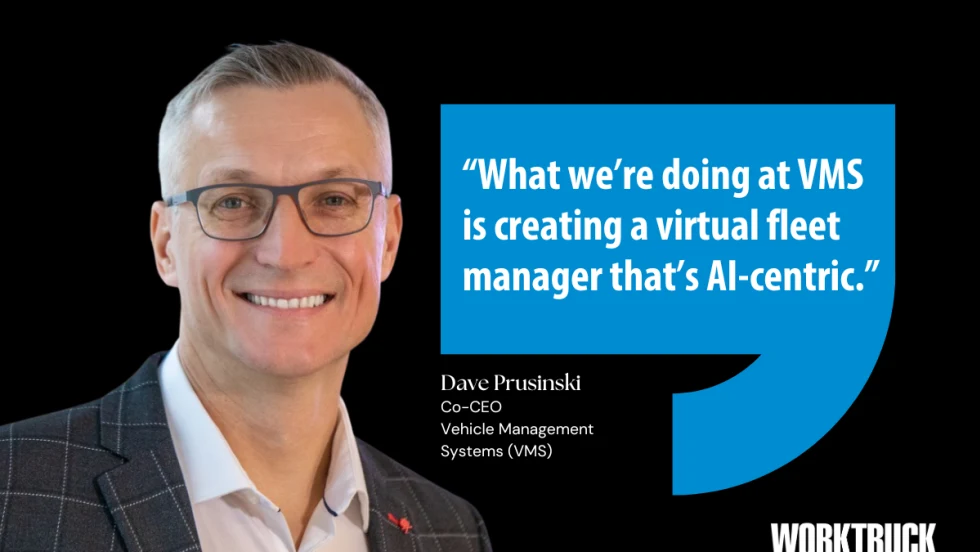
AI, Access, and Uptime: VMS’s Next Chapter with David Prusinski
VMS’s new Co-CEO, David Prusinski, shares how an AI-first approach will give small fleets and repair shops the tools to compete like big players.
Read More →