




Ford Wants to Discuss Raising Federal Fuel Economy Requirements: Reports
Ford says it is time to at least discuss raising federal fuel-economy requirements, which haven't changed since 1975. Janet Mullins Grissom, who heads Ford's Washington office, said the federal standards "might still be a stupid law" but "I think the issue is ripe for conversation," according to a Feb. 21 story in the Washington Post. Even talking about raising the standards -- called Corporate Average Fuel Economy, or CAFE -- would be a dramatic change for any major automaker. For years the carmakers have said the marketplace should determine gasoline mileage and that arbitrary government standards add cost and force automakers to sacrifice safety features to boost mileage. Ford Motor Company has adopted a more pro-environment stance under William Clay Ford Jr. Ford Jr., a great-grandson of Henry Ford, has made environmental concerns a top priority since becoming chairman of his company in 1999. At last March's annual shareholder meeting, the company distributed a 98-page book that admitted its high-profit business in SUVs doesn't always fit with a desire to be more environmentally responsible. Auto industry officials have a private meeting set for Feb. 22 in Washington to talk about the industry's position. DaimlerChrysler AG and General Motors Corporation representatives say they are participating in the discussions, according to a Feb. 22 Associated Press story by Nedra Pickler, but are not enthusiastic about inviting government regulation. "We still think it distorts the market," DaimlerChrysler spokesman Brian Wallace said. GM spokesman Bill Noack said the company is making strides without government regulation. He said more advanced vehicles that use electricity will be on the market soon. GM leases its EV1 electric car in California and Arizona. In the midst of the oil crisis of the 1970s, fuel economyu standards were set at 27.5 miles per gallon on new passenger cars and 20.7 mpg for light trucks, including pickups, minivans and SUVs. The automakers do not have to meet the standard for each vehicle but rather as an average for their entire fleet. The average fuel efficiency of passenger vehicles climbed in the 1970s and '80s. But when gas prices moderated in later years, mileage became less of an issue with consumers, who increasingly began favoring fuel-thirsty SUVs. Supporters of the fleet standards say they have saved the nation 3 million barrels of oil a day and have saved new car owners about $3,000 each at the gas pump over the life of their vehicles. Automakers feared the Clinton administration would raise the standards and successfully lobbied Congress to block federal regulators from even studying an increase beginning in 1995. But with dramatic increases in gas prices in the past two years, consumers again are looking for vehicles that go farther on a gallon of gas. And all sides recognize that support for higher standards is building in Congress. CAFE supporters made progress last year when Congress approved a bill calling for the National Academy of Sciences to study the standards and report its findings by July 1. Supporters of higher fuel economy standards say in addition to conserving fuel they limit air pollution by forcing automakers to develop cleaner technology. "It is really the largest single thing we can do relatively easily and quickly to stop global warming," said Sen. Dianne Feinstein, D-Calif. Representatives from Ford, GM and DaimlerChrysler appeared with Vice President Al Gore last March, pledging to begin mass production of vehicles with hybrid engines that significantly increase gas mileage within four years. And Ford announced last summer that it would increase the fuel economy of its SUV fleet by 25 percent by the 2005 model year. GM responded by pledging to keep the fuel economy of its light truck fleet better than Ford's.
More Small Fleet


Developing Budget-Friendly Driver Safety Programs
From driver training and safety meetings to one-on-one coaching and incentive programs, several small fleets share how they have developed a safety culture with their drivers using low- to no-cost resources.
Read More →
Boosting Last-Mile Fleet Uptime, Safety, and Value with AI Vehicle Inspections
AI-powered inspections are transforming last-mile fleets by replacing manual checks with highly accurate automated scans that detect defects in seconds. By giving fleet operations visibility into the daily condition of their vehicles, you can identify trends over the vehicle’s lifecycle that enable improved procurement decisions, route management, driver training and accountability.
Read More →
Five Ways Seat Belts Help Prevent Injuries
There are five ways seat belts protect occupants from injuries, according to the Tennessee Department of Safety and Homeland Security.
Read More →
It’s here: The 2026 Fleet Technology Trends Report
What does AI mean for fleets? Get the answer — and learn other top tech trends.
Read More →
Small Fleets, Big Impact: How Independent Drivers Power Wreaths Across America
Check out how small fleets and independent drivers power Wreaths Across America each December and why their impact matters more than ever.
Read More →
VMS Survey Finds 65% of Small Fleet Managers Run Operations Alone
A new VMS survey shows small fleet managers are stretched thin, with most handling operations solo and eager to adopt digital tools for relief.
Read More →
Tips for Driving Safely on Halloween Night
This video features a reminder from the Connecticut Department of Transportation (DOT) and the Connecticut Police Chiefs Association, urging drivers to prioritize safety this Halloween.
Read More →
AI, Access, and Uptime: VMS’s Next Chapter with David Prusinski
VMS’s new Co-CEO, David Prusinski, shares how an AI-first approach will give small fleets and repair shops the tools to compete like big players.
Read More →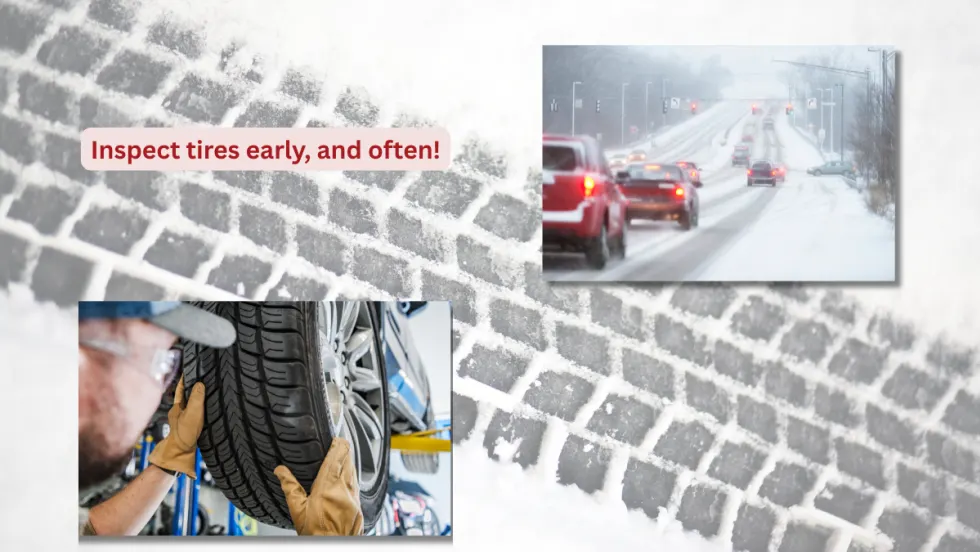
Fleet Managers Share Winter Prep Tips: It's Never Too Early!
Three fleets share best practices to prep vehicles for winter and prevent downtime when the cold sets in.
Read More →