




Ford Unveils 2008 Escape and Escape Hybrid
The 2008 Ford Escape made its debut last week at the Los Angeles Auto Show with a restyled exterior, an all-new and quieter interior package, and a host of standard safety equipment.
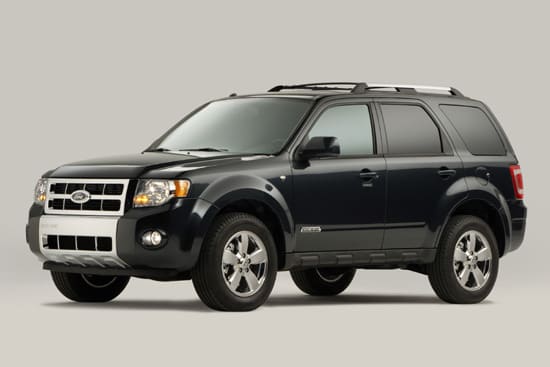
The 2008 Ford Escape made its debut last week at the Los Angeles Auto Show with a restyled exterior, an all-new and quieter interior package, and a host of standard safety equipment. Set to arrive at dealerships in January, Escape aims to keep Ford the sales leader in the small utility marketplace, which is expected to top 1.5 million units in 2006. "The Escape is about the freedom of the road and the trail," said Cisco Codina, group vice president, North America Marketing, Sales and Service. "It's about employing science and technology to make driving safer and greener. And it brings together nearly all of the Way Forward strategies we are following to make the Ford brand even stronger." Bolder, Tougher Exterior Design for '08 In one look, you can spot the influence of Ford trucks. The Escape's face is bolder. The new chrome grille is prominent. And the profile is stronger, thanks to a raised hood and beltline and 17-inch aluminum wheels. A Refined, Recycled Interior A new center console with a "top of dash" display, along with the first use of Ford's new Ice Blue interior lighting on the instrument cluster sets off an all-new interior for the 2008 Escape. The simple, efficient design puts much of the vehicle's information in one place at the top of the dashboard, making it easier to reference when driving. A combination of engineering and design has also helped the 2008 Escape deliver a 12 percent reduction in noise, vibration and harshness (NVH) levels inside the vehicle. The 2008 Escape is believed to be the first U.S. automotive application of seating surfaces made from 100 percent post-industrial materials, supplied by InterfaceFABRIC, Inc. "That means less waste in our landfills and an estimated savings of an equivalent 7 million kilowatt hours of electricity and 600,000 gallons of water each year," said Raghavachari. Hybrid Features Fuel-Efficient Powertrains The gas-powered 2008 Escape comes with two engine options. The standard 2.3-liter, 16-valve Duratec I-4 produces a more fuel efficient 153 horsepower and 152 lb.-ft. of torque, while the available 3.0-liter, 24-valve V-6 Duratec 30 engine delivers 200 horsepower and 193 lb.-ft. of torque. With a four-speed automatic, the V-6 powered Escape can tow up to 3,500 pounds. The Ford Escape Hybrid continues to be a "full" hybrid, meaning it can run on 100 percent electric power up to 25 mph, maximizing in-city fuel economy. Escape's hybrid engineers also made revisions to software in the vehicle's control system to improve transparency, or the transition between gasoline and electric operation. Perhaps most important to the 2008 Escape message is the inclusion of Ford's most advanced safety technology -- the Safety Canopy air curtain system and, on gas-powered models, Advance Trac with Roll Stability Control (RSC) -- as standard safety equipment.
More Small Fleet


Developing Budget-Friendly Driver Safety Programs
From driver training and safety meetings to one-on-one coaching and incentive programs, several small fleets share how they have developed a safety culture with their drivers using low- to no-cost resources.
Read More →
Boosting Last-Mile Fleet Uptime, Safety, and Value with AI Vehicle Inspections
AI-powered inspections are transforming last-mile fleets by replacing manual checks with highly accurate automated scans that detect defects in seconds. By giving fleet operations visibility into the daily condition of their vehicles, you can identify trends over the vehicle’s lifecycle that enable improved procurement decisions, route management, driver training and accountability.
Read More →
Five Ways Seat Belts Help Prevent Injuries
There are five ways seat belts protect occupants from injuries, according to the Tennessee Department of Safety and Homeland Security.
Read More →
It’s here: The 2026 Fleet Technology Trends Report
What does AI mean for fleets? Get the answer — and learn other top tech trends.
Read More →
Small Fleets, Big Impact: How Independent Drivers Power Wreaths Across America
Check out how small fleets and independent drivers power Wreaths Across America each December and why their impact matters more than ever.
Read More →
VMS Survey Finds 65% of Small Fleet Managers Run Operations Alone
A new VMS survey shows small fleet managers are stretched thin, with most handling operations solo and eager to adopt digital tools for relief.
Read More →
Tips for Driving Safely on Halloween Night
This video features a reminder from the Connecticut Department of Transportation (DOT) and the Connecticut Police Chiefs Association, urging drivers to prioritize safety this Halloween.
Read More →
AI, Access, and Uptime: VMS’s Next Chapter with David Prusinski
VMS’s new Co-CEO, David Prusinski, shares how an AI-first approach will give small fleets and repair shops the tools to compete like big players.
Read More →
Fleet Managers Share Winter Prep Tips: It's Never Too Early!
Three fleets share best practices to prep vehicles for winter and prevent downtime when the cold sets in.
Read More →