




Related: Hundreds of Chassis Sent to Houston as Replacements
Florida Braces for Hurricane Irma’s Impact
Hurricane Irma, already one of the most powerful hurricanes to ever develop in the Atlantic, will likely make landfall on the U.S. mainland by the end of the week. In preparation, state and federal agencies are already declaring an emergency on the ground.
by Staff
September 6, 2017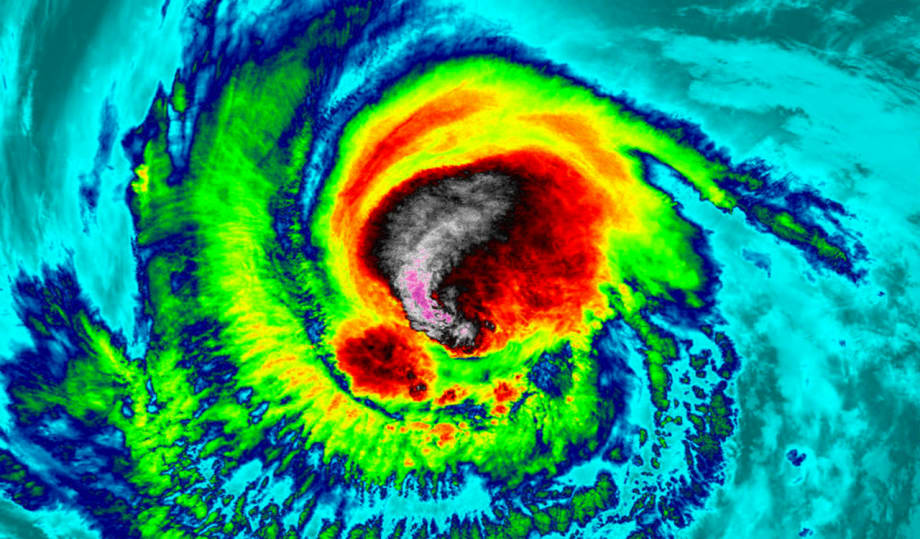
2 min to read
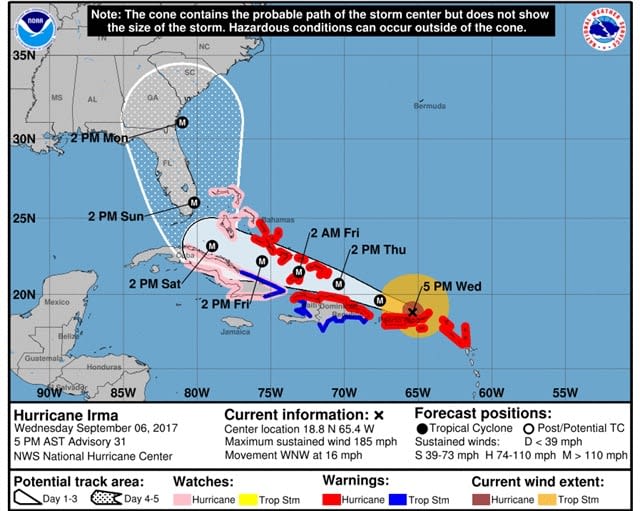
Hurricane Irma's likely path will take it along Florida's southern tip. Graphic: National Hurricane Center
Hurricane Irma, already one of the most powerful hurricanes to ever develop in the Atlantic, will likely make landfall on the U.S. mainland by the end of the week. In preparation, state and federal agencies are already declaring an emergency on the ground.
Similar to a declaration made for Hurricane Harvey, the Federal Motor Carrier Safety Administration has temporarily suspended several trucking regulations in the states in and around the expected path of Irma. Carriers and drivers in direct support of relief efforts related to Hurricane Irma are granted emergency relief from Parts 390 through 399 of Title 49 Code of Federal Regulations. By lifting regulations, FMCSA aims to ease the flow of emergency goods, fuel, and aid to and from the region.
The suspended regulations include those concerned with hours of service, inspection, repair, and maintenance, hazardous materials transportation, driving, parking, and other health and safety standards.
States covered by the Irma temporary suspension currently include Alabama, Florida, Georgia, Mississippi, North Carolina, South Carolina, Puerto Rico and the U.S. Virgin Islands. FMCSA has also set up page with all the latest transportation updates related to Hurricane Irma.
The same suspension of regulations was declared for 26 states during Hurricane Harvey and it is still in effect. FMCSA’s Hurricane Harvey page is available here.
On Sept. 5, President Trump declared an emergency in the state of Florida, Puerto Rico and in the U.S. Virgin Islands. Florida Governor Rick Scott also declared an emergency in the state and ordered the Florida National Guard to report for duty.
Irma is expected to make landfall on the southern tip of Florida. Mandatory evacuations began in Key West and more mandatory evacuations are likely as the storm nears. To help keep traffic moving, Gov. Scott suspended all tolls in the state for the duration of the storm’s impact on Florida.
Rated a Category 5 Hurricane, with sustained winds of over 185 miles per hour and considerable size, Irma is currently the strongest storm ever seen in the Atlantic basin. While it is still a few days away from hitting Florida, current models show a likely landfall of either late Saturday or early Sunday, hitting Southern Florida before possibly moving up the East Coast.
While Hurricane Harvey was known mostly for the incredible deluge of up to 50 inches of rain it brought down in some parts, Hurricane Irma is likely to be defined by its destructive winds and size, as it is only projected to produce 15 inches of rain at most.
Topics:FloridaHurricane IrmaNatural DisasterFMCSARegulationsDisaster ReliefHurricanesOperationsSmall Fleet
Originally posted on Automotive Fleet
More Operations

Family Ties Inside the Fleet Families Building Careers Across Generations
Three fleet families share what it really takes to work together, learn across generations, and keep business from following them home.
Read More →
Shades of Fleet Call for Voices: Fleet's Hidden Heroes
Fleet’s hidden heroes are often the ones keeping everything moving behind the scenes. September’s Shades of Fleet is looking for dispatchers, coordinators, parts specialists, and other support pros to share their stories.
Read More →
Truck Centers, Inc. Celebrates National Truck Driver Appreciation Week with $1,000 Fuel Card Giveaways
During National Truck Driver Appreciation Week, Truck Centers, Inc. is offering customers a chance to fuel up for free. Customers at all Truck Centers locations can enter to win one of four $1,000 fuel cards from Sept. 14 - 18.
Read More →
Fleet Guides, AI Time-Savers, Truck Tariffs & Fuel Strategy Lead the News
This week’s Truck Chat Cheat Sheet covers new fleet vehicle guides, practical AI use cases, U.S.-Canada truck production, mixed-energy strategy, and more.
Read More →
What Fleet Employers Are Missing When Hiring Veterans
What if some of the strongest candidates for fleet are already out there, but their experience is written in a language our industry does not always recognize?
Read More →
Automotive Fleet Opens 2026 Personal Use Survey for Commercial Fleet Managers
Less than two weeks left! Commercial and corporate fleet managers are invited to share how their organizations handle company vehicle personal-use policies, charges, and driver eligibility.
Read More →
What Resilient Fleets Do Differently When Conditions Change
Fleet resilience is about more than reacting to disruption. Lauren Fletcher talks with AP Fleet’s Alex Coveney about flexibility, planning, scaling, and what helps fleets adapt when business conditions shift.
Read More →
If We Want the Next Generation in Automotive, We Have to Give Them a Reason to Care
The automotive industry talks constantly about its workforce shortage. But before we can recruit the next generation, we may need to do a better job giving kids a reason to care about automotive in the first place.
Read More →
Ram ProMaster City Under $40K, Truck Tariffs, and AI Maintenance Lead the News
A sub-$40K commercial van, tariff questions, AI-powered maintenance, and a new EV production strategy headline this week’s Truck Chat Cheat Sheet.
Read More →
Bob Adamsky Shares the Fleet Lessons You Usually Learn the Hard Way
After more than 30 years in fleet, Arrow International’s Bob Adamsky has learned that the job is about far more than vehicles. He shares the lessons he wishes every fleet manager could learn a little earlier.
Read More →