




Fleet Helps Drive PG&E Corporate Sustainability
PG&E recently released it 2014 Corporate Responsibility and Sustainability Report, highlighting its progress and commitment to sustainability, including a breakdown of its fleet operations.
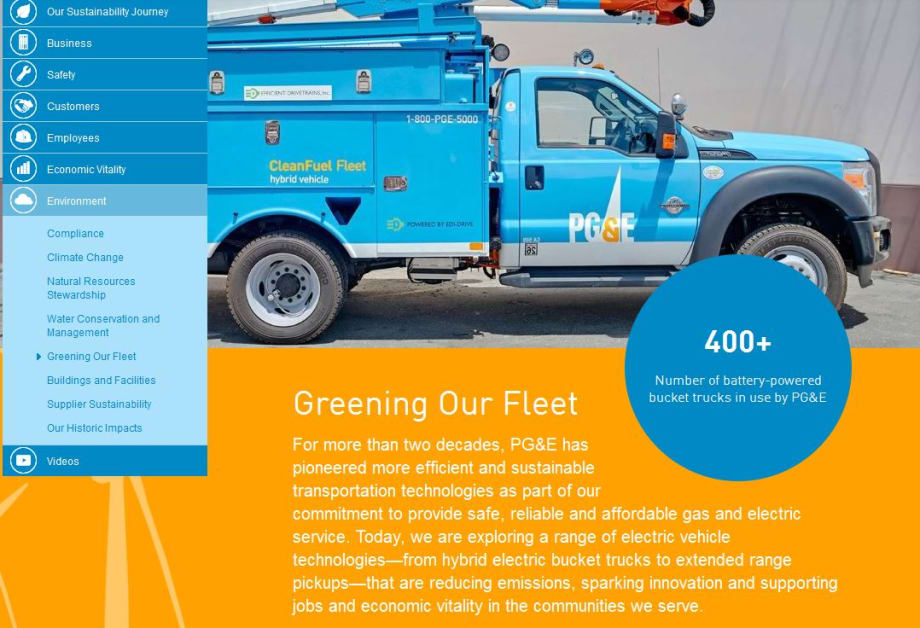
A screenshot from PG&E's corporate sustainbility report and website.
PG&E released it 2014 Corporate Responsibility and Sustainability Report Sept. 29, highlighting its progress and commitment to sustainability to life.
The report showcases the work PG&E employees are doing every day in local communities throughout Northern and Central California. It covers such areas as public and workforce safety, gas and electric operations, clean energy, diversity and inclusion, customer energy programs, financial results, and workforce development.
On the fleet operations side, PG&E has made significant progress to help drive overall corporate sustainability. The fleet has remained focused on meeting aggressive federal and state vehicle emissions and alternative-fuel requirements.
PG&E continues to implement a plan approved in 2009 by the California Air Resources Board (CARB) to reduce air emissions five years earlier than required by regulation. By 2017, all heavy-duty diesel vehicles in PG&E’s fleet will meet or exceed 2010 model-year tailpipe emission standards. The utility is working to make this transition in a way that fosters innovation and economic vitality, which includes partnering with vehicle manufacturers to design and test new types of vehicles and technologies.
At the end of 2013, the fleet of nearly 8,500 on-road vehicles included more than 1,150 electric-based, 730 CNG, and approximately 1,200 biodiesel-fueled vehicles.
Using alternative fuels and technologies, in particular electric transportation technologies, have helped drive fuel savings, lower lifetime maintenance costs, and emissions reductions for PG&E.
PG&E’s network of charging stations includes more than 275 charge points at about 60 locations across its service area. PG&E also maintains a network of 32 CNG facilities, 24 of which are open to customers.
2013 milestones also included the implementation of several innovative vehicles:
Electric hybrid work truck. A first for the utility industry, this truck features an all-electric range of 45 miles and fuel savings of up to 30 percent when operating in hybrid mode. Developed locally by Electric Vehicles International, the trucks will be enhanced to accommodate exportable energy that can be used to power the grid during outages. In 2013, PG&E began testing two of the trucks with plans to replace additional conventional-fuel Class 5 vehicles over time.
Battery-powered bucket trucks. PG&E and Altec Industries Inc. developed a plug-in battery-powered system called JEMS, the first of its kind. The battery operates the auxiliary systems of the trucks—lights, hydraulic lifts, heating, air conditioning and tools—while at the job site, avoiding the need to idle the vehicle’s engine. In 2013, PG&E increased its fleet of JEMS-equipped trouble trucks to more than 400, and installed the technology in nearly 75 material handler trucks. PG&E expects to have 700 of these bucket trucks in its fleet by 2017.
Electric hybrid material handler.This first-of-its-kind truck pairs a diesel engine with an electric motor and batteries for expected fuel savings of up to 25 percent. Equipped with a 55-foot double bucket, the truck was developed with Allison Transmission LLC and Peterbilt Motors Co. In 2013, PG&E deployed one of the trucks with plans to add more.
Extended-range electric pickup truck.This truck, developed in partnership with VIA Motors, has a 40-mile electric range and offers 15 kilowatts of exportable power that allows work crews to run power tools and lights from the truck. In 2013, PG&E continued testing the trucks and working with VIA on other models, such as vans and SUVs.
In addition to its 2013 innovations, PG&E recently unveiled two new utility trucks – a Class 5 utility work truck and Class 5 plug-in hybrid electric bucket truck – at an event held Sept. 17 at EDI’s manufacturing facility. Developed by EDI in partnership with PG&E, the utility trucks were designed, built and tested at EDI’s manufacturing plant in Dixon, Calif. Built upon a Ford F-550 platform, the utility work truck features 30 miles of all-electric range and up to 120kW of exportable power. Leveraging the on-board generator, the vehicle has the potential to supply power to the grid to help shorten or eliminate customer outages.
The report follows the recent announcement of PG&E’s inclusion on the Dow Jones Sustainability North America Index for the seventh consecutive year, recognizing PG&E’s ongoing commitment across the economic, environmental and social dimensions of sustainability.
Related stories:
More Utility Fleet
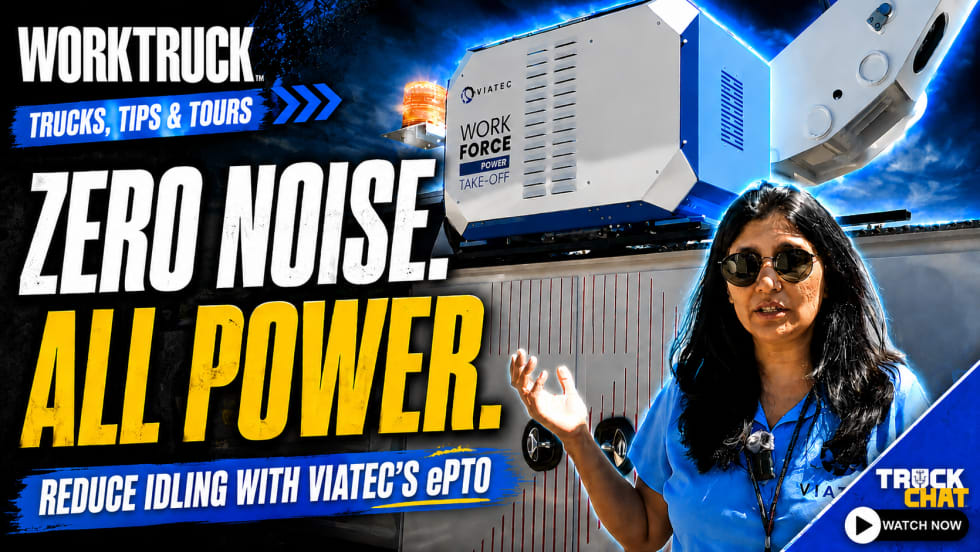
Reduce Noise & Idling with Viatec’s ePTO
Viatec's Workforce ePTO lets utility trucks power booms, outriggers, and auxiliary equipment using battery power instead of idling the engine. Learn how this technology helps reduce fuel use, noise, engine wear, and emissions while improving operator comfort.
Read More →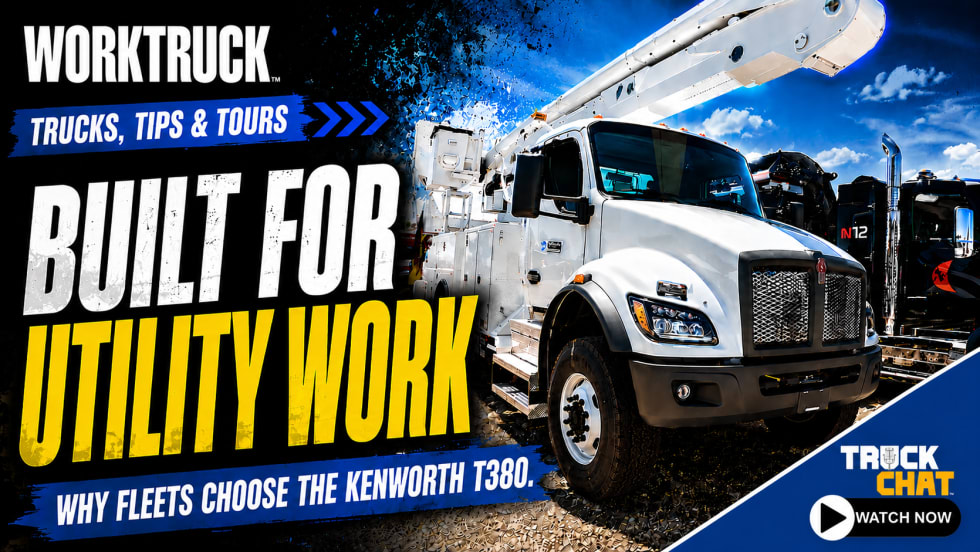
Why Utility Fleets Choose the Kenworth T380
The Kenworth T380 is engineered for utility fleets with custom chassis layouts, optimized frame rails, 4x4 capability, and improved driver visibility. See how its design helps maximize upfit flexibility and field performance.
Read More →
PALFINGER PB 38 AT P: Purpose-Built for Telecom Fleets
Purpose-built for telecommunications crews, the PALFINGER PB 38 ATP combines a 43-foot working height, flexible basket stowage, integrated cameras, and operator communication systems to improve productivity and safety during fiber and overhead cable installation.
Read More →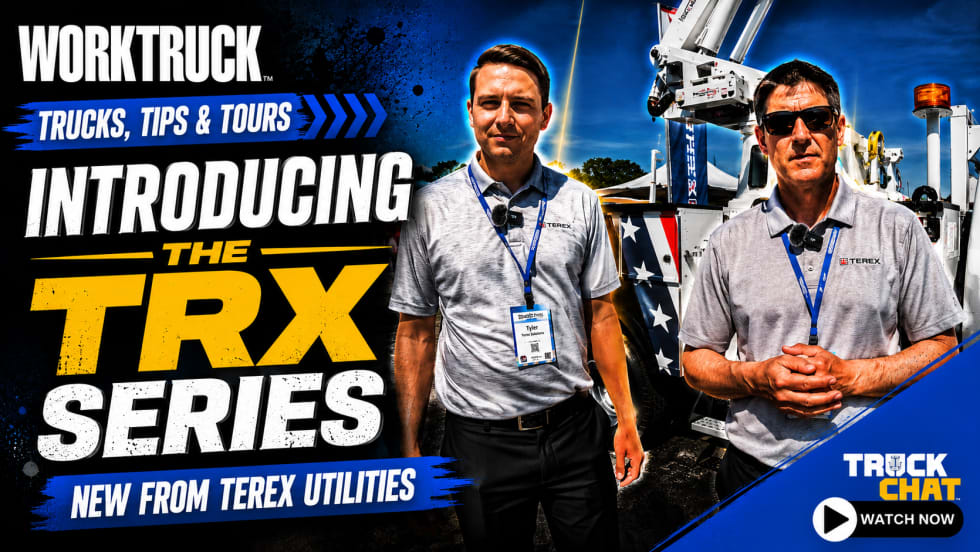
Inside Terex Utilities' Latest Work Truck Innovations
Terex Utilities is advancing utility fleet operations with its new TRX aerial platforms, Flex Pro controls, and AI-powered 3rd Eye safety technology. See how these innovations are helping fleets work safer, smarter, and more productively.
Read More →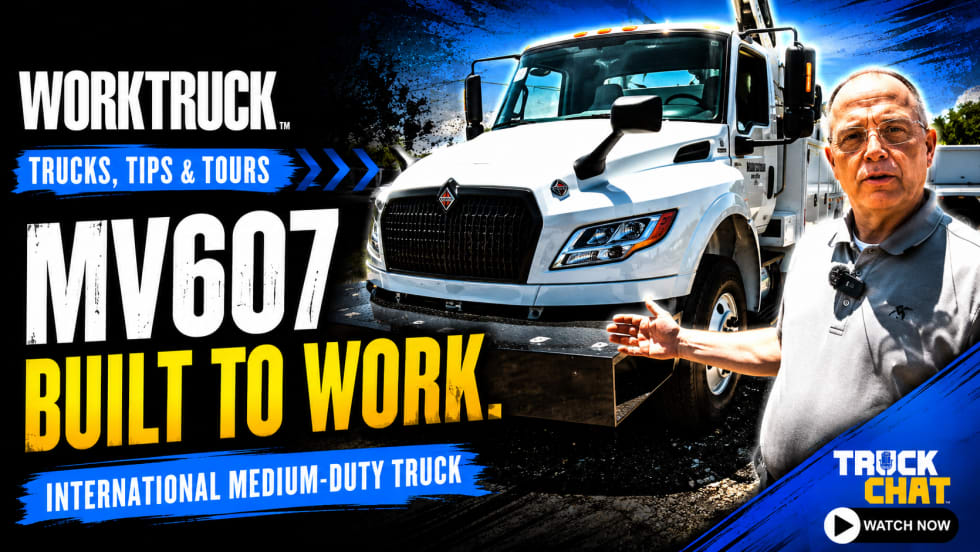
Walkaround of International MV607 Digger Derrick
The International MV607 combines advanced safety technologies, excellent visibility, vocational flexibility, and seamless body integration to create a powerful platform for utility fleet operations. Take a closer look at this Altec digger derrick configuration from EUFMC.
Read More →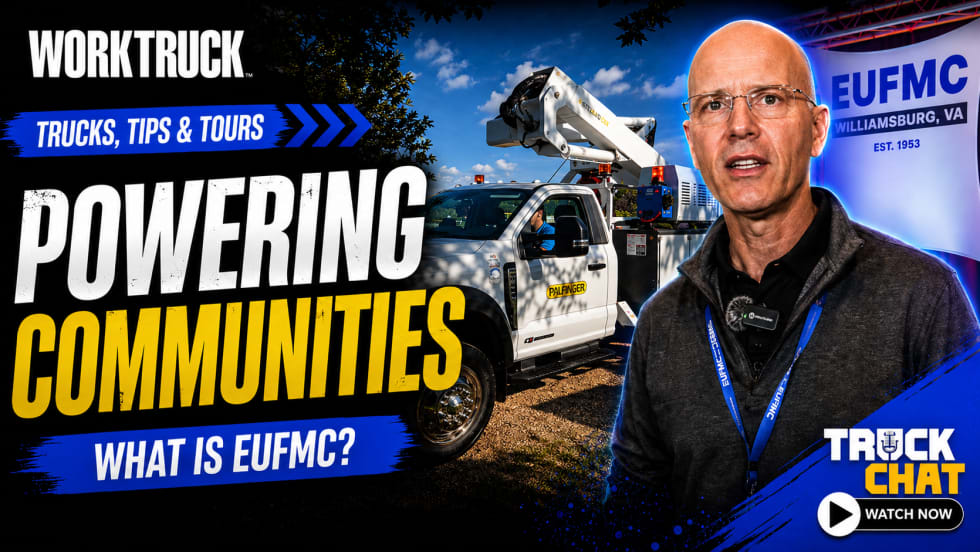
Inside the Electric Utility Fleet Managers Conference
What is EUFMC? For more than seven decades, the Electric Utility Fleet Managers Conference has served as a hub for collaboration, education, and innovation within the utility fleet industry. In this video, Work Truck talks to EUFMC President Greg Loew to learn more.
Read More →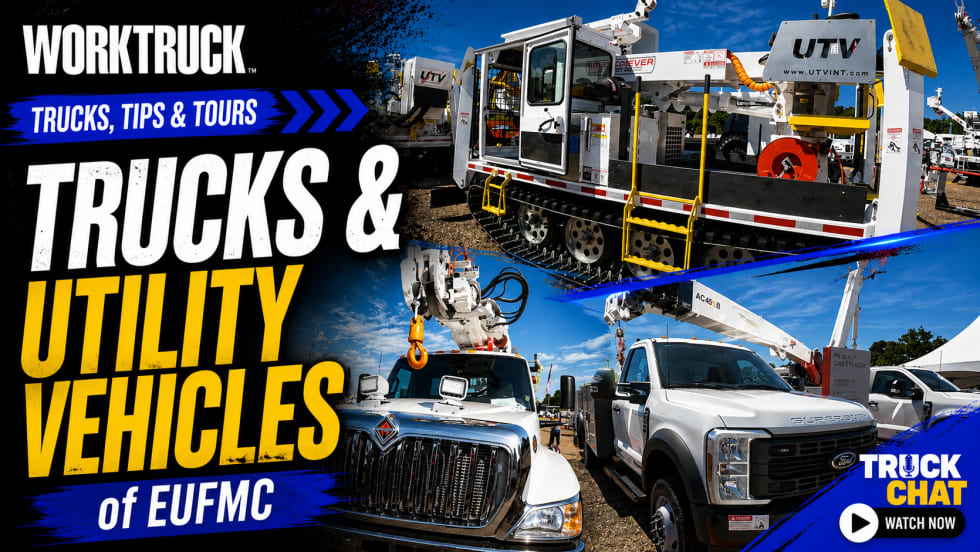
Inside the EUFMC Equipment Expo & Drive-Through
Follow Work Truck as we check out the trucks and other vehicles that were showcased at the Electric Utility Fleet Managers Conference in Williamsburg, Virginia. Whether looking for something on tires or treads, it was there for fleet managers to see.
Read More →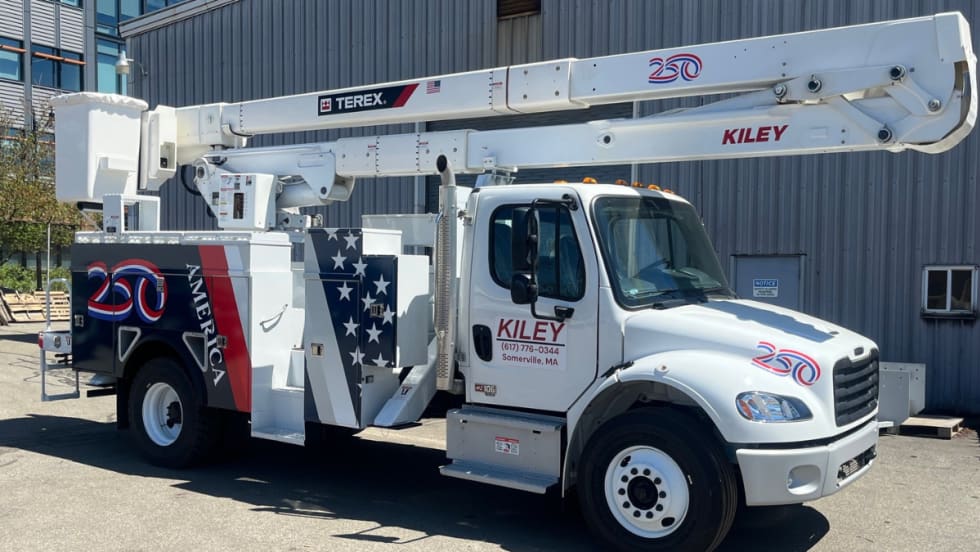
Terex Utilities & Kiley Unveil Custom America 250 Bucket Trucks at EUFMC 2026
Terex Utilities showcased a patriotic spirit in its booth this week during the Electric Utility Fleet Managers Conference in Williamsburg, Virginia, by debuting two custom-wrapped bucket trucks celebrating America’s upcoming 250th anniversary.
Read More →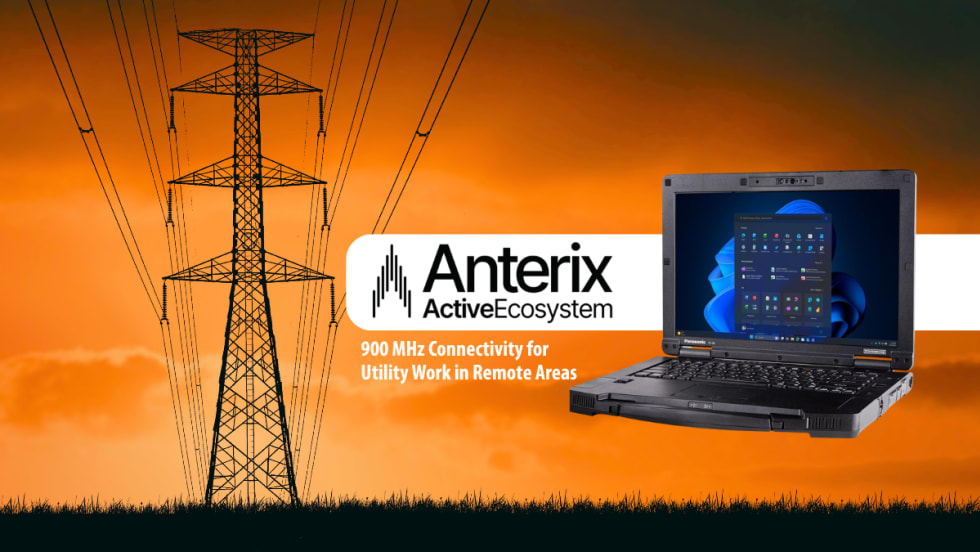
Panasonic Connect & Anterix Strengthen Connectivity Options for Utilities and Field Workers
The Panasonic Connect Toughbook 56 is the first Toughbook to earn the AnterixActive badge, which means it can connect to and operate on Anterix’s 900 MHz network even in the most remote locations.
Read More →
Streamlight Launches Portable Scene Light III & LiteBox 1Million
Streamlight has launched its Portable Scene Light III (PSL III), which delivers up to 10,000 lumens, and the LiteBox 1Million, a long-range search light that delivers one million candela.
Read More →