



First Rollover Resistance Ratings Announced
U.S. Transportation Secretary Rodney E. Slater has announced the first rollover resistance ratings for passenger vehicles as the U.S. Department of Transportation's National Highway Traffic Safety Administration (NHTSA) finalized a rating program that provides a measure of a vehicle's resistance to rolling over in a single vehicle crash.

U.S. Transportation Secretary Rodney E. Slater has announced the first rollover resistance ratings for passenger vehicles as the U.S. Department of Transportation's National Highway Traffic Safety Administration (NHTSA) finalized a rating program that provides consumers with a measure of a vehicle's resistance to rolling over in a single vehicle crash.
"By providing consumers with information about the comparative rollover risk of various types of vehicles, they will be better able to choose a safe vehicle for themselves and their family," Secretary Slater said. "We expect these ratings to drive improved safety, which is President Clinton and Vice President Gore's highest transportation priority. By providing consumers with additional information, we can motivate manufacturers to respond with safer, more stable vehicles."
The program gives "star" ratings for rollover resistance as part of the agency's New Car Assessment Program (NCAP). The highest rating is five stars; the lowest is one star. The ratings released today are for model year 2001 vehicles.
More than 10,000 people die every year in rollover crashes, according to NHTSA. More than 60 percent of the sport utility vehicle (SUV) occupants killed in 1999 died in crashes when their vehicle rolled over, compared to 23 percent for car occupants.
NHTSA Administrator Dr. Sue Bailey stressed the importance of these ratings to consumers when shopping for safety. She said that with the rollover resistance ratings, NHTSA is providing consumers with information about one of the deadliest types of crashes. NHTSA expects motivated manufacturers will respond to consumer demand for safer, more stable vehicles. In 1979 when NCAP ratings for frontal crashes began, just 33 percent of vehicles achieved a four- or five-star rating. By 1997, 85 percent had received four or five stars.
Bailey emphasized that the best consumer advice about rollover is the dramatic effect of seat belts. "Your best chance of surviving a rollover is by buckling up. Eighty percent of the people killed in single vehicle rollovers were unbelted, and we know that belted occupants are about 75 percent less likely to be killed in a rollover crash than unbelted occupants," Bailey said.
The Rollover Resistance Rating is an estimate of the risk of rolling over if a person has a single vehicle crash, usually when the vehicle runs off the road and is tripped by a curb, ditch or soft soil. It does not predict the likelihood of that crash. The Rollover Resistance Rating is based on "static stability factor," a measure of a vehicle's center of gravity and track width to determine how "top-heavy" the vehicle is. The more "top-heavy" the vehicle, the more likely it is to roll over. The lowest-rated vehicles (one star) are at least four times more likely to roll over than the highest-rated vehicles (five stars).
What is the 5-Star NHTSA Rating System?
Here is the five star rating system. In a single vehicle crash, a vehicle with a rating of:
- Five Stars - ***** Has a risk of rollover of less than 10 percent
- Four Stars - **** Has a risk of rollover between 10 percent and 20 percent
- Three Stars - *** Has a risk of rollover between 20 percent and 30 percent
- Two Stars - ** Has a risk of rollover between 30 percent and 40 percent
- One Star - * Has a risk of rollover greater than 40 percent
Among the first vehicles rated, only one, the Honda Accord, received five stars. All of the other passenger cars rated to date received four stars.
In addition, the Chrysler PT Cruiser, Honda Odyssey, Chevrolet Silverado Extended Cab 4x2, and the GMC Sierra Extended Cab 4x2 received a four star rating.
One vehicle, the Ford Focus, has Electronic Stability Control, a device which does not affect the Rollover Resistance Rating directly but may reduce the likelihood of a single vehicle crash, and thus, the risk of subsequent rollover. NHTSA will note vehicles equipped with Electronic Stability Control in all future Rollover Resistance Ratings announcements.
The agency expects to issue rollover resistance ratings for more than 80 Model Year 2001 vehicles by April of 2001. Ratings will be posted on the NHTSA web site www.nhtsa.dot.gov as they become available. The first set of ratings for model year 2001 vehicles follows:
Vehicle | Model Tested | Rollover Resistance Rating |
|---|---|---|
2001 Light Passenger Cars | 2,000–2,499 lbs. curb weight | |
Ford Focus | 4-door | 4 stars |
2001 Compact Passenger Cars | 2,500–2,999 lbs. curb weight | |
Chevrolet Cavalier | 4-door | 4 stars |
Honda Civic | 4-door | 4 stars |
Pontiac Sunfire | 4-door | 4 stars |
Volkswagen Jetta | 4-door | 4 stars |
2001 Medium Passenger Cars | 3,000–3,499 lbs. curb weight | |
Chevrolet Impala | 4-door | 4 stars |
Ford Taurus | 4-door | 4 stars |
Honda Accord | 4-door | 5 stars |
Mercury Sable | 4-door | 4 stars |
2001 Sport Utility Vehicles | ||
Chevrolet Blazer | 4-door 4x2 | 1 star |
Chevrolet Blazer | 4-door 4x4 | 2 stars |
Chevrolet Suburban | 4x4 | 3 stars |
Chevrolet Tahoe | 4-door 4x4 | 3 stars |
Chevrolet Tracker | 4-door 4x2 | 3 stars |
Chevrolet Tracker | 4-door 4x4 | 3 stars |
Ford Expedition | 4x2 | 2 stars |
Ford Explorer | 4x4 | 2 stars |
GMC Jimmy/Envoy | 4-door 4x2 | 1 star |
GMC Jimmy/Envoy | 4-door 4x4 | 2 stars |
GMC Yukon | 4-door 4x4 | 3 stars |
GMC Yukon XL | 4x4 | 3 stars |
Honda CR-V | 4x4 | 3 stars |
Jeep Grand Cherokee | 4x4 | 2 stars |
Lincoln Navigator | 4x2 | 2 stars |
Mercury Mountaineer | 4x4 | 2 stars |
Mitsubishi Montero Sport | 4x4 | 2 stars |
Suzuki Vitara | 4-door 4x2 | 3 stars |
Suzuki Vitara | 4-door 4x4 | 3 stars |
2001 Light Trucks | ||
Chevrolet S-10 | 4x2 | 3 stars |
Chevrolet S-10 | 4x4 | 3 stars |
Chevrolet Silverado | Extended Cab 4x2 | 4 stars |
Chevrolet Silverado | Extended Cab 4x4 | 3 stars |
Ford F-150 | 4x4 | 3 stars |
GMC Sierra | Extended Cab 4x2 | 4 stars |
GMC Sierra | Extended Cab 4x4 | 3 stars |
GMC Sonoma | 4x2 | 3 stars |
GMC Sonoma | 4x4 | 3 stars |
Isuzu Hombre | 4x2 | 3 stars |
Isuzu Hombre | 4x4 | 3 stars |
2001 Vans | ||
Honda Odyssey | — | 4 stars |
Mazda MPV | — | 3 stars |
Chrysler PT Cruiser | 4-door | 4 stars |
Quick Answers
Rollover resistance ratings are assessments that measure a vehicle's likelihood of rolling over in a collision or accident. These ratings are provided to help consumers understand and compare the safety performance of different vehicles.
*Summarized by AI
More Safety
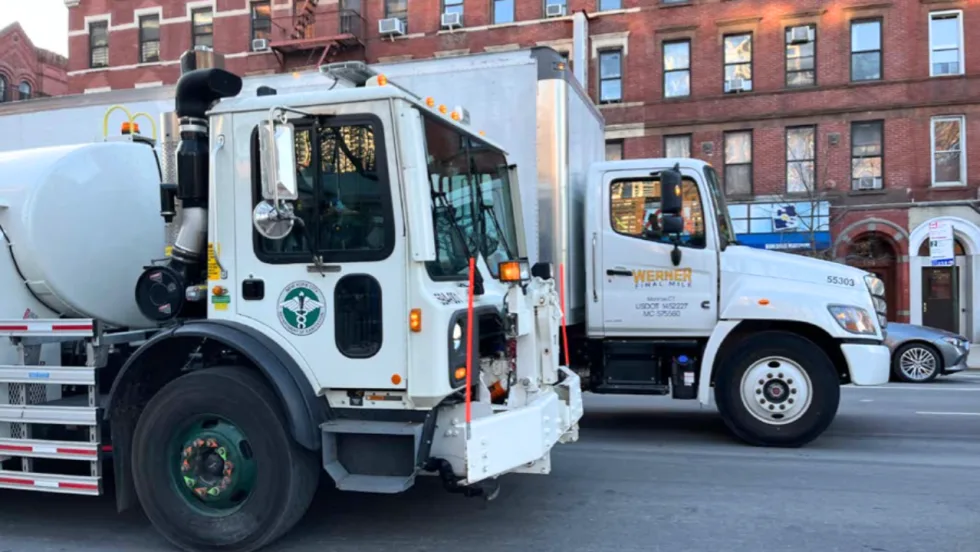
New York City Expands Safety Technologies Across Municipal Fleet
Mayor Zohran Mamdani’s Executive Order 19 requires added safety features on municipal vehicles and also calls for all existing city fleet trucks to be retrofitted with pedestrian alerts by June 30, 2029.
Read More →
Volvo Trucks Releases New Safety Recommendations for Traveling with Pets
One of the most important recommendations for professional drivers traveling with pets is to ensure pets are properly restrained while the truck is moving. Other tips are available in the new guide from Volvo Trucks North America and Center for Pet Safety.
Read More →
API Issues Refueling Safety Guidelines
The American Petroleum Institute offers a list of safe vehicle refueling guidelines, including ways to avoid potential problems with static electricity discharges in fall, winter, and early spring.
Read More →
Winter Fleet Prep: Expert Tips to Keep Vehicles Running Smoothly
Cold weather can expose weak batteries, tires, fuel systems, and maintenance gaps fast. Use this winter fleet checklist to prepare trucks and drivers before temperatures drop.
Read More →
When a Work Truck Breaks Down, the Job Can Stop, Too
A work truck breakdown can stop more than the vehicle. Discover how payloads, jobsites, and specialty equipment change the roadside response.
Read More →
What Stronger Long-Term Fleet Service Partnerships Actually Require
Fleet service partnerships rarely fall apart all at once. Learn the three warning signs that trust is eroding and what fleets and providers can do before downtime, frustration, and lost revenue follow.
Read More →
Applause & TRUCE Software Partner to Improve Driver Safety Through AI-Powered Telematics & Employee Performance Management
Applause has integrated TRUCE driving metrics directly into its employee-first performance and safety platform that transforms mobile devices into AI-powered telematics.
Read More →
How Detroit Assurance with Active Brake Assist Works
Do you want to see what it is like to experience Detroit Assurance’s Active Brake Assist? In this video, Work Truck will put you in the cab to see how it all works and then hear more details from DTNA’s Mike Young.
Read More →
Get Left of Loss: A 5-Step Workplace Violence Prevention Framework for Fleet Operators
Violence risks do not stop at the driver’s door. Learn five practical steps fleets can take to spot threats early and protect workers before loss occurs.
Read More →
How Better Visibility Cut Speeding Violations by 48%
Fleet leaders don't need more data, they need clearer visibility into what the data is saying. This case study explores how one utility replaced speeding-event counts with a single metric — miles driven in violation — to strengthen safety and significantly reduce speeding violations.
Read More →