




Drivers Don't Trust Parking Assist Technology
As automakers increasingly integrate self-parking features into new vehicles, drivers say they're not ready to give up control, according to a recent survey from AAA. The tests also showed that self-parking systems recorded 81 percent fewer curb strikes.
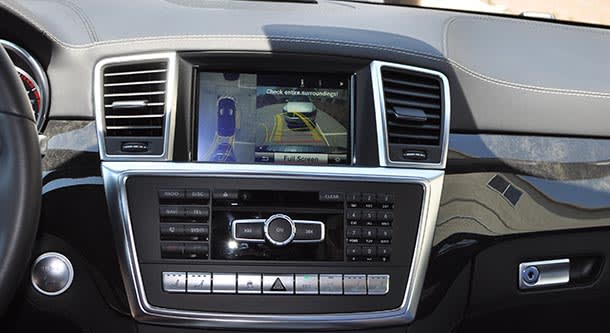
Photo courtesy of AAA.

Photo courtesy of AAA.
As automakers increasingly integrate self-parking features into new vehicles, drivers say they're not ready to give up control, according to a recent survey from AAA.
Nearly 80 percent of drivers are confident in their parallel parking abilities and only one in four would trust this technology to park their vehicle. Despite this, AAA testing found self-parking technology outperformed unassisted drivers in several areas.
"Autonomous features, such as active park assist, are rapidly being introduced into new vehicles, yet American drivers are hesitant to let go of the wheel," said John Nielsen, AAA’s managing director of automotive engineering and repair. "While the vast majority of Americans say they would not trust self-parking technology, AAA found these features performed well in tests and warrant consideration of new car buyers."
Compared to drivers that manually parallel parked with the aid of a standard backup camera, AAA found:
Drivers using self-parking systems experienced 81 percent fewer curb strikes.
Self-parking systems parallel-parked the vehicle using 47 percent fewer maneuvers, with some systems completing the task in as little as one maneuver.
Self-parking systems were able to park a vehicle 10 percent faster.
Self-parking systems were able to park 37 percent closer to the curb.
"AAA's testing found that self-parking technology outperformed manual parking in number of curb strikes, number of maneuvers, speed and accuracy,” said Megan McKernan, manager of the Automobile Club of Southern California’s Automotive Research Center. "While Americans report feeling confident in their parallel parking abilities, this technology proves there is room for improvement."
AAA tested self-parking features on five 2015 vehicles including a Lincoln MKC, Mercedes-Benz ML400 4Matic, Cadillac CTS-V Sport, BMW i3 and Jeep Cherokee Limited in a partnership with the Automobile Club of Southern California's Automotive Research Center.
Though the tested self-parking systems performed well and parked quicker and more accurately than an unassisted driver, the technology isn't without flaws. Several of the systems parked the vehicles too close to the curb, leaving wheels and tires vulnerable to scratches and costly repairs.
"AAA recommends that drivers leave 6-8 inches between the vehicle and the curb when parallel parking," said Nielsen. "With some systems leaving as little as a half-inch buffer, AAA urges automakers to increase this distance to prevent vehicle damage."
Originally posted on Automotive Fleet
More Small Fleet


Developing Budget-Friendly Driver Safety Programs
From driver training and safety meetings to one-on-one coaching and incentive programs, several small fleets share how they have developed a safety culture with their drivers using low- to no-cost resources.
Read More →
Boosting Last-Mile Fleet Uptime, Safety, and Value with AI Vehicle Inspections
AI-powered inspections are transforming last-mile fleets by replacing manual checks with highly accurate automated scans that detect defects in seconds. By giving fleet operations visibility into the daily condition of their vehicles, you can identify trends over the vehicle’s lifecycle that enable improved procurement decisions, route management, driver training and accountability.
Read More →

Five Ways Seat Belts Help Prevent Injuries
There are five ways seat belts protect occupants from injuries, according to the Tennessee Department of Safety and Homeland Security.
Read More →
Basic Tracking vs Next Generation Fleet Technology
Fleet software is getting more sophisticated and effective than ever, tying big data models together to transform maintenance, safety, and the value of your existing tech stack. Fleet technology upgrades are undoubtedly an investment, but updated technology can offer a much higher return. Read how upgrading your fleet technology can increase the return on your investment.
Read More →
It’s here: The 2026 Fleet Technology Trends Report
What does AI mean for fleets? Get the answer — and learn other top tech trends.
Read More →
Small Fleets, Big Impact: How Independent Drivers Power Wreaths Across America
Check out how small fleets and independent drivers power Wreaths Across America each December and why their impact matters more than ever.
Read More →
VMS Survey Finds 65% of Small Fleet Managers Run Operations Alone
A new VMS survey shows small fleet managers are stretched thin, with most handling operations solo and eager to adopt digital tools for relief.
Read More →
Tips for Driving Safely on Halloween Night
This video features a reminder from the Connecticut Department of Transportation (DOT) and the Connecticut Police Chiefs Association, urging drivers to prioritize safety this Halloween.
Read More →
AI, Access, and Uptime: VMS’s Next Chapter with David Prusinski
VMS’s new Co-CEO, David Prusinski, shares how an AI-first approach will give small fleets and repair shops the tools to compete like big players.
Read More →