




Consumer Reports: New Car MPG Greatly Overstated
YONKERS, N.Y. – Government fuel economy figures posted on new-car window stickers can have shortfalls of up to 50 percent, according to new-car fuel economy test results published in Consumer Reports magazine's October issue.
YONKERS, N.Y. – Government fuel economy figures posted on new-car window stickers can have shortfalls of up to 50 percent, according to new-car fuel economy test results published in Consumer Reports magazine’s October issue. The study monitored 303 2000-2006 model-year cars and trucks, finding that deficits in mile per gallon (mpg) occurred in 90 percent of the vehicles tested. City driving accounted for the largest discrepancies, noticing differences of 35 percent to 50 percent. Highway mpg fell closer to the EPA ratings. Hybrids, whose fuel economy has driven its popularity, turned in some of the biggest disparities, averaging 19 mpg below Environmental Protection Agency (EPA) city ratings. Business Fleet reported in March of this year that the American Automobile Association (AAA) was gearing up to use real-world fuel economy tests because the EPA's mileage ratings are based on 30-year-old tests dating back to the 1973 oil embargo. Those outdated standards fail to account for such modern factors as air conditioning, increased traffic congestion and the fact that many trips never go far enough to warm up the engine. At that time, AAA also endorsed the "Fuel Efficiency Truth-In-Advertising Act of 2005," a congressional bill that would require the EPA to update its fuel economy testing. "Current EPA figures are definitely misleading and ultimately expensive for consumers," said David Champion, Senior Director of Consumer Reports' Auto Test Center. Assuming 12,000 miles per year of driving over five years and no further increases in gas prices, Consumer Reports figures show it will cost Dodge Ram 1500 pickup truck owners $2,558 more in fuel than the EPA estimates, $1,742 more for Mercury Grand Marquis owners and $1,316 more for Nissan Quest owners. Put another way, when August gas prices hit $2.37 per gallon, the mpg shortchange effectively boosted the price for some drivers to $3.13 per gallon. The following vehicles showed some of the largest disparities: Jeep Liberty Diesel Ltd. (4WD) EPA CITY MPG: 22 Consumer Reports (CR) CITY MPG: 11 EPA SHORTFALL: 50 percent Honda Civic Sedan EPA CITY MPG: 48 CR CITY MPG: 26 EPA SHORTFALL: 46 percent Chrysler 300C EPA CITY MPG: 17 CR CITY MPG: 10 EPA SHORTFALL: 41 percent Chevrolet TrailBlazer EXT LT (4WD) EPA CITY MPG: 15 CR CITY MPG: 9 EPA SHORTFALL: 40 percent Honda Odyssey EX EPA CITY MPG: 20 CR CITY MPG: 12 EPA SHORTFALL: 40 percent BMW 745Li EPA CITY MPG: 18 CR CITY MPG: 11 EPA SHORTFALL: 39 percent Dodge Ram 1500 SLT (crew cab, 4WD) EPA CITY MPG: 13 CR CITY MPG: 8 EPA SHORTFALL: 38 percent Oldsmobile Alero GL EPA CITY MPG: 21 CR CITY MPG: 13 EPA SHORTFALL: 38 percent Dodge Durango Limited (4WD) EPA CITY MPG: 13 CR CITY MPG: 8 EPA SHORTFALL: 38 percent Ford Focus ZX4 SES EPA CITY MPG: 26 CR CITY MPG: 17 EPA SHORTFALL: 35 percent
More Small Fleet

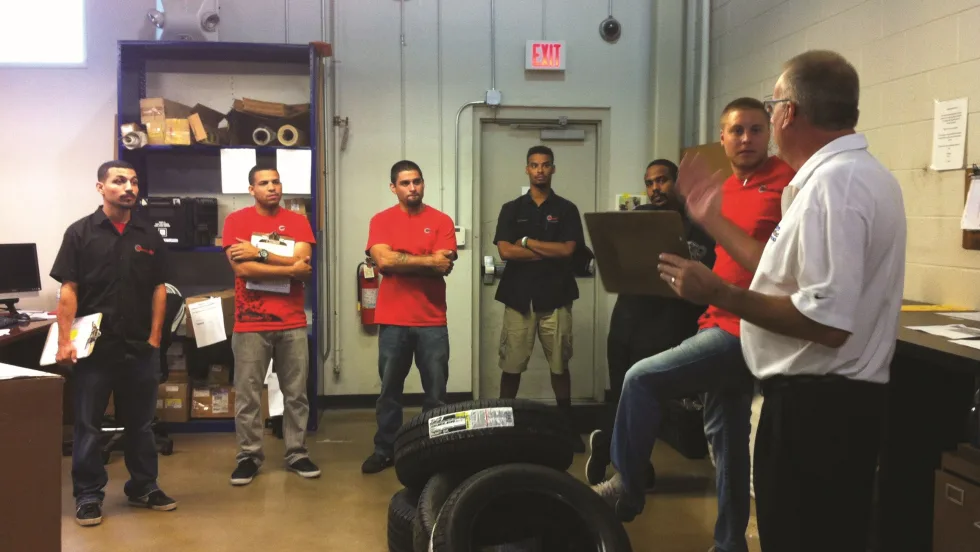
Developing Budget-Friendly Driver Safety Programs
From driver training and safety meetings to one-on-one coaching and incentive programs, several small fleets share how they have developed a safety culture with their drivers using low- to no-cost resources.
Read More →
Boosting Last-Mile Fleet Uptime, Safety, and Value with AI Vehicle Inspections
AI-powered inspections are transforming last-mile fleets by replacing manual checks with highly accurate automated scans that detect defects in seconds. By giving fleet operations visibility into the daily condition of their vehicles, you can identify trends over the vehicle’s lifecycle that enable improved procurement decisions, route management, driver training and accountability.
Read More →

Five Ways Seat Belts Help Prevent Injuries
There are five ways seat belts protect occupants from injuries, according to the Tennessee Department of Safety and Homeland Security.
Read More →
Basic Tracking vs Next Generation Fleet Technology
Fleet software is getting more sophisticated and effective than ever, tying big data models together to transform maintenance, safety, and the value of your existing tech stack. Fleet technology upgrades are undoubtedly an investment, but updated technology can offer a much higher return. Read how upgrading your fleet technology can increase the return on your investment.
Read More →
It’s here: The 2026 Fleet Technology Trends Report
What does AI mean for fleets? Get the answer — and learn other top tech trends.
Read More →
Small Fleets, Big Impact: How Independent Drivers Power Wreaths Across America
Check out how small fleets and independent drivers power Wreaths Across America each December and why their impact matters more than ever.
Read More →
VMS Survey Finds 65% of Small Fleet Managers Run Operations Alone
A new VMS survey shows small fleet managers are stretched thin, with most handling operations solo and eager to adopt digital tools for relief.
Read More →
Tips for Driving Safely on Halloween Night
This video features a reminder from the Connecticut Department of Transportation (DOT) and the Connecticut Police Chiefs Association, urging drivers to prioritize safety this Halloween.
Read More →
AI, Access, and Uptime: VMS’s Next Chapter with David Prusinski
VMS’s new Co-CEO, David Prusinski, shares how an AI-first approach will give small fleets and repair shops the tools to compete like big players.
Read More →