




Car Dealer Campaign Drives 'Science-Based' Fuel Economy Standards
The National Automobile Dealers Association's advocacy helped win passage of a Senate amendment March 13 that would ensure vehicle fuel efficiency is improved without significant and adverse impacts on consumers, dealers and manufacturers, according to NADA. The Senate passed by a vote of 62 to 38 an NADA-supported bipartisan amendment to the pending energy bill which authorizes the National Highway Transportation Safety Administration (NHTSA) to set new corporate average fuel economy (CAFE) standards for cars and light trucks within a specified timeframe. The amendment, co-authored by Sens. Carl Levin (D-Mich.) and Christopher "Kit" Bond (R-Mo.), directs the agency to take into consideration the following factors: technological feasibility; the effect on motor vehicle safety; the effect of increased fuel economy on air quality; the effect on U.S. employment; and the cost and lead-time required for the introduction of new technologies. "The Levin-Bond amendment ensures that important progress is made in increasing energy efficiencies while also ensuring that the automobile industry continues to be a vital part of our nation's economic recovery," said Carter Myers, chairman of NADA. The measure replaces an energy bill provision drafted by Sens. John Kerry (D-Mass.) and Ernest Hollings (D-S.C.) that would have required automakers to increase the combined average fuel economy for passenger vehicles and light trucks to 36 miles per gallon by 2015. Sen. Kerry, sponsor of the 36 mpg proposal, said the new proposal -- which replaced his in a broad energy bill -- was "an artful dodge, a great escape" from doing anything about fuel economy. "We are going backward," Kerry said. Federal fuel economy rules have not changed in 15 years, noted Senate Majority Leader Tom Daschle (D-S.D.), who said the vote was "a missed opportunity ... to pass meaningful" standards. The House already has turned down significant increases in auto fuel economy.
More Small Fleet


Developing Budget-Friendly Driver Safety Programs
From driver training and safety meetings to one-on-one coaching and incentive programs, several small fleets share how they have developed a safety culture with their drivers using low- to no-cost resources.
Read More →
Boosting Last-Mile Fleet Uptime, Safety, and Value with AI Vehicle Inspections
AI-powered inspections are transforming last-mile fleets by replacing manual checks with highly accurate automated scans that detect defects in seconds. By giving fleet operations visibility into the daily condition of their vehicles, you can identify trends over the vehicle’s lifecycle that enable improved procurement decisions, route management, driver training and accountability.
Read More →
Five Ways Seat Belts Help Prevent Injuries
There are five ways seat belts protect occupants from injuries, according to the Tennessee Department of Safety and Homeland Security.
Read More →
It’s here: The 2026 Fleet Technology Trends Report
What does AI mean for fleets? Get the answer — and learn other top tech trends.
Read More →
Small Fleets, Big Impact: How Independent Drivers Power Wreaths Across America
Check out how small fleets and independent drivers power Wreaths Across America each December and why their impact matters more than ever.
Read More →
VMS Survey Finds 65% of Small Fleet Managers Run Operations Alone
A new VMS survey shows small fleet managers are stretched thin, with most handling operations solo and eager to adopt digital tools for relief.
Read More →
Tips for Driving Safely on Halloween Night
This video features a reminder from the Connecticut Department of Transportation (DOT) and the Connecticut Police Chiefs Association, urging drivers to prioritize safety this Halloween.
Read More →
AI, Access, and Uptime: VMS’s Next Chapter with David Prusinski
VMS’s new Co-CEO, David Prusinski, shares how an AI-first approach will give small fleets and repair shops the tools to compete like big players.
Read More →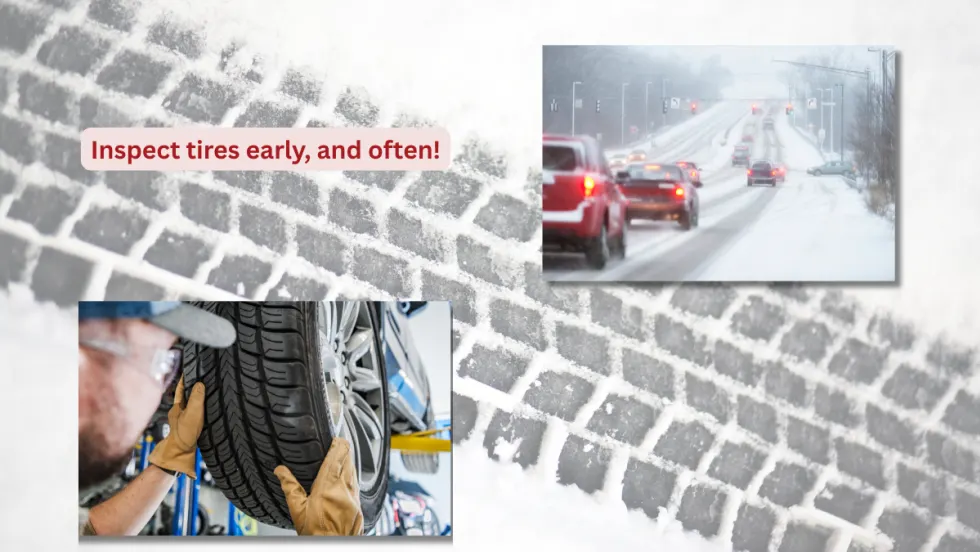
Fleet Managers Share Winter Prep Tips: It's Never Too Early!
Three fleets share best practices to prep vehicles for winter and prevent downtime when the cold sets in.
Read More →