




Autobytel Survey Finds Online Car Shoppers Overwhelmingly Poised to Buy Hybrid Vehicles
Nine of every 10 online auto shoppers surveyed might consider buying a hybrid vehicle if it was offered in the exact same model as the car or truck they currently drive, or next plan to buy, according to a new survey. The survey, conducted by Autobytel, further reveals that among the 90 percent of consumers that are potential hybrid adopters, 67 percent of women and 55 percent of men would either "definitely buy" or "strongly consider" a hybrid if a comparable model was available. Another key finding is that a significant percentage of consumers simply lack sufficient information about hybrids. Autobytel announced that it is addressing this information gap with the launch of a Green Guide on its three consumer car-buying Web sites (Autobytel.com, Autoweb.com, and Carsmart.com). As the Senate energy debates rage on, Autobytel says its study can provide critical insight into what it would take to make consumers "go hybrid." Online automotive shoppers, like those polled in this Autobytel site survey, represent 62 precent of all new-car buyers - and have proven to be serious, ready-to-buy consumers, according to Autobytel. The Senate is currently refocusing its debates away from higher fuel-efficiency standards, toward offering consumers large rebates to purchase hybrid or alternative-fuel vehicles. However, only a very small minority of Autobytel respondents - 9 percent of women and 13 percent of men - indicate that a tax credit (of $1,500 or more) would most influence them to buy a hybrid. Instead, availability of comparable hybrids to current vehicle models overwhelmingly topped online automotive shoppers' lists, with 83 percent of respondents citing a form of vehicle parity as the biggest incentive to future hybrid buying. Specifically, 36 percent of women and 46 percent of men cite "confidence the vehicle will perform comparably to an all-gasoline vehicle" as the most important factor. And similarly, 49 percent of women and 35 percent of men say that being able to get the model, styling, size and features they want in a hybrid version would be the most powerful incentive. Respondents to the survey clearly indicate that additional cost is not necessarily a barrier to purchasing a hybrid vehicle. In fact, when consumers were asked what they would be most willing to give up for the better fuel economy of a hybrid, 45 percent of consumers indicated they would be willing to pay $1,000 to $2,000 - or more - for the hybrid version. Women are even more willing to pay for environmentally-friendly hybrids: 43 percent of women indicate they would pay up to $2,000 more, as opposed to 34 percent of men. Only 10 percent overall, on the other hand, indicate that they are most willing to accept a differently styled or sized vehicle, and only 16 percent are most willing to compromise some performance features, such as horsepower and acceleration. Another key finding of the survey is that most online car shoppers are simply uninformed about hybrids, with 44 percent of women indicating that they were "not very informed," or having heard the term "hybrid" for the first time when taking the survey, with 31 percent of men in that same category. In fact, only 9 percent of women and 18 percent of men define themselves as "very informed." The lack of information is so inhibiting to hybrid adoption that, for women shoppers, simply not knowing enough about hybrids is the number one reason cited for not purchasing one. Autobytel's "Green Guide," available at its consumer research and purchasing sites Autobytel.com, Autoweb.com, and Carsmart.com, aims to help provide consumers with a wealth of information on hybrids and other environmentally-friendly vehicles. The Green Guide features an in-depth buying guide for current and future hybrid models, a glossary of terms, informative hybrid technology articles, fuel economy guides, useful links, and more-everything a consumer needs to make it "easy to be green," according to Autobytel. "Our survey reveals that three out of four consumers - both men and women equally - prefer an independent all-makes Web site as their chosen source of information about hybrids - dramatically more than any other media - more than any other source," said Autobytel CEO Jeffrey Schwarz. "We have a mandate to provide this information to online automotive shoppers at each Autobytel Inc. site." About Autobytel Inc. Autobytel Inc., which calls itself the world's largest Internet automotive marketing services company, helps retailers sell cars and manufacturers build brands through marketing and CRM (customer relationship management) programs. Autobytel Inc. owns and operates the popular websites Autobytel.com, Autoweb.com, Carsmart.com and Autosite.com, as well as AIC (Automotive Information Center), a provider of automotive marketing data and technology. Autobytel Inc. generated an estimated four percent of all domestic new vehicle sales - $17 billion in car sales in 2001 - for dealers through its Web sites. With approximately 8,800 dealer relationships and 30 international automotive manufacturer customers, Autobytel Inc. says it is the largest syndicated car-buying content network, reaching millions of unique visitors as they are making their vehicle buying decisions. Autobytel Inc. says its content and technology has potential exposure to more than 90 percent of total Web traffic.
More Small Fleet


Developing Budget-Friendly Driver Safety Programs
From driver training and safety meetings to one-on-one coaching and incentive programs, several small fleets share how they have developed a safety culture with their drivers using low- to no-cost resources.
Read More →
Boosting Last-Mile Fleet Uptime, Safety, and Value with AI Vehicle Inspections
AI-powered inspections are transforming last-mile fleets by replacing manual checks with highly accurate automated scans that detect defects in seconds. By giving fleet operations visibility into the daily condition of their vehicles, you can identify trends over the vehicle’s lifecycle that enable improved procurement decisions, route management, driver training and accountability.
Read More →

Five Ways Seat Belts Help Prevent Injuries
There are five ways seat belts protect occupants from injuries, according to the Tennessee Department of Safety and Homeland Security.
Read More →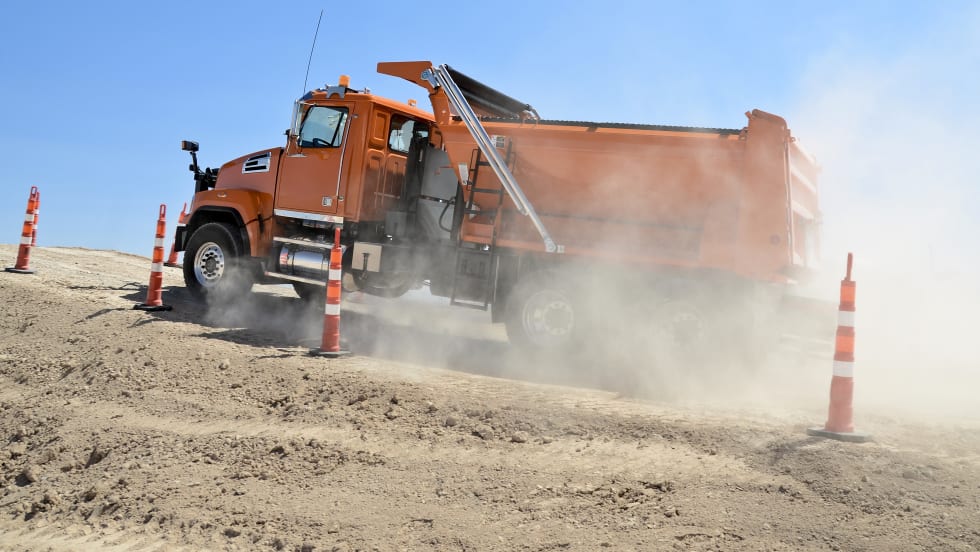
Basic Tracking vs Next Generation Fleet Technology
Fleet software is getting more sophisticated and effective than ever, tying big data models together to transform maintenance, safety, and the value of your existing tech stack. Fleet technology upgrades are undoubtedly an investment, but updated technology can offer a much higher return. Read how upgrading your fleet technology can increase the return on your investment.
Read More →
It’s here: The 2026 Fleet Technology Trends Report
What does AI mean for fleets? Get the answer — and learn other top tech trends.
Read More →
Small Fleets, Big Impact: How Independent Drivers Power Wreaths Across America
Check out how small fleets and independent drivers power Wreaths Across America each December and why their impact matters more than ever.
Read More →
VMS Survey Finds 65% of Small Fleet Managers Run Operations Alone
A new VMS survey shows small fleet managers are stretched thin, with most handling operations solo and eager to adopt digital tools for relief.
Read More →
Tips for Driving Safely on Halloween Night
This video features a reminder from the Connecticut Department of Transportation (DOT) and the Connecticut Police Chiefs Association, urging drivers to prioritize safety this Halloween.
Read More →
AI, Access, and Uptime: VMS’s Next Chapter with David Prusinski
VMS’s new Co-CEO, David Prusinski, shares how an AI-first approach will give small fleets and repair shops the tools to compete like big players.
Read More →