




WT Editorial Advisory Board Talks Upfitting, AI, Safety, & More
As the 2023-2025 Work Truck Editorial Advisory Board convened for its fourth-quarter meeting, key topics involved procurement, artificial intelligence, spec’ing vehicle upfits, and more.

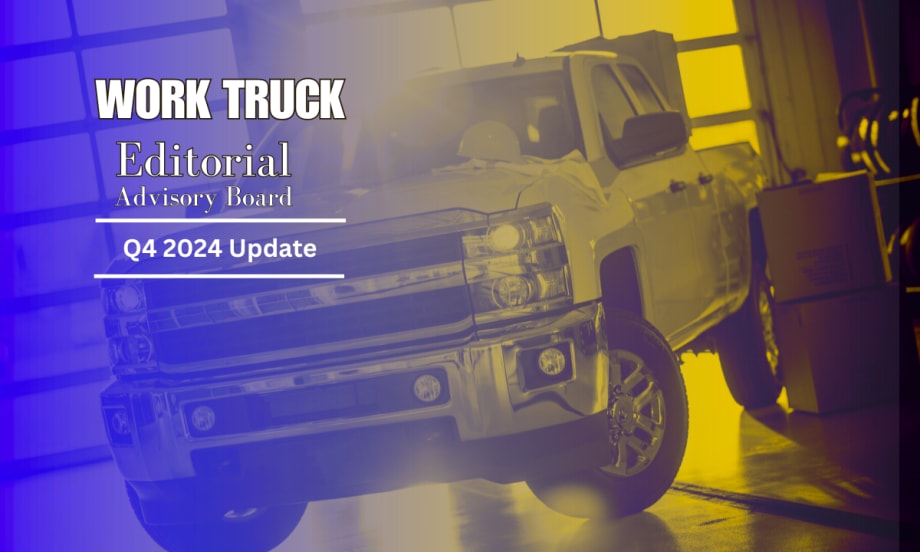
Read what was on the minds of fleet leaders during the recent Work Truck Editorial Advisory Board meeting.
Photo: Work Truck
Standardized specs for upfitting, artificial intelligence, safety, procurement, and more all rose to the forefront of discussions in the most recent quarterly meeting of the 2024-2025 Work Truck Editorial Advisory Board.
The advisory board also welcomed a new member to the discussion.
Mashala Joins Advisory Board
Lauren Fletcher, vice president of content for Bobit, shared that Kenny Mashala, automotive fleet manager at United Parcel Service (UPS), is joining the board, taking a spot previously filled by Robert Auer, also of UPS. Mashala has been with UPS for more than seven years and has about 15 years of experience in the automotive industry.
“It's been fun watching the changes and developments that have come in this industry in the past decade or so, and just being a part of it and all the changes,” Mashala said. “I think it's always a blast to hear from different industry partners and what they've got going on, the challenges that they see, and what they implement to keep their work group working safely, but also to really be pioneers of this automotive industry.”
“We try to have some fun. We try to talk a little bit about some challenges,” Fletcher explained to Mashala. “And overall, we're really just trying to help move the fleet industry forward and make sure that the Work Truck publication is constantly providing the resources that you all need to do your jobs the best you can.”
Upcoming: Fleet Journey Profiles
On the Work Truck new content side, Fletcher shared that she took some of her trivia questions from Work Truck Exchange and reformatted them into a video short.
Fletcher also reminded the board that Work Truck is asking for submissions for Fleet Journey Profiles. There is a simple survey form that the Work Truck editors can use to create profile stories about fleet professionals. The advisory board was the first to have access to and test the Fleet Journey Profiles survey.
“I'm really excited about this series. I've been reading through the answers that you who submitted them already went through, and they're fantastic,” Fletcher said. “I think hearing about how we've gotten into this industry, how we've evolved, and getting a chance to learn a little bit more about the people they see on these show floors is just a really neat opportunity and gives you a chance to share your insights.”
Don't Miss: Webinar On Demand
Fletcher also reminded the board about the Legends of Fleet webinar, which featured Fletcher, Betz, consultant, Ore Creek Fleet Consulting; Bob Stanton, a retired fleet leader for public and private sector; Glenn Yamada, fleet manager for Hawaii Gas; and Peter Silva, retired fleet leader from PepsiCo, Aramark, and National Express. The webinar is available on the Work Truck website on demand.
Work Truck, in its editorial capacity, is working on end-of-year trends and forecast stories, Fletcher shared. However, the entire company’s broader content team will gather in December to talk about growth opportunities and moving forward under the new leadership of Colin Sutherland.
“We're really excited. We've got some big growth opportunities and a fantastic future in store for us,” Fletcher added.
Betz: Safety a Top Concern
During the editorial advisory board meeting, Betz relayed his experiences from Fleet Forward and Global Fleet Conference and how the final session was an advisory panel for the Global Fleet Conference. Sutherland, Bobit’s new owner, was on hand.
“Colin joined us, so we changed it around a little bit and talked about what was of interest to each person, but also what are people's perceptions of Automotive Fleet, and for Colin's benefit, how can Automotive Fleet help fleets? We got a lot of good information and great input there that I'm sure he'll bring back,” Betz said.
“I had a chance to chat with Colin a little bit, and I'm really excited about his vision for Bobit. It almost seems like we're going back to Bobit 1.0 but with some modern flair to it,” Betz added.
From around the industry, Betz said he is hearing safety is still the top issue for fleets. Recently, he talked to a trucking lawyer and two counterparts and garnered some practical advice. From that, Betz said he hopes to write an article.
“You never want to say that safety is your top priority as a company because the plaintiff's lawyers can jump all over that and tear it apart. It's okay to say safety is a core value, but you never want to say that it's your number one priority because it's too easy to tear that down into, ‘Well, ‘Why didn't you do this, and this, and this?’ I guess just the language of it is my point. I thought that was interesting,” Betz said.
From Betz’s viewpoint, the next largest topic at these recent conferences was artificial intelligence (AI).
“The general consensus is that it's all going to be good things and make the life of a fleet manager easier, but there's going to be some hurdles,” he added.
“If I use a fleet management company, and then I have some data in my own system, like my policies, that type of thing, and then I've got a different fuel card provider, and then I've got a collision management company. I need to find a way to pool it all,” he continued.
A third topic that seemed to prevail, according to Betz, was procurement.
“I think most people have agreed that most of the procurement issues are behind us,” he said.
But, he also added that fewer people today seemed concerned about procurement managers being involved in fleet ordering.
“The general experience has been that when they go to procurement, procurement within their own company doesn't want to take over the process. They have suggested the opposite, like, ‘Hey, you're the fleet expert. You go out and figure out what you need. We'll just help you with the RFP process, and we'll help you make sure you're dotting the I's and crossing the T's.’ And that's different than what we've seen in the past, where procurement wanted to take control of the whole process without as much input from fleet.”
Kevin Rider: AI & CARB Compliance
Kevin Rider, senior director of fleet operations at United Site Services, jumped back over to the AI topic and shared two related stories.
He said he has been talking with a company about predictive maintenance, and they shared their data flow model about how they would connect his fleet to a provider and add several steps before uploading results into his database.
“I said, why can't we simplify this? If I already have my data aggregated into an FMIS, why don't you just take that data, process it, and push it back in for me? And they were like mind blown,” Rider said. “I think a lot of times these engineers and developers get too far into making it complicated when there may be a simple solution out there.”
Rider continued with the AI topic and said he has used Microsoft Copilot to document meetings and make notes.
“Talk about simplifying life and getting rid of notebooks. That has been huge for me,” Rider added.
During Work Truck Exchange, Rider shared that his company had moved restroom trailers under fleet. He updated that, and said that following the success of that, two more products were also moved under fleet.
He said through the end of the year, he will be busy as he works to get ahead of 2025 California Air Resources Board requirements. Other states like New Jersey and Massachusetts also present similar clean-air mandates.
“We have a heavy presence in California, and with the nature of our work, EVs are not an option. So, we're really trying to figure out what to do,” he added. “It's going to be an interesting next 3, 5, 7 years, I think, as more and more states roll out various levels of Clean Air Acts.”
Rider also provided an update on a telematics project he had discussed with the advisory board earlier in the year. His company spent significantly on telematics devices wired into 3,000 vehicles, but only about 350 are reporting consistently.
“Apparently, there's a whole manual piece in the back end where they've got to go in and toggle settings on and off and everything to get the data to flow correctly,” Rider said.
He also said he has been trying to limit CapEx for replacements, balanced against rising repair costs.
“We paid some hefty repairs that we could have avoided if we'd had a little more flexibility on the replacement side.”
McAdams: Standardized Upfit Specs
McAdams, fleet manager for Diebold Nixdorf Inc., shared how she is still focused on creating standardized specifications for upfitting her fleet vehicles.
After meeting with executive leaders, she returned to her office, scheduled a workshop, and rallied the stakeholders – internal staff, external vendors, and upfit partners. She set aside three days to focus the team on establishing standardization.
It only took a day-and-a-half, and the team configured specs for five vehicles.
“I'm working now getting all the specs back with diagrams so that I can then present them and the quotes from the upfitters to our leadership, get it signed off, that'll go to our regional managers, get that signed off, then go on to my branch manager so I can get my orders,” she explained.
“This vehicle spec standardization was a huge win,” she added.
More Operations
Family Ties Inside the Fleet Families Building Careers Across Generations
Three fleet families share what it really takes to work together, learn across generations, and keep business from following them home.
Read More →
Shades of Fleet Call for Voices: Fleet's Hidden Heroes
Fleet’s hidden heroes are often the ones keeping everything moving behind the scenes. September’s Shades of Fleet is looking for dispatchers, coordinators, parts specialists, and other support pros to share their stories.
Read More →
Truck Centers, Inc. Celebrates National Truck Driver Appreciation Week with $1,000 Fuel Card Giveaways
During National Truck Driver Appreciation Week, Truck Centers, Inc. is offering customers a chance to fuel up for free. Customers at all Truck Centers locations can enter to win one of four $1,000 fuel cards from Sept. 14 - 18.
Read More →
Fleet Guides, AI Time-Savers, Truck Tariffs & Fuel Strategy Lead the News
This week’s Truck Chat Cheat Sheet covers new fleet vehicle guides, practical AI use cases, U.S.-Canada truck production, mixed-energy strategy, and more.
Read More →
What Fleet Employers Are Missing When Hiring Veterans
What if some of the strongest candidates for fleet are already out there, but their experience is written in a language our industry does not always recognize?
Read More →
Automotive Fleet Opens 2026 Personal Use Survey for Commercial Fleet Managers
Less than two weeks left! Commercial and corporate fleet managers are invited to share how their organizations handle company vehicle personal-use policies, charges, and driver eligibility.
Read More →
What Resilient Fleets Do Differently When Conditions Change
Fleet resilience is about more than reacting to disruption. Lauren Fletcher talks with AP Fleet’s Alex Coveney about flexibility, planning, scaling, and what helps fleets adapt when business conditions shift.
Read More →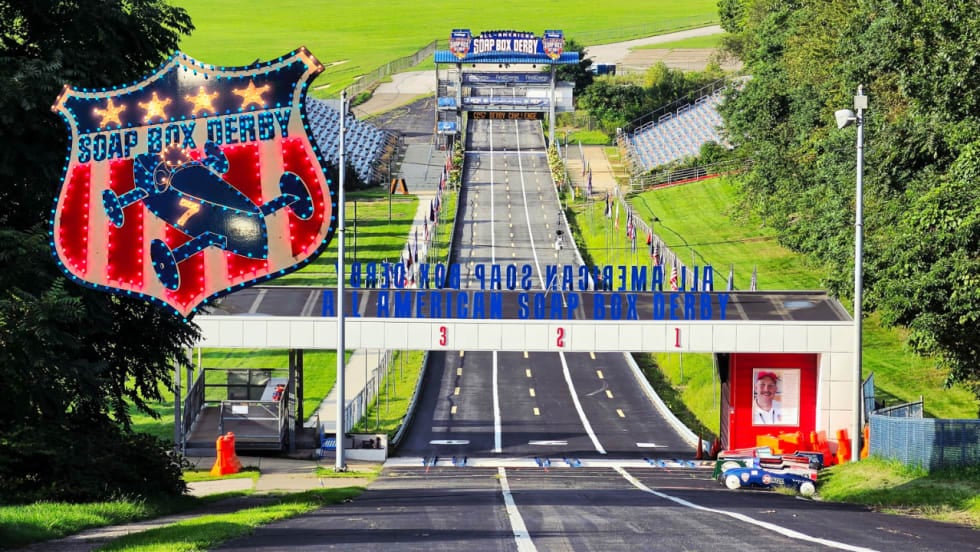
If We Want the Next Generation in Automotive, We Have to Give Them a Reason to Care
The automotive industry talks constantly about its workforce shortage. But before we can recruit the next generation, we may need to do a better job giving kids a reason to care about automotive in the first place.
Read More →
Ram ProMaster City Under $40K, Truck Tariffs, and AI Maintenance Lead the News
A sub-$40K commercial van, tariff questions, AI-powered maintenance, and a new EV production strategy headline this week’s Truck Chat Cheat Sheet.
Read More →
Bob Adamsky Shares the Fleet Lessons You Usually Learn the Hard Way
After more than 30 years in fleet, Arrow International’s Bob Adamsky has learned that the job is about far more than vehicles. He shares the lessons he wishes every fleet manager could learn a little earlier.
Read More →