




Learn More: How are Cars Recycled?
Why DTG Recycle’s Trucks Are Vital Tools of The Trade
Maintaining a fleet that is safe and includes the latest technology to help improve the lives of drivers and customers is a major priority for the company.

Lexi Tucker・Former Senior Editor

DTG runs a total of 113 vehicles.
Photo: DTG
5 min to read
A job can only be done as efficiently as possible when one has the right tools. Brian Thompson, fleet manager for DTG Recycle, has a passion for equipping the company’s fleet to handle anything customers can throw at it, and the vast array of equipment he specs is a testament to how involved the business of recycling truly is.
A Big Fleet for Even Bigger Jobs
DTG Recycle was founded in 1999 and has become the largest commercial recycler of construction, demolition, industrial, and manufacturing waste in the Pacific Northwest. It works with customers to collect, transport, process, and manufacture waste into innovative end products from the recovered commodities.
The company has nearly 300 employees, over 2,000 roll-off and recycling containers, and nine material recovery facilities. It will soon be adding sweeper trucks and a portable restroom division as well to cement its status as a major part of the construction site ecosystem.
DTG runs a total of 113 vehicles, including the following:
37 hook lift/chain.
Two dump trucks.
18 drywall scrap dump trucks.
25 tractors set up to haul flatbed, dry vans, end dumps, side dumps, and gondola trailers.
Two box trucks.
13 maintenance support trucks.
11 self-loader/grapple trucks.
Five other light- to medium-duty vehicles
The hook-lift and chain trucks are used to transport roll-off boxes/dumpsters, and their dump trucks are used for a retail gravel operation at the company’s rock quarry in Yakima, Washington. The drywall scrap trucks are small, non-CDL dump trucks used to collect and transport drywall scraps to DTG’s facilities to be processed into gypsum powder.
The company’s tractor division hauls a wide variety of trailers, and its box trucks are used to work with retail and industrial customers to haul recyclable items that don’t work well in dumpsters, such as refrigerators, palletized items, furniture, etc. The self-loader grapple trucks are used to deliver and empty the company’s small-footprint dumpsters called “swing cans,” which are great for smaller job sites and homebuilders.
Outfitting the Perfect Fleet
Thompson said DTG has worked with its vendors to land on the right gear ratios for fuel mileage and efficiency, as well as wear and tear to spec the company’s trucks to be the safest they can be.
“We have a diverse fleet, so it isn’t easy to go at it with a one-size-fits-all approach. In the past, it was a mix and match. Now, all tractors are one spec, roll-off trucks are one spec, self-load are now one spec, etc. It’s taken a lot of experimentation and trial and error, and we have partnered with Peterbilt and PacLease to work through that,” he explained.
DTG has added electronic logs with electronic dispatch, in-cab and dashboard cameras, and GPS units that monitor driving habits such as harsh braking, cornering, speed, seatbelts, and more. Thompson says the company is also in the process of installing backup cameras on all units, and, on units where visibility is an extra concern, it’s also installing side cameras.
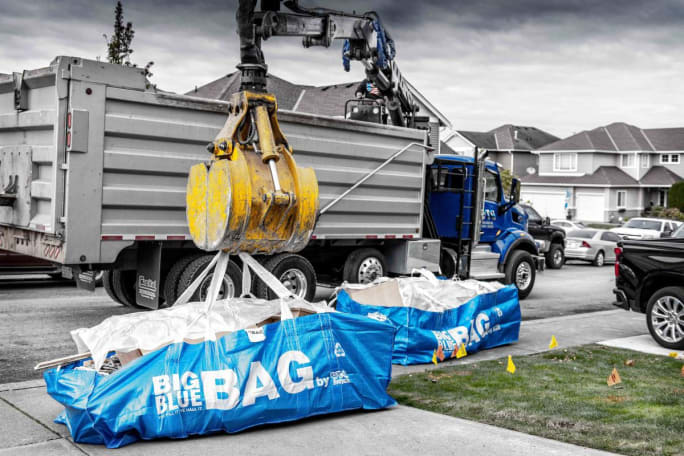
DTG Recycle was founded in 1999 and has become the largest commercial recycler of construction, demolition, industrial, and manufacturing waste in the Pacific Northwest.
Photo: DTG
Finding Solutions to Challenges
A challenge DTG has worked to overcome is updating its DOT compliance and safety programs; it now has two full-time employees dedicated to ensuring all is up to snuff. Ontop of that, having a mixed-match fleet of trucks that were all different specs caused problems for maintenance and dispatch. It solved this by standardizing its fleet.
Tire repair was also an issue, so the company has been working with Bridgestone to implement their tire pressure management system that will link to Geotab for live tire monitoring. This way, it’ll become apparent when a tire is getting low and allow technicians to address repairs in real-time, minimizing downtime and improving safety for drivers and customers.
Prepping For Future Projects
DTG’s gondola trailer project has been in the works for over two years and has been a big hit with its customers. There were many moving parts, including a trailer tipping machine, working on what spec the company needed, and partnering with customers to utilize the trailers on their jobs.
“Any time you have a new service line, there are a lot of things you need to figure out to streamline it,” Thompson said. “We have been making tweaks and improvements to the stock trailer to fit our specific needs, so this way we can fine-tune for our next order, so the trailers arrive ready to get to work with minimal customization on our part.”
Tweaking Technology to Improve Ops
Thompson said the company is moving over to AMCS dispatch software, which he believes will be a game-changer. He feels it will provide for better routing for trucks, automatic billing, inventory management, and auto tickets to the yard.
“When a driver picks up a load, it will self-generate an order at the destination scale house so when the driver arrives, the order is already populated. Everything from accounting, dispatch, sales, and the scale houses will be interconnected and working together, vastly improving the accuracy and efficiency of our operations,” he explained.
Pandemic Hiccups
Due to supply chain complications caused by COVID-19, the company has 11 trucks on order that won’t arrive until the second quarter of 2022. They’ve seen this disruption on everything from new equipment to maintenance parts such as filters, wiring harnesses, and more. New equipment is being held up by a few small components, from computer chips to tires.
“One part being back-ordered can hold up an entire unit when suppliers aren’t able to keep up. The pandemic has impacted our vendors, which affects us, and in turn, impacts our customers,” Thompson said.

Having a mixed-match fleet of trucks that were all different specs caused problems for maintenance and dispatch, so the company has standardized its fleet.
Photo: DTG
Cultivating A Passion for Trucks
Thompson got his start in fleet over 22 years ago, working with DTG founder Dan Guimont. They learned as they went along, and about seven years ago decided to get into the dumpster and transportation business.
“It was a natural fit for me to head that up, as I’d been there since the beginning when we had a small fleet of scrapping trucks. I had been heavily involved with that division at all levels,” he explained.
His favorite part of the job is the trucks themselves. They are nice and new, with most trucks being five years old or less, and are regularly swapped out.
“I enjoy fine-tuning our trucks and looking into what specifications provide the best vehicle for our needs,” he said.
Thompson believes keeping an updated fleet and investing in technology that improves safety for your employees and makes their jobs easier and more efficient will also give them a better quality of life experience.
“That all adds to driver retention and brand image. Safety is important to us, our employees, and our customers, and so is the way our fleet looks and runs,” he said.
Subscribe to Our Newsletter
More Operations
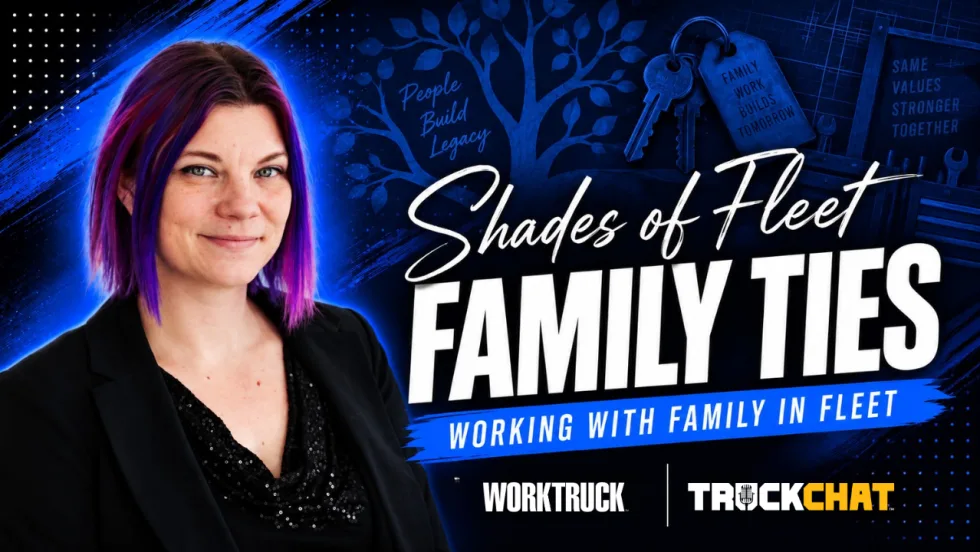
Family Ties Inside the Fleet Families Building Careers Across Generations
Three fleet families share what it really takes to work together, learn across generations, and keep business from following them home.
Read More →
Shades of Fleet Call for Voices: Fleet's Hidden Heroes
Fleet’s hidden heroes are often the ones keeping everything moving behind the scenes. September’s Shades of Fleet is looking for dispatchers, coordinators, parts specialists, and other support pros to share their stories.
Read More →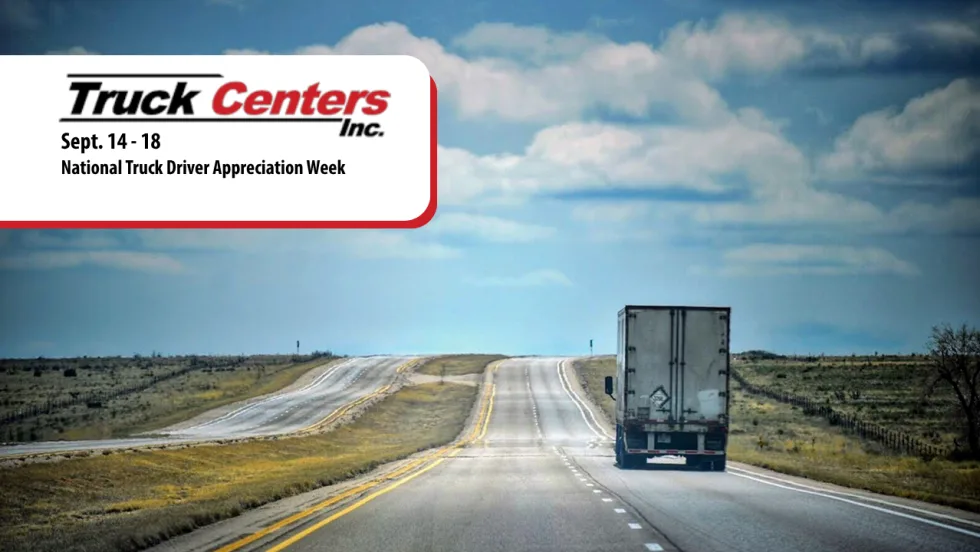
Truck Centers, Inc. Celebrates National Truck Driver Appreciation Week with $1,000 Fuel Card Giveaways
During National Truck Driver Appreciation Week, Truck Centers, Inc. is offering customers a chance to fuel up for free. Customers at all Truck Centers locations can enter to win one of four $1,000 fuel cards from Sept. 14 - 18.
Read More →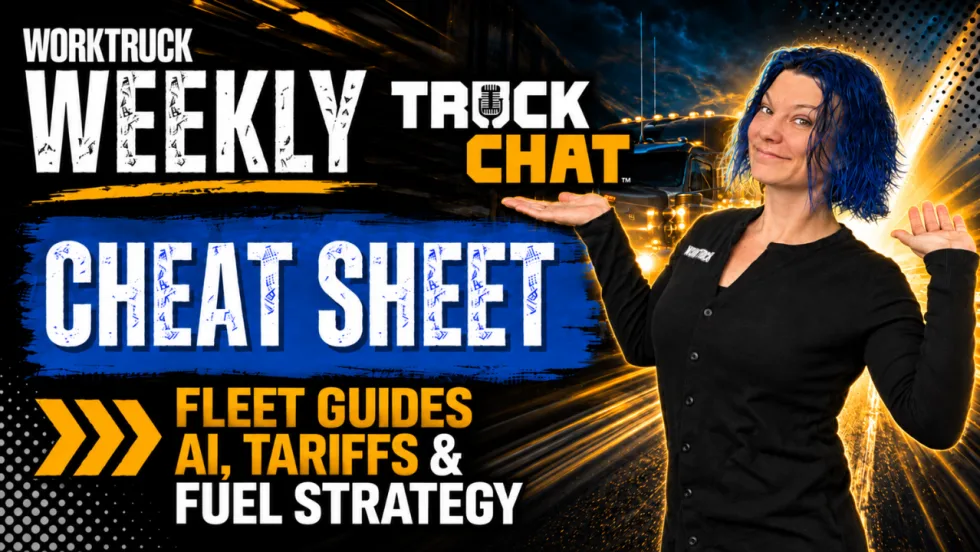
Fleet Guides, AI Time-Savers, Truck Tariffs & Fuel Strategy Lead the News
This week’s Truck Chat Cheat Sheet covers new fleet vehicle guides, practical AI use cases, U.S.-Canada truck production, mixed-energy strategy, and more.
Read More →
What Fleet Employers Are Missing When Hiring Veterans
What if some of the strongest candidates for fleet are already out there, but their experience is written in a language our industry does not always recognize?
Read More →
Automotive Fleet Opens 2026 Personal Use Survey for Commercial Fleet Managers
Less than two weeks left! Commercial and corporate fleet managers are invited to share how their organizations handle company vehicle personal-use policies, charges, and driver eligibility.
Read More →
What Resilient Fleets Do Differently When Conditions Change
Fleet resilience is about more than reacting to disruption. Lauren Fletcher talks with AP Fleet’s Alex Coveney about flexibility, planning, scaling, and what helps fleets adapt when business conditions shift.
Read More →
If We Want the Next Generation in Automotive, We Have to Give Them a Reason to Care
The automotive industry talks constantly about its workforce shortage. But before we can recruit the next generation, we may need to do a better job giving kids a reason to care about automotive in the first place.
Read More →
Ram ProMaster City Under $40K, Truck Tariffs, and AI Maintenance Lead the News
A sub-$40K commercial van, tariff questions, AI-powered maintenance, and a new EV production strategy headline this week’s Truck Chat Cheat Sheet.
Read More →
Bob Adamsky Shares the Fleet Lessons You Usually Learn the Hard Way
After more than 30 years in fleet, Arrow International’s Bob Adamsky has learned that the job is about far more than vehicles. He shares the lessons he wishes every fleet manager could learn a little earlier.
Read More →