




What is Driving Up Insurance Costs?
Insurance is a costly and often rising component of truck fleet management. How to stop the rise and combat the potential of a ‘nuclear verdict’ from impacting your operation?

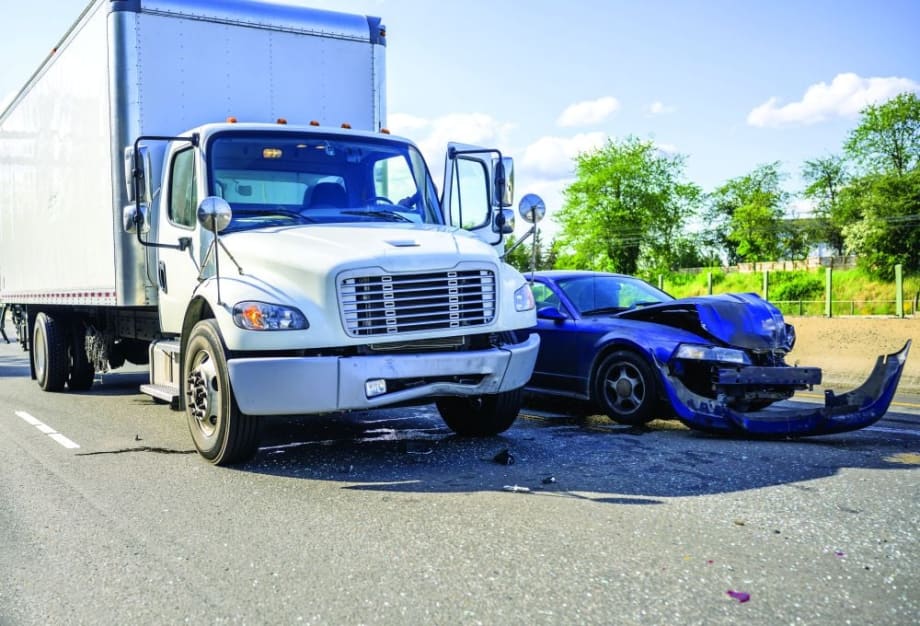
Nuclear verdicts — extraordinarily large jury settlements that appear to be out of proportion to the damages suffered —plague fleets and insurers alike.
Photo: GPS Insight
The fundamental purpose of insurance is to protect a company or individual from the financial consequences of a crash. But lately, fleets are seeing premiums rise higher and higher, sometimes making insurance itself be a financial hurdle. Where are the cost hikes coming from?
Four key trends are the source of steep insurance costs: advanced vehicle technology, accident severity, distracted driving, and nuclear verdicts.
Trend #1: Advanced Vehicle Technology
Over the past few years, vehicle safety technology like lane assist, lane keeping, automatic emergency braking, and collision warning systems have helped drivers avoid crashes. But these same technologies are also driving up insurance costs.
“Fleets have been replacing older vehicles with newer ones that have parts with higher costs to replace after an accident,” said Ryan Driscoll, VP of marketing at GPS Insight. “Insurance carriers are increasing rates across the board as costs to fix even small crashes are escalating while the number of sensors and technology in each car increases.”
While advanced driver assistance systems (ADAS) can reduce the likelihood of a crash, the sensor, cameras, and radars they rely on are often located in easy-to-damage areas, such as side mirrors and inside the bumper and windshield. That can make even the most common collisions costly.
According to a AAA study, a car with ADAS that’s in a minor fender bender can cost as much as $5,300 to repair, which is about $3,000 more than repairing the same vehicle without ADAS. Likewise, on average, repairing a windshield equipped with a camera system costs about $1,500 to repair — about two and a half times more than the same model without one.
Trend #2: Accident Severity
In a normal year, light- and medium-duty trucks will have more crashes than over-the-road trucks because driving in town presents more opportunities for collisions.
On the flip side, over-the-road trucks will have more severe crashes due to their weight and the speed at which they travel. But since March of 2020, things haven’t been normal, even on roadways.
“During the pandemic when roads were clear, drivers had a tendency to go a little faster because there were fewer vehicles on the road,” said Tommy Ruke, founder & education director at the Motor Carrier Insurance Education Foundation. “Now, roadways are more congested, but people are still driving faster than before.”
Increased vehicle speed correlates directly to increased accident severity — and the more severe accidents are, the higher the costs for insurers.
“From March 2020 until late 2020, frequency was down for all auto accidents, as fewer vehicles were on the road,” said Tim Horgan, chief marketing officer for insurance brokerage Hub International. “But, published reports indicated that severity was up — fewer vehicles but higher speeds resulting in more serious accidents.”
Trend #3: Distracted Driving
While it’s clear crashes increase the cost of insurance, the question becomes, “What’s causing the crashes?”
According to the National Safety Council (NSC), the top three causes of vehicle accidents are alcohol (30.8%), speeding (30%), and distracted driving (26%). However, insurers estimate distracted driving causes more like 40%-50% of collisions, making it likely the top cause of crashes.
“Distracted driving has become a bigger problem over the last decade,” said Driscoll of GPS Insight. “That can be attributed to the smartphone. We all recognize that smartphones are a leading cause of distracted driving.”
Ruke of the Motor Carrier Insurance Education Foundation said the stakes associated with distracted driving are higher for drivers of trucks and vans.
“The biggest concern is distracted driving and the increase in cell phone use, mainly by drivers of four-wheelers,” he said. “Crashes happen when the four-wheeler is distracted, then initiates a move that the unit can’t react to like a car.”
Trend #4: Nuclear Verdicts
Nuclear verdicts — extraordinarily large jury settlements that appear to be out of proportion to the damages suffered — plague fleets and insurers alike.
A prime example is a case in Florida that was estimated to have an exposure of $750,000-$900,000 but resulted in a $21 million verdict. These settlements are shocking but worse, can be financially ruinous.
Unfortunately, nuclear verdicts are becoming both more common and more costly. Since 2012, trucking verdicts are up approximately 330% compared to 2007-2012. And a study by the American Transportation Research Institute (ATRI) based on trucking litigation data on 600 cases between 2006 and 2019 showed that the first five years of the data, there were 26 cases over $1 million.
In the past five years of the data, there were nearly 300 cases over $1 million. That same study found that between 2010 and 2018 the average verdict size for a lawsuit above $1 million involving a truck crash increased nearly 1,000%, from $2.3 million to $22.3 million.
“Nuclear verdicts, or extremely large verdicts, impact the cost of insurance for everyone, as the cost of the verdict gets broken down and passed onto future consumers of insurance,” said Steve McKay, CEO for Pouch, a small business insurance provider. “We are seeing higher average commercial auto verdicts, and this does drive the cost of insurance up. While an owner can’t control every verdict, fortunately they can control their drivers.” For this reason, Pouch gives customers free telematics devices that can monitor driver behavior and reward them with lower rates.
Driscoll of GPS Insight said these steep settlements are firmly on insurers’ radars and are now a part of how they determine risk profiles.
“We are currently in a ‘hard’ insurance marketplace with auto liability, which means premiums/rates are increasing and underwriters are taking a more detailed look at businesses from a risk management standpoint,” he said. “The cause of the hard market is primarily due to the auto liability line of business being a loss leader across all insurance companies. There are many reasons for that, but in part it has a lot to do with the astronomical settlements that are being paid out on lawsuits.”
More Operations
Family Ties Inside the Fleet Families Building Careers Across Generations
Three fleet families share what it really takes to work together, learn across generations, and keep business from following them home.
Read More →
Shades of Fleet Call for Voices: Fleet's Hidden Heroes
Fleet’s hidden heroes are often the ones keeping everything moving behind the scenes. September’s Shades of Fleet is looking for dispatchers, coordinators, parts specialists, and other support pros to share their stories.
Read More →
Truck Centers, Inc. Celebrates National Truck Driver Appreciation Week with $1,000 Fuel Card Giveaways
During National Truck Driver Appreciation Week, Truck Centers, Inc. is offering customers a chance to fuel up for free. Customers at all Truck Centers locations can enter to win one of four $1,000 fuel cards from Sept. 14 - 18.
Read More →
Fleet Guides, AI Time-Savers, Truck Tariffs & Fuel Strategy Lead the News
This week’s Truck Chat Cheat Sheet covers new fleet vehicle guides, practical AI use cases, U.S.-Canada truck production, mixed-energy strategy, and more.
Read More →
What Fleet Employers Are Missing When Hiring Veterans
What if some of the strongest candidates for fleet are already out there, but their experience is written in a language our industry does not always recognize?
Read More →
Automotive Fleet Opens 2026 Personal Use Survey for Commercial Fleet Managers
Less than two weeks left! Commercial and corporate fleet managers are invited to share how their organizations handle company vehicle personal-use policies, charges, and driver eligibility.
Read More →
What Resilient Fleets Do Differently When Conditions Change
Fleet resilience is about more than reacting to disruption. Lauren Fletcher talks with AP Fleet’s Alex Coveney about flexibility, planning, scaling, and what helps fleets adapt when business conditions shift.
Read More →
If We Want the Next Generation in Automotive, We Have to Give Them a Reason to Care
The automotive industry talks constantly about its workforce shortage. But before we can recruit the next generation, we may need to do a better job giving kids a reason to care about automotive in the first place.
Read More →
Ram ProMaster City Under $40K, Truck Tariffs, and AI Maintenance Lead the News
A sub-$40K commercial van, tariff questions, AI-powered maintenance, and a new EV production strategy headline this week’s Truck Chat Cheat Sheet.
Read More →
Bob Adamsky Shares the Fleet Lessons You Usually Learn the Hard Way
After more than 30 years in fleet, Arrow International’s Bob Adamsky has learned that the job is about far more than vehicles. He shares the lessons he wishes every fleet manager could learn a little earlier.
Read More →