




Learn About Tire Sensors: Get Smart About Smart Tires
Understanding How Connected Vehicles & Fleets Can Protect Data Privacy
As light-duty and medium-duty vehicles generate significantly more data daily, fleet managers must consider security and data precautions.
by Sumit Chauhan, CerebrumX
September 11, 2023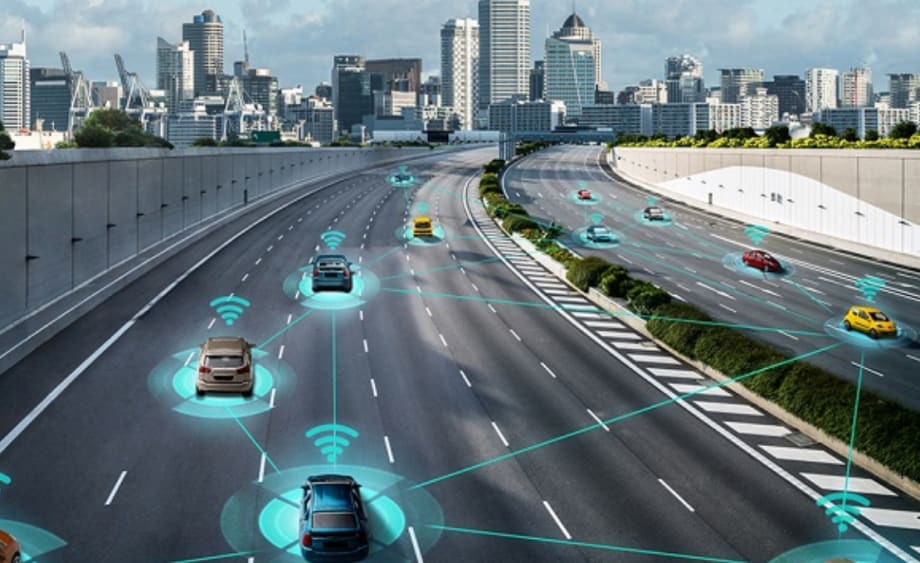
Fleets with light- and medium-duty vehicles generate more daily data.
Photo: CerebrumX
5 min to read
Automakers are currently faced with the challenge of developing an engaging in-vehicle experience that surpasses their rivals with a focus on rapid innovation. At its core, this innovation is primarily about connectivity through sophisticated and advanced data and algorithms.
As light-duty and medium-duty vehicles generate significantly more data daily, and with the advent of high-speed 5G communication, in-vehicle edge computing has become critical to ensure that connected vehicles function at scale to provide quicker and improved performance.
As a result, vehicles can harness data from multiple OEMs and sources scattered in the ecosystem, to be utilized by OEMs, insurers, fleet companies, and smart cities/municipalities. However, all this connectivity also means that security and data precautions must be considered.
Connected Vehicles Have a Wealth of Data yet to Be Unlocked
Owing to the vast size and breadth of the automotive industry, numerous OEMs are involved in manufacturing connected vehicles and medium-duty trucks as well as a wide variety of models from each OEM.
Further, with more than 100 sensors inside each vehicle, tracking everything from driver behavior, vehicle performance, and component lifecycle, the scope and scale of data sources truly becomes exponential.
And while all this data can come in handy for various applications, it can be challenging to keep secure. It could become very difficult to enforce conventional cyber security standards with such a complicated automotive supply chain.
Protecting vehicles from cyber threats becomes increasingly challenging with each additional connection, embedded or telematics system, and data-collecting sensor. The software and technology industries have had a lot to learn when it comes to implementing stringent security norms.
Modern cars have great promise in leveraging all this data, and it is possible that more reliable and regulated cybersecurity protocols may be implemented in the production of vehicles in the near future.
Some vehicles may be even more susceptible to these threats because they are built with even more data possibilities in mind. In response to a global movement toward decarbonization, ACE mobility (autonomous, connected, and electric) has been growing in popularity. While this is good news for the environment, it can raise new issues with data privacy and security.
An average ICE (internal combustion engine) vehicle today has about 100 million lines of code. With more autonomous and electric vehicles expected on our roads in the future, there will be a steep rise in the number of lines of code for ACE vehicles, and consequently in the scope for security issues.
Electric Vehicles Are Designed With Data in Mind
Electric vehicles gain from in-vehicle systems that can assess and enhance energy output, battery usage, and charging capabilities, in addition to the safety features that improve each year.
Since software controls most safety features, the powertrain, and even the battery functionality, cyber security flaws may threaten several aspects of the vehicle. A big open target for cyber predators is the vehicle itself, which is more connected than ever, more dependent on technology than ever, and more anticipated by the world than ever. It also has an internal network of components connected to the outside world.
But such vehicles will be more connected than ever, more dependent on technology than ever, and more anticipated by the world than ever. They will also house an internal network of components and sensors connected to the outside world via the cloud.
They could produce terabytes of data daily, which could be analyzed to identify usage patterns and applied on a larger scale to make cities and infrastructures safer and more effective.
In this setting, machine learning (ML) also performs exceptionally well. ML-driven solutions give analysts the ability to identify the connections between events over time and across various hosts, users, and networks by giving them a broad understanding of the activity surrounding the assets they oversee.
Contextual information can be provided by ML to lower the risks and potential costs of a breach. Professionals in the mobility industry need to partner with experts with a thorough understanding of machine learning to become skilled in designing secure smart vehicle solutions.
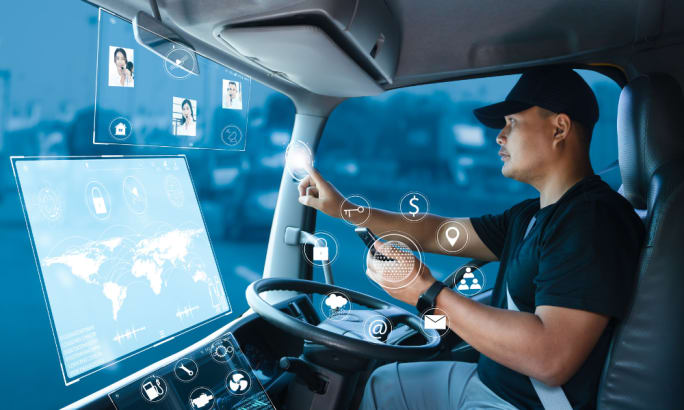
There are more than 100 sensors in each vehicle.
Photo: Work Truck
What’s Possible to Help Prevent Incidents
While it is impossible to foresee every cybercriminal attack scenario, it is obvious that data privacy will be a key concern. The lives and privacy of the people it serves must be protected, and policymakers must ensure that the system governing the next generation of transportation does so.
There is a heightened need for all nations to adopt data privacy and security norms, which not only lay the foundation for improved data and vehicle security, but also make way for safer innovations.
In fact, once the security of connected vehicles is standardized, doors open for the standardization of many extra features within cars. This makes it much simpler and quicker for exciting innovation to spread throughout the entire industry.
It's possible that start-ups and smaller businesses won't always have access to the data and technology needed to support their innovative concepts for next-gen, sustainable automotive solutions.
In these circumstances, platforms with adaptable, secure technology to support such players offer opportunities for larger industry players to share data insights.
This will shorten and de-risk innovation, enabling both start-ups and established players to market great ideas more quickly. The automotive industry is accelerating its capabilities as it keeps developing and utilizing data platforms, open-source software, and cloud providers.
Vehicles are still machines, even with added intelligence. And any interference could undermine security. Various opportunities also become available when the proper systems are in place to protect user data. The potential of smart vehicles can only be fully realized once the security of connected vehicles and the corresponding data has been effectively addressed.
Subscribe to Our Newsletter
More Operations

Family Ties Inside the Fleet Families Building Careers Across Generations
Three fleet families share what it really takes to work together, learn across generations, and keep business from following them home.
Read More →
Shades of Fleet Call for Voices: Fleet's Hidden Heroes
Fleet’s hidden heroes are often the ones keeping everything moving behind the scenes. September’s Shades of Fleet is looking for dispatchers, coordinators, parts specialists, and other support pros to share their stories.
Read More →
Truck Centers, Inc. Celebrates National Truck Driver Appreciation Week with $1,000 Fuel Card Giveaways
During National Truck Driver Appreciation Week, Truck Centers, Inc. is offering customers a chance to fuel up for free. Customers at all Truck Centers locations can enter to win one of four $1,000 fuel cards from Sept. 14 - 18.
Read More →
Fleet Guides, AI Time-Savers, Truck Tariffs & Fuel Strategy Lead the News
This week’s Truck Chat Cheat Sheet covers new fleet vehicle guides, practical AI use cases, U.S.-Canada truck production, mixed-energy strategy, and more.
Read More →
What Fleet Employers Are Missing When Hiring Veterans
What if some of the strongest candidates for fleet are already out there, but their experience is written in a language our industry does not always recognize?
Read More →
Automotive Fleet Opens 2026 Personal Use Survey for Commercial Fleet Managers
Less than two weeks left! Commercial and corporate fleet managers are invited to share how their organizations handle company vehicle personal-use policies, charges, and driver eligibility.
Read More →
What Resilient Fleets Do Differently When Conditions Change
Fleet resilience is about more than reacting to disruption. Lauren Fletcher talks with AP Fleet’s Alex Coveney about flexibility, planning, scaling, and what helps fleets adapt when business conditions shift.
Read More →
If We Want the Next Generation in Automotive, We Have to Give Them a Reason to Care
The automotive industry talks constantly about its workforce shortage. But before we can recruit the next generation, we may need to do a better job giving kids a reason to care about automotive in the first place.
Read More →
Ram ProMaster City Under $40K, Truck Tariffs, and AI Maintenance Lead the News
A sub-$40K commercial van, tariff questions, AI-powered maintenance, and a new EV production strategy headline this week’s Truck Chat Cheat Sheet.
Read More →
Bob Adamsky Shares the Fleet Lessons You Usually Learn the Hard Way
After more than 30 years in fleet, Arrow International’s Bob Adamsky has learned that the job is about far more than vehicles. He shares the lessons he wishes every fleet manager could learn a little earlier.
Read More →