




Related Photos: Assembling Ford's Transit Van
The Complex Efficiency of Assembling Ford's Transit Van
Ford offers 58 configurations of its full-size van, and produces them all on one line at its Kansas City Assembly Plant.

Paul Clinton・Former Senior Web Editor
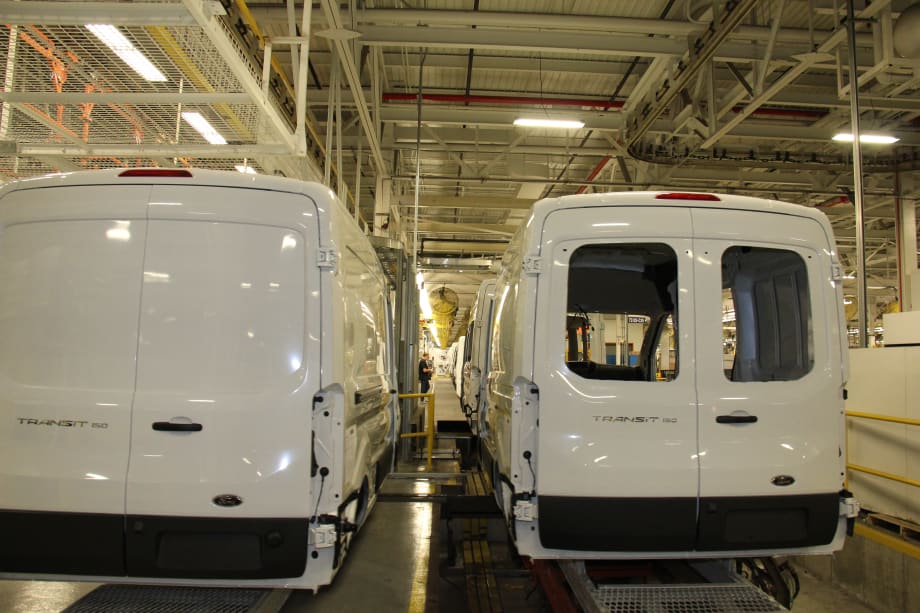
Photo by Paul Clinton.
4 min to read
Photo by Paul Clinton.
Ford offers its full-size Transit van in 58 configurations that would seem to thwart an efficient assembly process with its mix of wheelbases (three), body lengths (five), roof heights (three) and engines (three).
However, to watch the various configurations move toward completion on a single assembly line at the Kansas City Assembly Plant (KCAP) is to behold what may be the most complex vehicle assembly of a light-duty vehicle sold in the U.S.
The 58 configurations provide a starting point to the customization available. There are nearly 2,000 variations of Transit built at KCAP — only the hood and left- and right-hand fenders appear on all variants. There are more than 3,500 different end-item parts that can go into a Transit, including 12 doors and more than 100 pieces of glass.
"Transit offers the most configurations of any vehicle in its class," said Raj Sarkar, general marketing manager for Ford North America Fleet, Lease, and Remarketing. "We have the right product for each customer and their individual needs, and we have the manufacturing capability to build all of those Transit variations with quality at KCAP."
How all the parts converge with impressive precision on the assembly line demonstrates just how far Ford has evolved its founder's initial three principles to automate vehicle assembly with heavy machinery, work stations, and minimal movement of parts.
Ford builds Transits at the plant using two shifts, including cargo vans, passenger wagons, chassis cabs, and cutaways. In 2014 — the first year of production that began April 30 — Ford built 42,951 Transits. Every Transit sold in North America is built at KCAP. The plant is also one of two U.S. factories to build the F-150, producing nearly 325,000 of the best-selling vehicle in 2014. The plant is now building almost two F-150s for every Transit.
"We are very proud to build both America's best-selling truck and best-selling van right here at KCAP," said Tim Young, the plant's manager.
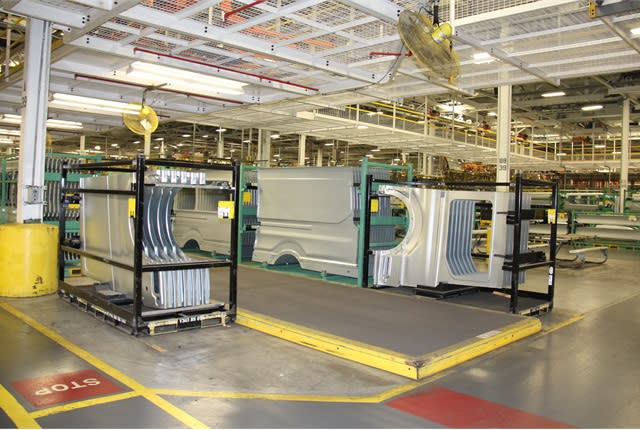
Photo by Paul Clinton.
KCAP is Ford's largest manufacturing facility in the world, covering 5.5 million square feet on 1,269 acres. The company significantly upgraded the plant in 2011 to support production of Transit and increased demand for the new F-150 with a $1.1 billion investment that included a 437,000-square-foot stamping facility that opened in 2012 and a 78,000-square-foot paint shop. The paint shop expansion included installation of the three-wet paint and two-wet monocoat processes, which are more environmentally friendly and don't compromise paint quality and durability.
The plant builds Transits in a customer-order-driven sequence known as a "natural blend order" that incorporates the just-in-time parts arrival process. Parts come into the factory and reach the workstations along the line in a way that minimizes the amount of parts storage required on the plant floor. Because parts reach the line just when they're needed, workers can build a multitude of versions of the van on a single line. This process is also called "bull's-eye sourcing" at the plant.
"That allows us to handle the complexity," Young said. "It gives us a tremendous amount of flexibility."
Each workstation has what's known as an AIS box that's named for its vendor, American Industrial Systems, Inc. The box displays a list of parts that need to be added to the van at that step in the process and a sequence of how the parts are added. The vehicle and parts information sent to the box is known as "the broadcast."
In addition to providing instructions for workers, the AIS box and broadcast allow plant managers to track each job and monitor vehicle build quality.
At the start of each job, each van is assigned a Vehicle Identification Number (VIN) that stays with the vehicle build and parts assigned to that job.
In addition to new vans, the plant also produces replacement parts for Ford's service network that are sent to dealers to stock their parts inventory.
The plant runs two shifts for Transit of eight to 10 hours a day, five or six days a week based on demand.
"In the end, it's all about giving customers what they want," Young said. "Transit offers incredible utility to our customers, and we've been able to put flexible manufacturing processes in place that let us build the utility into Transit that our customers demand and need. We can build the Transit configuration with the utility that they're looking for at any moment of any day."
Topics:FordFord TransitFull-Size VansAssembly PlantsVehicle ManufacturingOperationsVehicle ResearchSmall Fleet
Originally posted on Automotive Fleet
Subscribe to Our Newsletter
More Operations
Family Ties Inside the Fleet Families Building Careers Across Generations
Three fleet families share what it really takes to work together, learn across generations, and keep business from following them home.
Read More →
Shades of Fleet Call for Voices: Fleet's Hidden Heroes
Fleet’s hidden heroes are often the ones keeping everything moving behind the scenes. September’s Shades of Fleet is looking for dispatchers, coordinators, parts specialists, and other support pros to share their stories.
Read More →
Truck Centers, Inc. Celebrates National Truck Driver Appreciation Week with $1,000 Fuel Card Giveaways
During National Truck Driver Appreciation Week, Truck Centers, Inc. is offering customers a chance to fuel up for free. Customers at all Truck Centers locations can enter to win one of four $1,000 fuel cards from Sept. 14 - 18.
Read More →
Fleet Guides, AI Time-Savers, Truck Tariffs & Fuel Strategy Lead the News
This week’s Truck Chat Cheat Sheet covers new fleet vehicle guides, practical AI use cases, U.S.-Canada truck production, mixed-energy strategy, and more.
Read More →
What Fleet Employers Are Missing When Hiring Veterans
What if some of the strongest candidates for fleet are already out there, but their experience is written in a language our industry does not always recognize?
Read More →
Automotive Fleet Opens 2026 Personal Use Survey for Commercial Fleet Managers
Less than two weeks left! Commercial and corporate fleet managers are invited to share how their organizations handle company vehicle personal-use policies, charges, and driver eligibility.
Read More →
What Resilient Fleets Do Differently When Conditions Change
Fleet resilience is about more than reacting to disruption. Lauren Fletcher talks with AP Fleet’s Alex Coveney about flexibility, planning, scaling, and what helps fleets adapt when business conditions shift.
Read More →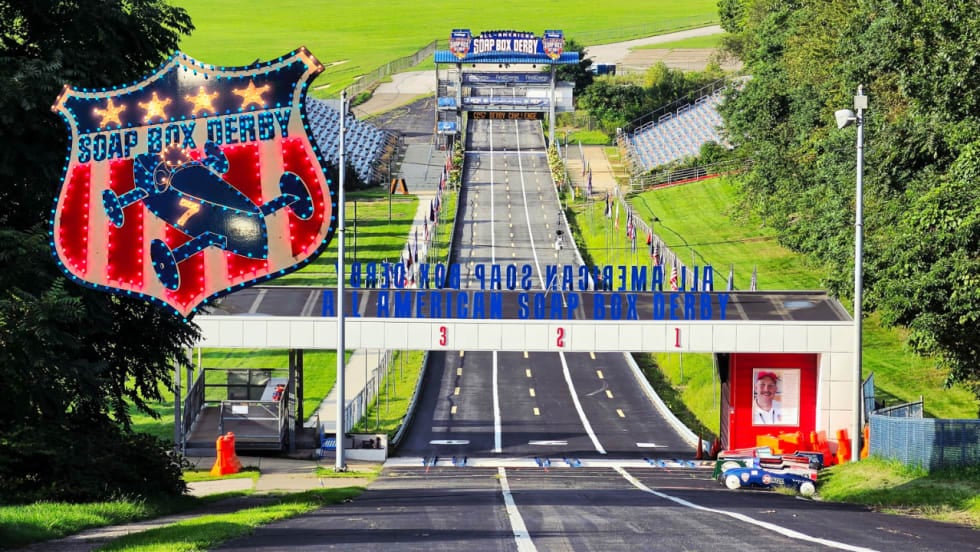
If We Want the Next Generation in Automotive, We Have to Give Them a Reason to Care
The automotive industry talks constantly about its workforce shortage. But before we can recruit the next generation, we may need to do a better job giving kids a reason to care about automotive in the first place.
Read More →
Ram ProMaster City Under $40K, Truck Tariffs, and AI Maintenance Lead the News
A sub-$40K commercial van, tariff questions, AI-powered maintenance, and a new EV production strategy headline this week’s Truck Chat Cheat Sheet.
Read More →
Bob Adamsky Shares the Fleet Lessons You Usually Learn the Hard Way
After more than 30 years in fleet, Arrow International’s Bob Adamsky has learned that the job is about far more than vehicles. He shares the lessons he wishes every fleet manager could learn a little earlier.
Read More →