




Staying Prepared for the Road Ahead
Area Wide Protective has remained resilient during tough times and is always looking for ways to minimize downtime and maximize efficiency.

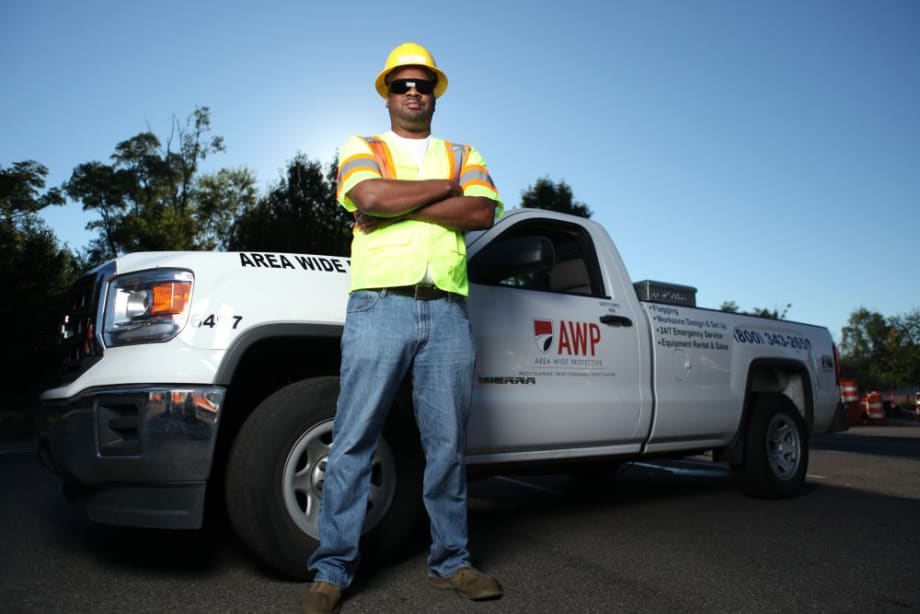
John Harris, an Estimator out of the company’s corporate office, stands by one of the company’s vehicles.
Photo: Area Wide Protective
What doesn’t take down a business only makes it stronger. The pandemic has caused many to have to adjust to a “new normal.” When it comes to fleet, that means adapting to hiccups caused by COVID-19 and coming out better for it.
Here, Bob Adamsky, fleet manager for Area Wide Protective (AWP), discusses how the company has used the pandemic as an opportunity to cultivate strong relationships and improve the way it operates.
Protecting with the Right Trucks
Area Wide Protective, Inc. (AWP) is a professional traffic control company that protects its customers’ people, business, and time. Founded in 1993, the company delivers safe, reliable, and compliant traffic control services ranging from work zone flagging to comprehensive transportation management plans. The company employs 5,000 protectors at 124 locations across the U.S. and Canada.
Its fleet currently consists of 2,800 powered vehicles and 1,800 trailers, some with mounted equipment. AWP’s primary fleet vehicle is a light-duty, full-size, ½ ton pickup truck, which makes up almost 50% of the fleet. Medium-duty trucks make up less than 10%. Typically, a standard full-size pickup with an 8-foot bed and light-duty towing ability covers the largest percentage of the company’s needs.
Employees use company trucks to transport themselves and road safety equipment to various worksite scenarios that require flagging and traffic control – including creating road safety zones for everything from construction work to special events.
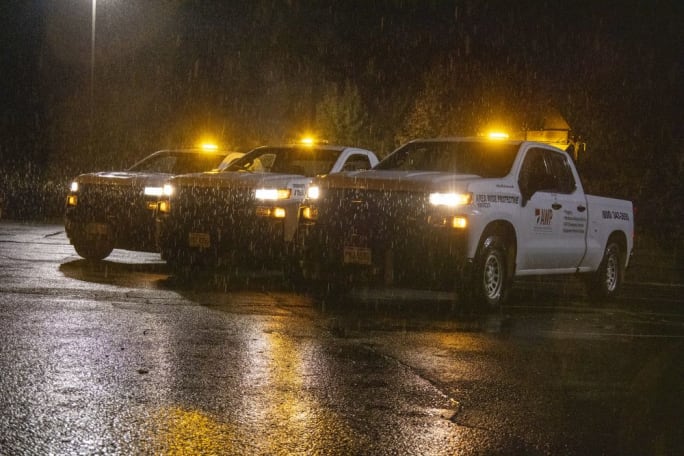
The company strives to maximize utilization models to ensure timely assignment of available or underutilized trucks and equipment across the many geographical areas it serves.
Photo: Area Wide Protective
Adapting to Tough Times
The company strives to maximize utilization models to ensure timely assignment of available or underutilized trucks and equipment across the many geographical areas it serves. It continues to target the correct lifecycle of its fleet and equipment, as supply and resale dollars have varied over the last 12 months due to interruptions caused by COVID-19. One of its goals is to continue to reduce the downtime needed for repair and maintenance services.
To combat these challenges, AWP implemented telematics using Azuga GPS for tracking driver performance. The company won the Azuga Safety Star Fleet Driving Award for 2020, which involves ranking fleets with a weighted average of several individual components, including speeding, hard braking, harsh acceleration, and the number of trips made in a given day, and miles traveled per hour.
Partnering with the manufacturers of its fleet and equipment to better understand the engineered total lifecycle of major components and to find and rectify the most common fails has helped the company a great deal.
“AWP has cultivated strong relationships with its vendors and has developed a strong preventive maintenance program,” Adamsky said.
In addition to this, the company has been working to consolidate its outsourced programs and multiple leasing partners. It has also been conducting best practices training for drivers and field management, which has resulted in improved productivity and better financial results.
Overcoming COVID-19 Complications
Finding new business and keeping employees safe and productive while remaining profitable are critical challenges AWP and most fleet-based businesses have had to deal with during the COVID-19 pandemic.
The primary challenges the company faces include finding available pickup trucks as the company grows. Delayed order delivery times can cause the extension of service of an aged vehicle.
“There is no doubt challenging times still lay ahead, even as businesses continue counting their losses. 2020 brought many challenges; what we have learned from this experience will make us fleet managers better in the future,” Adamsky said.
Best Practices Yield Best Results

Bob Adamsky is the fleet manager for Area Wide Protective (AWP).
Photo: Area Wide Protective
Adamsky entered the fleet world from the shop floor. He said he always knew from a young age that he enjoyed mechanical challenges and making things better. A few weeks after turning 16, he got his start as an auto mechanic at the local gas station, where he performed repairs and maintenance. A few years later, he worked as a flat-rate tech in a dealership but found the desire to treat all the vehicles like they were his own, not just warranty work or the cheapest repair.
He entered the fleet world as a company mechanic for a construction company. Immediately, he enjoyed improving the efficiency and longevity of trucks and equipment. This progressed into operational and financial efficiency.
“I truly enjoy the continued challenge of making a fleet operation better and more efficient. Prior best practices can always be improved by discovering new methods, and nothing is more exciting than seeing results,” he said.
His advice for others is to optimize your business operations by monitoring costs, leveraging technology, taking good care of your employees, and preparing for shifting customer needs.
“This will give you an edge over the tough times ahead,” he said.
More Operations
Family Ties Inside the Fleet Families Building Careers Across Generations
Three fleet families share what it really takes to work together, learn across generations, and keep business from following them home.
Read More →
Shades of Fleet Call for Voices: Fleet's Hidden Heroes
Fleet’s hidden heroes are often the ones keeping everything moving behind the scenes. September’s Shades of Fleet is looking for dispatchers, coordinators, parts specialists, and other support pros to share their stories.
Read More →
Truck Centers, Inc. Celebrates National Truck Driver Appreciation Week with $1,000 Fuel Card Giveaways
During National Truck Driver Appreciation Week, Truck Centers, Inc. is offering customers a chance to fuel up for free. Customers at all Truck Centers locations can enter to win one of four $1,000 fuel cards from Sept. 14 - 18.
Read More →
Fleet Guides, AI Time-Savers, Truck Tariffs & Fuel Strategy Lead the News
This week’s Truck Chat Cheat Sheet covers new fleet vehicle guides, practical AI use cases, U.S.-Canada truck production, mixed-energy strategy, and more.
Read More →
What Fleet Employers Are Missing When Hiring Veterans
What if some of the strongest candidates for fleet are already out there, but their experience is written in a language our industry does not always recognize?
Read More →
Automotive Fleet Opens 2026 Personal Use Survey for Commercial Fleet Managers
Less than two weeks left! Commercial and corporate fleet managers are invited to share how their organizations handle company vehicle personal-use policies, charges, and driver eligibility.
Read More →
What Resilient Fleets Do Differently When Conditions Change
Fleet resilience is about more than reacting to disruption. Lauren Fletcher talks with AP Fleet’s Alex Coveney about flexibility, planning, scaling, and what helps fleets adapt when business conditions shift.
Read More →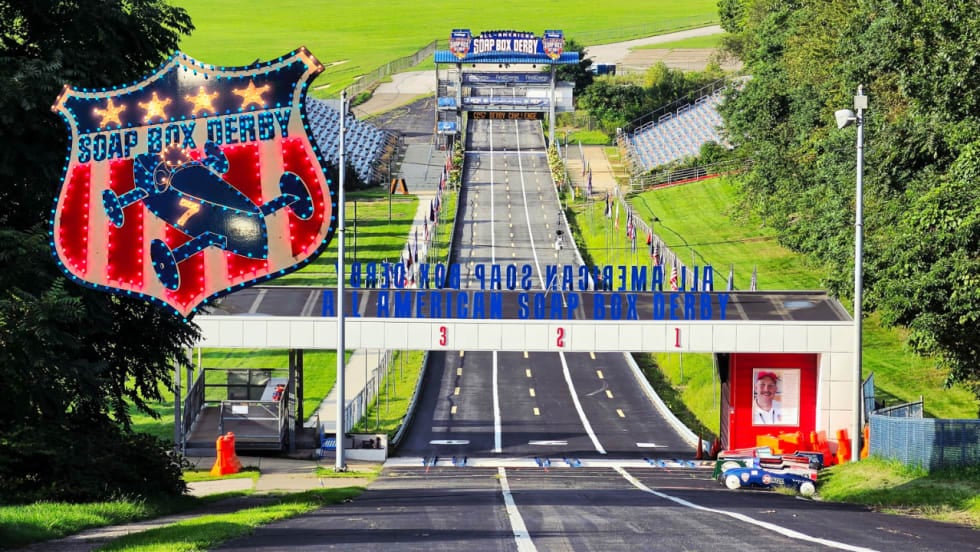
If We Want the Next Generation in Automotive, We Have to Give Them a Reason to Care
The automotive industry talks constantly about its workforce shortage. But before we can recruit the next generation, we may need to do a better job giving kids a reason to care about automotive in the first place.
Read More →
Ram ProMaster City Under $40K, Truck Tariffs, and AI Maintenance Lead the News
A sub-$40K commercial van, tariff questions, AI-powered maintenance, and a new EV production strategy headline this week’s Truck Chat Cheat Sheet.
Read More →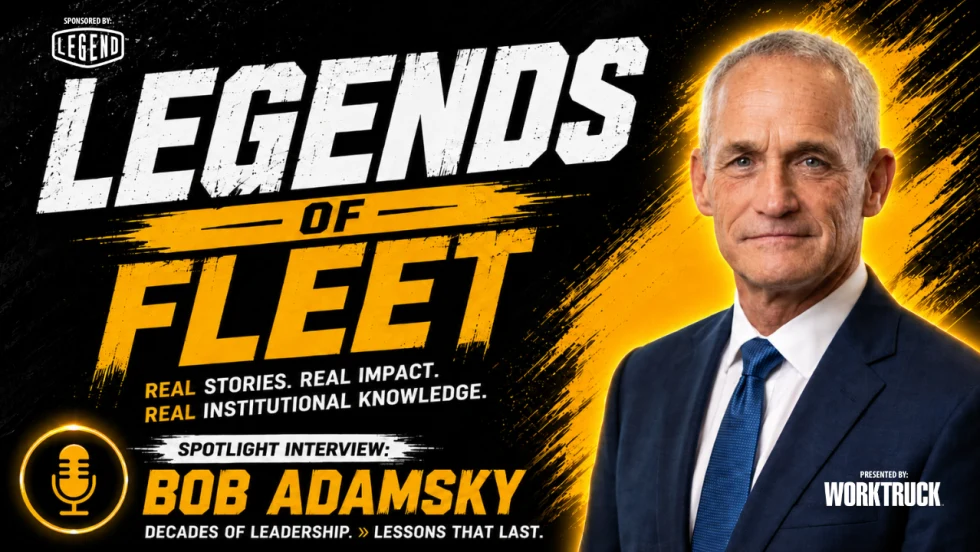
Bob Adamsky Shares the Fleet Lessons You Usually Learn the Hard Way
After more than 30 years in fleet, Arrow International’s Bob Adamsky has learned that the job is about far more than vehicles. He shares the lessons he wishes every fleet manager could learn a little earlier.
Read More →