





Dig Deeper: How to Build Better Work Orders for Fleet Managers
In 2026, Yard Operations Stops Being a ‘Site Thing’ And Becomes a Strategy
Yard operations are leveling up in 2026. Electrification, standardization, yard operating systems, and specialized partners redefine uptime.
January 22, 2026
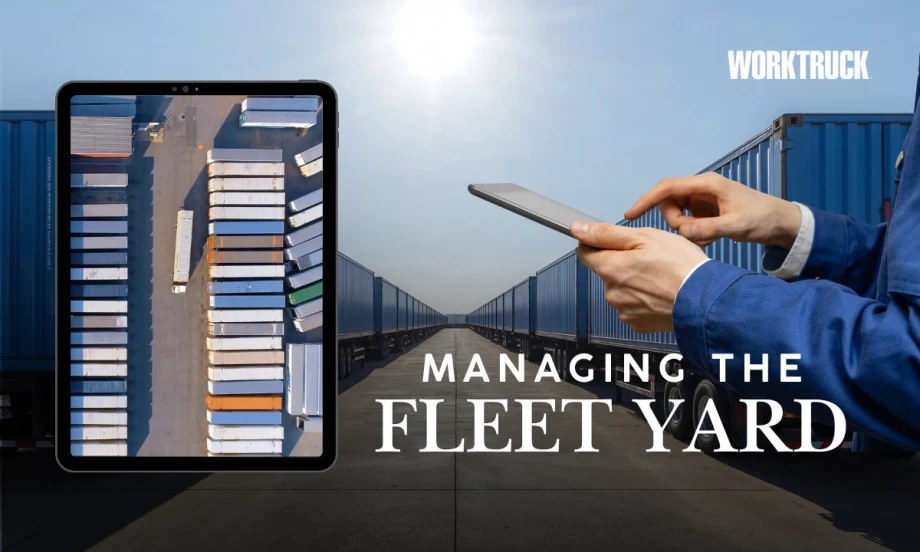
In 2026, the yard stops being a “site thing” and starts operating like a system. Better visibility, standardized workflows, and smarter service planning turn the four fences into a lever for uptime, labor, and network performance.
Credit: Work Truck
8 min to read
For years, yard operations have lived in the category of “important… but later.”
Yards were where problems first showed up, but they didn’t always get the investment, structure, or leadership attention that long-haul transportation or field fleets did. And in many organizations, the yard ran on tribal knowledge, heroic dispatchers, and the magical ability of someone on-site to just “make it work.”
In 2026, that era starts to end.
The yard is becoming a strategic operational focus, and the changes happening within the four fences will ripple into transportation performance, warehouse efficiency, uptime, labor planning, and even electrification decisions.
Matt Yearling, CEO of YMX Logistics, put it plainly: “If last year was about realizing the yard operations matter, the year ahead is about acting on that conviction.”
And in his view, fleets and logistics operations are moving away from improvisation toward systematic execution.
“Together, these movements signal the end of improvisational yard management and the rise of disciplined, systematic execution, significantly impacting both transportation and warehouse operations,” Yearling said.
If you manage a work truck fleet and you’ve ever been burned by a yard bottleneck, a trailer sitting too long, or the mystery of where equipment went, you already know why this matters. The yard is not a background function. It’s the control room for a lot of the work.
Yard Electrification Will Become Standard Practice
One of the biggest disruptors Yearling sees is yard electrification, and not because it’s trendy. Because it’s practical.
“Electrification is no longer a fringe investment,” Yearling said. “It is becoming one of the fastest, most cost-effective ways to modernize yard operations.”
Yard tractors are one of the most natural entry points into EV adoption because their duty cycles are predictable and they operate in controlled environments. That means charging can be planned, infrastructure can be centralized, and the operational risk is lower than on-the-road electrification.
“Because of their predictable duty cycles and controlled charging environments, yard tractors are the ideal entry point into EV adoption,” Yearling said.
And the benefits are immediate and operationally visible: lower operating costs, reduced downtime, and better operator experience.
“The air is cleaner. The site is quieter. And organizations gain immediate emissions reductions without straining their transportation network,” Yearling said.
For organizations that have struggled to find the right place to start with electrification, the yard becomes a very compelling answer: it’s contained, measurable, and scalable.
Yearling’s advice for preparation is practical and phased, not all-or-nothing. He recommends organizations assess electrical capacity, prioritize high-volume sites, model total lifecycle cost, train frontline teams, and integrate EV planning into capital budgets. “Phased deployment allows companies to learn, scale, and avoid service disruption,” he said.
That theme of phased deployment shows up across other forecasts, too. In 2026, the winning strategies aren’t reckless. They’re intentional.
Standardization Will Replace the Site-by-Site Patchwork
The second big shift Yearling called out is standardization.
“For years, every yard ran its own playbook,” he said. “Different processes. Different metrics. Different tools. The result was predictable: volatile performance and inconsistent outcomes.”
That’s a painful truth in many networks. When every site operates differently, it becomes harder to measure performance, harder to train teams, and it is nearly impossible to scale improvements.
In 2026, Yearling expects more organizations to shift toward unified network operating models, including shared workflows, unified KPIs, consistent labor expectations, and aligned equipment strategies.
“With standardization in place, performance stops relying on individual site heroes and starts relying on system design,” he said.
That’s a huge mindset shift, and it also ties directly into workforce challenges. When operations are standardized and measurable, performance doesn’t collapse when a single key person leaves. It becomes repeatable.
Yearling’s preparation steps again focus on foundational work: mapping workflows, aligning KPIs, standardizing tools, establishing engineered expectations, and centralizing performance visibility.
“Consistency is the gateway to scale,” he said.
Yard Operating Systems Will Take Center Stage
If electrification and standardization are the operational foundation, Yearling sees technology as the structure that makes it scalable, especially through what he calls Yard Operating Systems.
“Yard Operating Systems represent the next stage of evolution,” Yearling said. “Unlike traditional YMS tools that observe what’s happening, a YOS directs what should happen.”
That’s an important distinction. Many yard management tools today offer visibility, but visibility alone doesn’t solve congestion, labor allocation, or trailer dwell. A YOS is designed to orchestrate the work.
“A YOS integrates people, process, equipment, technology, and data into a single operational structure,” Yearling said. “It allocates labor, prioritizes moves, synchronizes dock flow, and connects yard activities with warehouse and transportation systems.”
The outcome is a more predictable yard: faster trailer turns, reduced dwell time, stronger dock productivity, and better accountability at both the site and network levels.
And once the yard becomes measurable, continuous improvement becomes routine instead of aspirational.
Yearling’s preparation checklist includes defining desired outcomes, creating unified performance frameworks, integrating systems with upstream and downstream partners, aligning labor with system-directed tasking, and training supervisors to manage by data.
Put simply: the yard becomes something you can manage like an operation, not like a daily fire drill.
Outsourcing Will Shift Toward Specialists
The fourth shift Yearling predicts is outsourcing, but with a twist.
“Running a high-performing yard is hard,” he said. “It requires specialized labor, high equipment standards, robust safety practices, and a culture of continuous improvement.”
Many organizations have historically relied on insourced teams or bundled 3PL models for yard management. Yearling argues that those approaches were not built for high-performance yard execution.
“In 2026, more organizations will turn to best-of-breed yard operators,” he said. “Providers focused exclusively on performance inside the four fences.”
These specialists bring integrated labor, equipment, technology, and playbooks designed specifically for yard performance, and they can accelerate everything else: electrification, standardization, and YOS adoption.
Yearling’s advice for getting started includes assessing performance gaps, benchmarking labor and safety practices, seeking integrated solutions, starting at a high-impact site, and aligning leadership on goals and timelines.
“Specialists help organizations move fast and get it right the first time,” he said.
That shift mirrors what’s happening across fleet operations more broadly. As complexity rises, organizations are increasingly outsourcing not just for cost savings, but for expertise and operational maturity.
Predictive Maintenance Moves from Nice-To-Have to Expected
Yard operations may feel separate from fleet maintenance at first glance, but in 2026, they are becoming tightly linked. Yard equipment downtime slows everything, and organizations are less willing to tolerate reactive maintenance and unpredictability.
That’s where the Cox Fleet perspective comes in.
Arnie Braun, Senior Director of Operations Management at Cox Fleet, and Kevin Clark, AVP at Cox Fleet, expect predictive maintenance to become a mainstream expectation.
“‘Predict-and-prevent’ maintenance goes mainstream,” Braun said. “With richer VMRS data, photo evidence, and higher PM compliance, fleets will expect predictive triggers (miles, duty cycle, failure patterns) to schedule work before an event, and to justify replacement cycles.”
This is a major theme in 2026 forecasts across the board. Predictive maintenance isn’t just a technological trend. It’s a response to pressure on costs and downtime.
And it becomes especially relevant in the yard, where equipment reliability has immediate, visible impacts on throughput, dock flow, and overall network performance.
Integrated Service Solutions Will Beat Point Solutions
Another major 2026 disruptor, according to Clark, is the consolidation of service and uptime support.
“Integrated service solutions will beat point solutions,” he said. “The operational edge will come from partners that connect emergency, mobile, shop, dedicated on-site, and parts into one program focused on uptime.”
This reflects what fleets have learned across multiple categories: point solutions create a management burden. Integrated service models reduce friction, improve response time, and make uptime more predictable.
And again, the yard is a place where uptime is not theoretical. If equipment goes down, productivity drops. If a yard tractor isn’t available, moves don’t happen. If trailers stack up, the warehouse feels it.
Integrated service programs can become a competitive advantage by reducing downtime without requiring constant coordination from internal teams.
The Service Workforce Gap Will Force New Operating Models
The workforce shortage isn’t only a driver issue. It’s a service and technician issue too, and it affects everything from maintenance planning to yard operations.
Braun and Clark expect the service workforce gap to drive new operating processes.
“The service workforce gap will drive new operating processes,” they said. “Expect more remote diagnostics, guided repair, and hub-and-spoke staffing, with top techs coaching field teams.”
That’s a realistic response to limited labor: using technology and process design to extend expertise, reduce unnecessary truck rolls, and keep equipment moving.
They also note that fleets will increasingly evaluate provider safety cultures and training rigor as part of risk management.
In other words, 2026 will be about more than whether a provider can fix equipment quickly. It will also be about whether they can fix it safely and consistently, with a culture that reduces risk.
The Real 2026 Yard Disruptor is Discipline
If you step back, the pattern across these yard forecasts is clear.
The disruptor isn’t just electrification. It isn’t just a new system. It isn’t just outsourcing.
It’s discipline.
It’s moving away from site-by-site improvisation and toward standardized workflows, network visibility, measurable performance, and structured execution. It’s treating the yard as a designed operation with engineered expectations, not a place where you rely on heroes to survive the day.
And because yard operations sit at the intersection of transportation and warehousing, those improvements ripple outward. Better yard performance improves trailer turns. Faster turns improve dock productivity. Better dock flow supports transportation schedules. Reduced dwell time reduces congestion. And when the yard runs with discipline, the entire network becomes more predictable.
That’s why Yearling’s forecast feels so important for 2026. It’s not just about the yard. It’s about how organizations manage complexity.
In 2026, the yard becomes a proving ground for what fleet and logistics leaders are trying to do everywhere: reduce downtime, standardize performance, modernize operations, and build strategies that can scale.
Or as Yearling said, this is the year organizations stop just recognizing yard operations matter and start acting like it.
A Forecast Series Built for Fleet Planning, Not Guesswork
The forces shaping 2026 won’t hit fleets one at a time. They’ll hit all at once. Read the full Work Truck forecast series for more insights on how fleets can plan smarter and stay ahead.
Subscribe to Our Newsletter
More Operations
Family Ties Inside the Fleet Families Building Careers Across Generations
Three fleet families share what it really takes to work together, learn across generations, and keep business from following them home.
Read More →
Shades of Fleet Call for Voices: Fleet's Hidden Heroes
Fleet’s hidden heroes are often the ones keeping everything moving behind the scenes. September’s Shades of Fleet is looking for dispatchers, coordinators, parts specialists, and other support pros to share their stories.
Read More →
Truck Centers, Inc. Celebrates National Truck Driver Appreciation Week with $1,000 Fuel Card Giveaways
During National Truck Driver Appreciation Week, Truck Centers, Inc. is offering customers a chance to fuel up for free. Customers at all Truck Centers locations can enter to win one of four $1,000 fuel cards from Sept. 14 - 18.
Read More →
Fleet Guides, AI Time-Savers, Truck Tariffs & Fuel Strategy Lead the News
This week’s Truck Chat Cheat Sheet covers new fleet vehicle guides, practical AI use cases, U.S.-Canada truck production, mixed-energy strategy, and more.
Read More →
What Fleet Employers Are Missing When Hiring Veterans
What if some of the strongest candidates for fleet are already out there, but their experience is written in a language our industry does not always recognize?
Read More →
Automotive Fleet Opens 2026 Personal Use Survey for Commercial Fleet Managers
Less than two weeks left! Commercial and corporate fleet managers are invited to share how their organizations handle company vehicle personal-use policies, charges, and driver eligibility.
Read More →
What Resilient Fleets Do Differently When Conditions Change
Fleet resilience is about more than reacting to disruption. Lauren Fletcher talks with AP Fleet’s Alex Coveney about flexibility, planning, scaling, and what helps fleets adapt when business conditions shift.
Read More →
If We Want the Next Generation in Automotive, We Have to Give Them a Reason to Care
The automotive industry talks constantly about its workforce shortage. But before we can recruit the next generation, we may need to do a better job giving kids a reason to care about automotive in the first place.
Read More →
Ram ProMaster City Under $40K, Truck Tariffs, and AI Maintenance Lead the News
A sub-$40K commercial van, tariff questions, AI-powered maintenance, and a new EV production strategy headline this week’s Truck Chat Cheat Sheet.
Read More →
Bob Adamsky Shares the Fleet Lessons You Usually Learn the Hard Way
After more than 30 years in fleet, Arrow International’s Bob Adamsky has learned that the job is about far more than vehicles. He shares the lessons he wishes every fleet manager could learn a little earlier.
Read More →