




How Rising Costs Reshaped Work Truck Fleets in 2025 [Part 1]
Rising costs pushed work truck fleets to sharpen budgets, cut waste, and rethink assets in 2025. Here’s what changed and why it matters.


Fleet budgets in 2025 were stretched thin as managers balanced rising costs, downtime pressures, and tougher financial expectations from leadership.
Photo: Work Truck
If 2025 had a theme for light- and medium-duty work truck fleets, it was “do more with less and prove every dollar.” Costs were up, margins were tight, and every decision around vehicles, drivers, and maintenance was suddenly fair game.
Fleet managers felt that pressure from all directions. Vehicle prices, insurance, tariffs, fuel, downtime, fraud, and disasters all showed up in the balance sheet. The result was a year where fleet leaders had to sharpen their financial story and bring harder numbers to their leadership teams.
Cost Control Moved to the Front Seat
Tim Mundahl, director of fleet consulting at Merchants Fleet, said 2025 was a year of hypersensitivity to costs, but not just the usual suspects like fuel and maintenance.
“Fleet managers are becoming more astute in speaking fleet with their leadership and bringing the cost of downtime into their conversations. While it is easy to see costs associated with fuel, maintenance, and the net depreciation of a vehicle by looking at an invoice, the hidden cost of fleet downtime is where real business impact can be managed and often has a more significant impact on a company’s bottom line,” Mundahl said.
That shift changed how many fleets viewed underused assets. Underutilized vehicles were no longer seen as “nice to have” backups. They became line items that had to earn their keep.
“Underutilized vehicles have been a key area of focus for fleet managers as well. Leveraging cross-platform data, fleet managers have been holding operating groups accountable for having spare, underutilized vehicles at their locations. Those vehicles cost the company money, even when not being used, and fleet managers are moving more and more to eliminate those assets from their fleets,” Mundahl explained.
Enterprise Fleet Management said better access to integrated vehicle data is also helping fleets stay ahead of these hidden costs.
“Vehicle technology is continuing to advance rapidly, which will help fleet managers be more proactive with fleet planning, maintenance, and resolving issues,” said Justin Lisonbee, AVP of fleet operations. He added that having cleaner visibility across mixed-OEM fleets gives managers the flexibility to choose the right vehicles for their applications and reduce downtime-related expenses before they snowball.
Efficiency, uptime, and utilization all became part of the same financial conversation, not separate topics.
Tariffs and Uncertainty Froze Some Replacement Plans
At the same time, tariffs and policy uncertainty made planning much more complicated. Some fleets simply hit pause.
According to Kendra Rupp, regional vice president of client partnerships at Mike Albert Fleet Solutions, many companies chose to extend their current contracts and hold onto vehicles longer than they normally would.
“Companies are opting to extend their current contracts and keep their vehicles for a bit longer, at least for another year, given the uncertainty and continual changes in tariff decisions,” Rupp said.
This “wait and see” strategy went against typical cycling plans, but for some fleets it felt safer than making big commitments in the middle of shifting costs.
“This ‘wait and see’ approach is not ideal and goes against typical cycle strategies, but the hope is that it will allow the tariff situation to stabilize, providing definitive numbers for budgeting and making alternative product plans,” Rupp added.
That uncertainty landed hardest on segments that were already tight. Replacing small cargo vans stayed a pain point, and the alternatives all came with tradeoffs.
Rupp said companies tried full-size vans, SUVs with upfits, and pickups with caps and upfits. Larger vans strained budgets and growth projections; pickups with caps did not always meet specific business needs; and SUVs could not always accommodate the space or upfit configurations required. The net result was greater complexity in spec decisions and greater budgetary pressure.
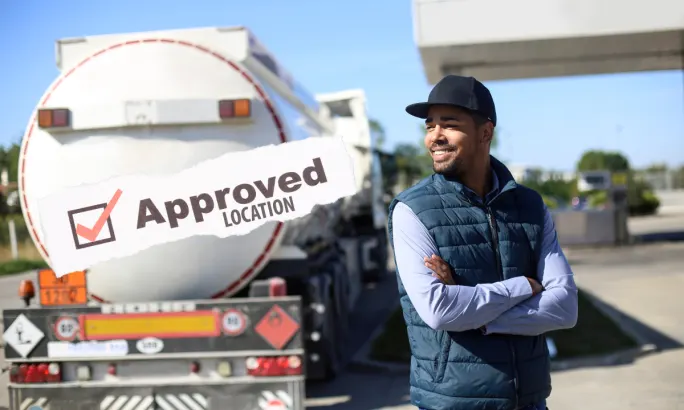
Fuel fraud and poor fueling choices became expensive pain points, pushing fleets to rely on smarter tools that guide drivers to approved, lower-cost locations.
Photo: Work Truck
Fraud, Fuel, and Every Swipe Under the Microscope
Fuel cost is not a new concern, but 2025 put a spotlight on how much is lost to fraud and poor fueling decisions.
“Fleets are seeking smarter, more connected ways to merge their data, from fuel transactions and telematics to HR, finance, and fraud prevention. They want these systems to communicate seamlessly in real time, enabling better decisions and fewer inefficiencies,” said Brian Fournier, Americas senior vice president and general manager of fleet and mobility at WEX. “Additionally, fuel efficiency and total savings remain top priorities for fleets. They want technology that directs drivers to the lowest-cost fueling options automatically, removing poor decisions from the equation.”
Fraud added another layer of cost and risk. William Fitzgerald, vice president of global anti financial crimes at WEX, said the numbers are not small.
“According to research, operations leaders estimate that 19% to 22% of their fleet spend is being lost to theft and fraud, with some estimates adding up to over $1 billion a year, so it is no surprise that one of the most significant trends this year is the rapid advancement of fraud detection and prevention technologies,” Fitzgerald said.
He added that fuel theft, card skimming, and unauthorized use pushed fleets to focus on education and smarter tools.
“To combat this, fleets increasingly relied on greater education for drivers to keep credentials safe, and AI-driven fraud protection, such as WEX’s platform, which combines telematics and machine learning to detect suspicious activity in real time,” he said. “Fleet operators are seeking fuel and fuel card providers that automatically verify both vehicle and driver presence before activating a pump. They no longer want to sift through endless data to spot anomalies like high pounds per gallon, opposite fuel types, or non-fuel transactions. Providers are expected to prevent these instances or surface them instantly.”
In other words, fraud prevention is quickly moving from “nice extra feature” to “basic requirement” because it directly protects already tight margins.
Insurance, Risk, and Disasters Stack on More Pressure
Rising insurance costs and a tougher risk environment layered even more cost pressure onto fleets.
“As operating costs and insurance premiums continue to rise alongside unpredictable global trade and market dynamics, fleet operators need to remain vigilant and flexible in their approach to safeguarding profitability from a wide range of threats,” said Dave Berno, transportation practice leader at Hub International.
Berno said commercial fleets across segments have been hit hard by growing cost pressures around risk control and driver benefits programs over the past two years. His advice is simple but not easy to put into practice: prevent crashes.
“Preventing accidents and injuries must be the top goal of fleet risk management. Reducing crashes is the number one way to reduce insurance costs. Be proactive by hiring a qualified fleet safety manager, implementing programs for vehicle maintenance and, most importantly, select, train, and monitor qualified drivers,” Berno said.
Natural disasters and severe weather only raised the stakes. Berno noted that the rising frequency and costs of climate-related disasters raise safety concerns, cause shipping delays, and compound costs. Technology-enabled route optimization and advanced weather modeling are becoming important tools to plan around those disruptions.
Cyber threats also infiltrated transportation budgets as fleets faced cargo theft, invoice manipulation, and fraud.
“Motor carriers and commercial fleets continue to address the pervasive challenge of preventing cyber-facilitated cargo theft,” Berno said, pointing to criminals using AI tools and document manipulation to reroute trucks and steal mid-value goods.
With cargo theft up sharply since 2024, closing coverage gaps and strengthening cyber hygiene became part of the cost-control strategy, not just an IT concern.
Uptime and Cost are Now the Same Conversation
All these trends point to the same reality for work truck fleets. Cost is no longer just what shows up on a vehicle invoice or fuel bill. It lives in downtime, fraud, tariffs, disasters, and even data that is not being used well.
For many fleets, uptime has quietly become the primary financial metric. Keeping vehicles on the road, eliminating underused assets, reducing breakdowns, and tightening risk programs all add up to the same bottom-line story.
2025 forced fleets to see those connections more clearly. Going into 2026, cost awareness is not going away. It is becoming the starting point for every conversation about trucks, technology, and the future shape of the fleet.
Keep Following the 2025 Work Truck Trends Series
This story is part of an ongoing look at how 2025 reshaped work truck fleets. Dive into the rest:
Part 2: Data Became the Backbone of Fleet Decisions: How connected tools helped fleets coach better, prevent downtime, and tighten operations.
Part 3: Maintenance and Uptime Took Center Stage: Why mobile service, predictive tools, and stronger maintenance planning ruled 2025.
Part 4: Safety, Security, and Risk Became Non-Negotiable: How rising fraud, cyber threats, and insurance costs pushed fleets into a new mindset.
Part 5: Energy Strategies Shifted as Fleets Rebalanced Options: EVs slowed, hybrids surged, and propane autogas offered steady ground for fleets chasing stability.
Part 6: Workforce Pressures Forced New Approaches: Coaching, culture, and technology moved front and center as hiring stayed tough.
Part 7: Vehicle Availability and Market Shifts Shaped Decisions: Inventory swings and van shortages made forecasting and strong dealer ties essential.
More Operations

Family Ties Inside the Fleet Families Building Careers Across Generations
Three fleet families share what it really takes to work together, learn across generations, and keep business from following them home.
Read More →
Shades of Fleet Call for Voices: Fleet's Hidden Heroes
Fleet’s hidden heroes are often the ones keeping everything moving behind the scenes. September’s Shades of Fleet is looking for dispatchers, coordinators, parts specialists, and other support pros to share their stories.
Read More →
Truck Centers, Inc. Celebrates National Truck Driver Appreciation Week with $1,000 Fuel Card Giveaways
During National Truck Driver Appreciation Week, Truck Centers, Inc. is offering customers a chance to fuel up for free. Customers at all Truck Centers locations can enter to win one of four $1,000 fuel cards from Sept. 14 - 18.
Read More →
Fleet Guides, AI Time-Savers, Truck Tariffs & Fuel Strategy Lead the News
This week’s Truck Chat Cheat Sheet covers new fleet vehicle guides, practical AI use cases, U.S.-Canada truck production, mixed-energy strategy, and more.
Read More →
What Fleet Employers Are Missing When Hiring Veterans
What if some of the strongest candidates for fleet are already out there, but their experience is written in a language our industry does not always recognize?
Read More →
Automotive Fleet Opens 2026 Personal Use Survey for Commercial Fleet Managers
Less than two weeks left! Commercial and corporate fleet managers are invited to share how their organizations handle company vehicle personal-use policies, charges, and driver eligibility.
Read More →
What Resilient Fleets Do Differently When Conditions Change
Fleet resilience is about more than reacting to disruption. Lauren Fletcher talks with AP Fleet’s Alex Coveney about flexibility, planning, scaling, and what helps fleets adapt when business conditions shift.
Read More →
If We Want the Next Generation in Automotive, We Have to Give Them a Reason to Care
The automotive industry talks constantly about its workforce shortage. But before we can recruit the next generation, we may need to do a better job giving kids a reason to care about automotive in the first place.
Read More →
Ram ProMaster City Under $40K, Truck Tariffs, and AI Maintenance Lead the News
A sub-$40K commercial van, tariff questions, AI-powered maintenance, and a new EV production strategy headline this week’s Truck Chat Cheat Sheet.
Read More →
Bob Adamsky Shares the Fleet Lessons You Usually Learn the Hard Way
After more than 30 years in fleet, Arrow International’s Bob Adamsky has learned that the job is about far more than vehicles. He shares the lessons he wishes every fleet manager could learn a little earlier.
Read More →