




Related: ATA Says Truck Driver Shortage Threatens Supply Chain
Can Millennials Solve the Truck Driver Shortage?
How can the right fleet tools attract younger drivers and help you solve the driver shortage for good?
by Ted Lee
November 25, 2019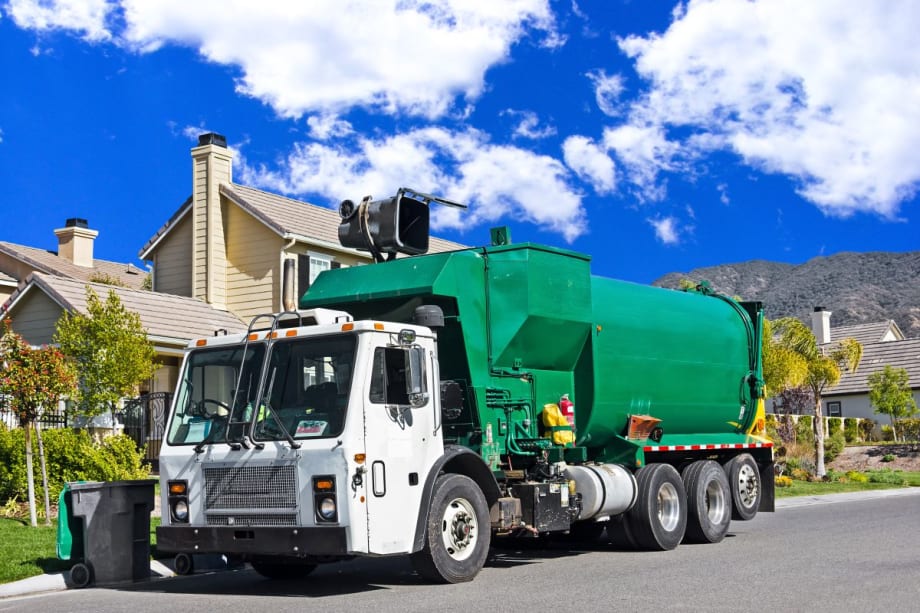
Although the shortage could initially have the greatest impact on the long-haul segment, short-haul municipal and independent fleets will not be immune.
Photo: Magellan GPS
4 min to read
The times are a changing.
Baby Boomer truck drivers are retiring in droves, with up to 25% of today’s drivers cashing in their routes over the next five years. The average age of a trucker is 49 years and more than half of the truck industry workforce is over the age of 45. Worse still, the American Trucking Associations (ATA) predicts a truck driver shortage could reach as high as 175,000 by the year 2024.
According to Bob Costello, chief economist for the ATA, it’s not just the lack of drivers, it’s also a “lack of qualified” drivers, which makes a bad situation much worse.
Although the shortage could initially have the greatest impact on the long-haul segment, short-haul municipal and independent fleets will not be immune.
To retain current drivers and attract new ones, long-haul carriers may be forced to increase pay and offer better benefits. And if they do, short-haul fleets could find themselves competing for the same shrinking pool of drivers but at a pay scale disadvantage.
So, where is the next generation of truck drivers?
Make Way for Millennials
Millennials, the generation born between 1981 and 1996, now make up the largest demographic in the U.S. labor force, according to Pew Research. By 2020, it’s estimated that 86 million millennials will be in the workplace, representing 40% of the total number of workers; by 2025, millennials could make up roughly 75% of workers in the U.S.
In an industry facing a shortage of workers, it is mission critical that you attract and recruit the best available talent. And that means recruiting millennials. But before you cast your line out there, it helps to understand what might lure a typical millennial to your business.
Several studies have reached the same general conclusions about hiring millennials. Chief among their job expectation is the opportunity to work from anywhere, even if only part-time.
Working remotely is a good fit for businesses where employees do heads-down work over a computer.
That’s not how a fleet business operates, as we know. Your employees won’t be able to drive a snow plow from the comfort of their own living room. Your drivers physically have to be on the road—in all kinds of weather, at any hour.
Attracting Millennials
Granted, millennials won’t be able to work from home or devise their own schedule. But they could consider working as a fleet truck driver for at least two compelling reasons.
First, millennials prefer to work for a purpose-filled company, one that gives back to the community and makes a difference. Whether you’re in the waste management removal or snow and ice removal end of the industry, you are delivering a useful public service. Your efforts save time, money and lives.
Second, millennials prefer to put their knowledge of and comfort with technology to good use. This is, after all, the “Connected” generation, a group of children that came of age with Wi-Fi, the Internet, GPS, laptops, and smartphones. According to Gallup, 91% of millennials own a smartphone, and 71% of millennials rely on the Internet as their main source for information.
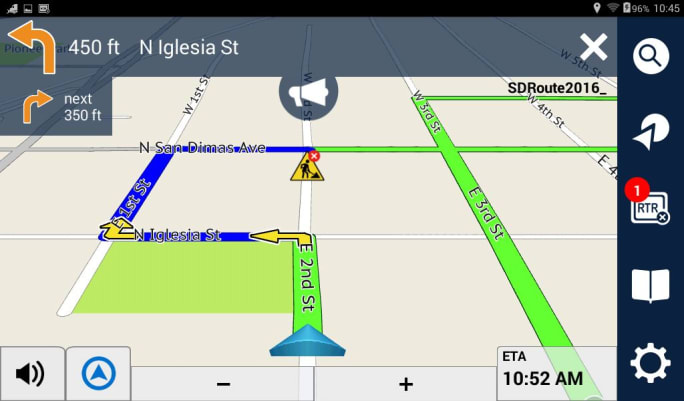
The next generation of drivers expects to be digitally connected to streets and routes. For them, using the latest technology is an assumption, not a gimmick.
Photo: Magellan GPS
Meet Your New Driver
Yesterday’s truck driver relied on old school tactics, from scraps of paper to paper maps to personal knowledge of streets and routes. The next generation of drivers expects to be digitally connected to streets and routes. For them, using the latest technology is an assumption, not a gimmick.
So, as an employer looking to attract the next generation of truck drivers, what can you do?
Make sure your business is technologically appropriate for the times. At a minimum, you’ll want to replace your paper maps with digitized routes.
Ensure your back office and drivers are connected in real-time through a backend portal (for the manager) and a dashboard mounted GPS-device (for the driver).
Use software that visually represents turn-by-turn directions, clearly identifies unexpected street obstacles and road hazards, as well as best detours, and enables OTA communication.
Use technology to ensure greater safety for your drivers and faster training.
All of these digital connections, of course, should be backed up with a powerful GPS capability that works even in urban canyons. Millennials want to be connected at all times.
My point is, expectations are changing. Digital is not just in, it’s deeply embedded. If you want to attract younger drivers and set up your company or organization for the “long-haul,” make sure you empower your drivers and dispatchers with a proven route planning, management, execution and service verification solution.
This is not your father’s fleet industry.
About the Author: Ted Lee is the Head of Business Development and Innovation for Magellan GPS, a provider of innovative GPS navigation devices since 1986, offering products in multiple categories including auto, RV, outdoor, mobile, fleet, and auto OEM. He can be reached at tlee@magellangps.com.
Subscribe to Our Newsletter
More Operations
Family Ties Inside the Fleet Families Building Careers Across Generations
Three fleet families share what it really takes to work together, learn across generations, and keep business from following them home.
Read More →
Shades of Fleet Call for Voices: Fleet's Hidden Heroes
Fleet’s hidden heroes are often the ones keeping everything moving behind the scenes. September’s Shades of Fleet is looking for dispatchers, coordinators, parts specialists, and other support pros to share their stories.
Read More →
Truck Centers, Inc. Celebrates National Truck Driver Appreciation Week with $1,000 Fuel Card Giveaways
During National Truck Driver Appreciation Week, Truck Centers, Inc. is offering customers a chance to fuel up for free. Customers at all Truck Centers locations can enter to win one of four $1,000 fuel cards from Sept. 14 - 18.
Read More →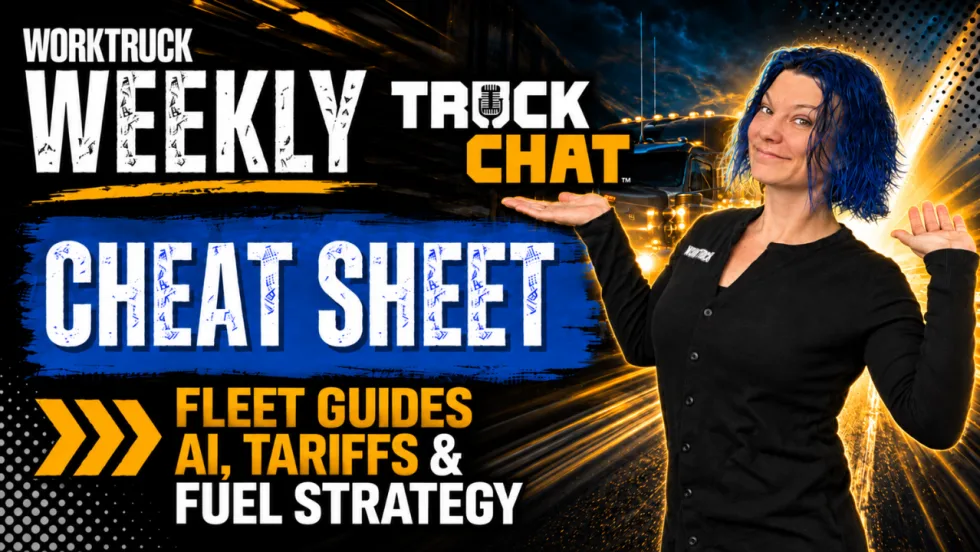
Fleet Guides, AI Time-Savers, Truck Tariffs & Fuel Strategy Lead the News
This week’s Truck Chat Cheat Sheet covers new fleet vehicle guides, practical AI use cases, U.S.-Canada truck production, mixed-energy strategy, and more.
Read More →
What Fleet Employers Are Missing When Hiring Veterans
What if some of the strongest candidates for fleet are already out there, but their experience is written in a language our industry does not always recognize?
Read More →
Automotive Fleet Opens 2026 Personal Use Survey for Commercial Fleet Managers
Less than two weeks left! Commercial and corporate fleet managers are invited to share how their organizations handle company vehicle personal-use policies, charges, and driver eligibility.
Read More →
What Resilient Fleets Do Differently When Conditions Change
Fleet resilience is about more than reacting to disruption. Lauren Fletcher talks with AP Fleet’s Alex Coveney about flexibility, planning, scaling, and what helps fleets adapt when business conditions shift.
Read More →
If We Want the Next Generation in Automotive, We Have to Give Them a Reason to Care
The automotive industry talks constantly about its workforce shortage. But before we can recruit the next generation, we may need to do a better job giving kids a reason to care about automotive in the first place.
Read More →
Ram ProMaster City Under $40K, Truck Tariffs, and AI Maintenance Lead the News
A sub-$40K commercial van, tariff questions, AI-powered maintenance, and a new EV production strategy headline this week’s Truck Chat Cheat Sheet.
Read More →
Bob Adamsky Shares the Fleet Lessons You Usually Learn the Hard Way
After more than 30 years in fleet, Arrow International’s Bob Adamsky has learned that the job is about far more than vehicles. He shares the lessons he wishes every fleet manager could learn a little earlier.
Read More →