




5 Keys to Managing Effective Fleet Supplier Relationships
Working with vendors is a significant part of a fleet manager’s job. Here are several tips for effectively managing those relationships.


how do fleet managers strike the right balance to maximize relationships with suppliers?
Photo courtesy of Pexels
Fleet managers deal with suppliers to procure a wide range of products and services, including vehicles, parts, financing, maintenance, specialty equipment, fuel, fleet management services, and technology.
The benefits are clear when the relationship goes well: responsiveness, on-time deliveries, preferential treatment with product specification and availability, and advantageous pricing.
Yet, these relationships often require a balancing act between two seemingly conflicting interests. As Mike Butsch, fleet manager, P&H Mining/Joy Global, aptly put it, “The suppliers are in the relationship to make money; our job in fleet management is to minimize their profit margins while still keeping them interested enough to do business with you.”
So, how do fleet managers strike the right balance to maximize relationships with suppliers? Here are five keys to keep in mind:
1. Open, honest, ongoing communication.
What defines an “effective” supplier relationship? “The underpinnings of the relationship would have to be mutual trust and respect,” said John Rencher, fleet manager, City of Ft. Lauderdale, Fla. “Over time, you become familiar with one another and know each other’ needs. They know how you operate so they can come to you with solutions. There have to be open lines of communication.”
Yet, as Rencher acknowledged, “open communication” is often easier said than done, especially early in the relationship. “I know that from a negotiation standpoint, you have to sometimes hold your cards close to your vest,” Rencher said. “But, after the contract has been signed, the cards can’t be close to the vest anymore. We have to have open and honest communication moving forward.”
Rencher recommended scheduling regular meetings with suppliers when practical. For example, he meets with the City’s vehicle maintenance supplier, either in person or on the phone, almost daily. This hands-on approach not only helps Rencher manage the contract in a way that ensures attainment of certain key performance indicators (KPIs), it also cultivates rapport and trust between the two parties.
“I hate adversarial relationships with suppliers. We put everything out on the table: What I’m looking for and what their needs are. And, we don’t nitpick each other because that will kill the relationship,” Rencher said.
2. Collaboration.
Butsch at P&H Mining/Joy Global advises fleet managers to participate in client advisory programs their suppliers offer. This gives them more influence over product development and raises their profile with the supplier.
“The thing we always try to do is not necessarily slant a product or service for just our particular need,” Butsch said. “We’re always looking to give insight into a broader-based solution that more people would want. So, it’s a two-way street to develop that relationship. There needs to be a benefit for both you and the vendor.”
3. Accountability.
Rencher points to the City’s contract with its vehicle maintenance supplier as a prime example of accountability in action. The contract puts the onus on both the City and vendor to keep costs in line. If the budget is exceeded, the vendor must pay back 50-percent of the “loss.” But, the vendor also gets a piece of the upside, with a bonus of 50-percent of any cost savings achieved for the City.
“Last year, we ended under budget by $198,000. So, both the City and vendor received nearly $100,000 in ‘shared savings,’ ” Rencher said. “I have KPIs that I look at on a daily
basis and on a weekly basis, so I know what I’m doing and where we’re heading to ensure we’re on track when managing a contract.”
4. Relationships with higher-level contacts.
What do you do when the contact person with a supplier keeps changing? “You often see a lot of employee turnover, whether it’s at a dealership or upfitter or another supplier,” Butsch said. “I get involved early and try to reach the highest person within the organization that we can get to. Those relationships are really key to maintaining continuity with service levels — but, it’s also essential especially when you’re trying to do something that is a little out of the ordinary. When you have this relationship established at a higher level, it tends to go much easier for you to get something done that is a little different than the supplier’s typical offering.”
5. Clear expectations.
What if things aren’t going well with a supplier? When should a fleet manager pull the plug on the relationship and move on?
“When there’s a reduction in delivery of service — a lack of concern or response over poor performance, poor delivery — I’d walk away,” Butsch advised. “I think it’s important to understand that anybody can have a hiccup — when there’s a new system to put in place, for example. But, when the relationship stops being a two-way street and it becomes more about the vendor, that’s the time when you take a step back and say, ‘Look, this just isn’t working for me.’ If there is a breakdown, communicate what you need. Establish a plan and timeline — and if they don’t meet that, then pull the plug.”
Said Rencher: “If they don’t keep their word; if they have trouble meeting the contracted stipulation; or if they flat out lie to you — that’s when you need to pull the plug. Integrity is like a forest. It takes a lifetime to grow, but you can burn it to the ground in a matter of hours. Without integrity, the relationship can’t work.”
The Bottom Line
How can fleet managers strike the right balance between their interests and those of their suppliers? Butsch summed it up: “I think you need to be fair with your vendors. I think you need to be reasonable. Yet, at the end of the day, you still have a job to do. Be reasonable with your expectations about what needs to happen. Communicate clear timelines, with clear consequences.”
More Operations
Family Ties Inside the Fleet Families Building Careers Across Generations
Three fleet families share what it really takes to work together, learn across generations, and keep business from following them home.
Read More →
Shades of Fleet Call for Voices: Fleet's Hidden Heroes
Fleet’s hidden heroes are often the ones keeping everything moving behind the scenes. September’s Shades of Fleet is looking for dispatchers, coordinators, parts specialists, and other support pros to share their stories.
Read More →
Truck Centers, Inc. Celebrates National Truck Driver Appreciation Week with $1,000 Fuel Card Giveaways
During National Truck Driver Appreciation Week, Truck Centers, Inc. is offering customers a chance to fuel up for free. Customers at all Truck Centers locations can enter to win one of four $1,000 fuel cards from Sept. 14 - 18.
Read More →
Fleet Guides, AI Time-Savers, Truck Tariffs & Fuel Strategy Lead the News
This week’s Truck Chat Cheat Sheet covers new fleet vehicle guides, practical AI use cases, U.S.-Canada truck production, mixed-energy strategy, and more.
Read More →
What Fleet Employers Are Missing When Hiring Veterans
What if some of the strongest candidates for fleet are already out there, but their experience is written in a language our industry does not always recognize?
Read More →
Automotive Fleet Opens 2026 Personal Use Survey for Commercial Fleet Managers
Less than two weeks left! Commercial and corporate fleet managers are invited to share how their organizations handle company vehicle personal-use policies, charges, and driver eligibility.
Read More →
What Resilient Fleets Do Differently When Conditions Change
Fleet resilience is about more than reacting to disruption. Lauren Fletcher talks with AP Fleet’s Alex Coveney about flexibility, planning, scaling, and what helps fleets adapt when business conditions shift.
Read More →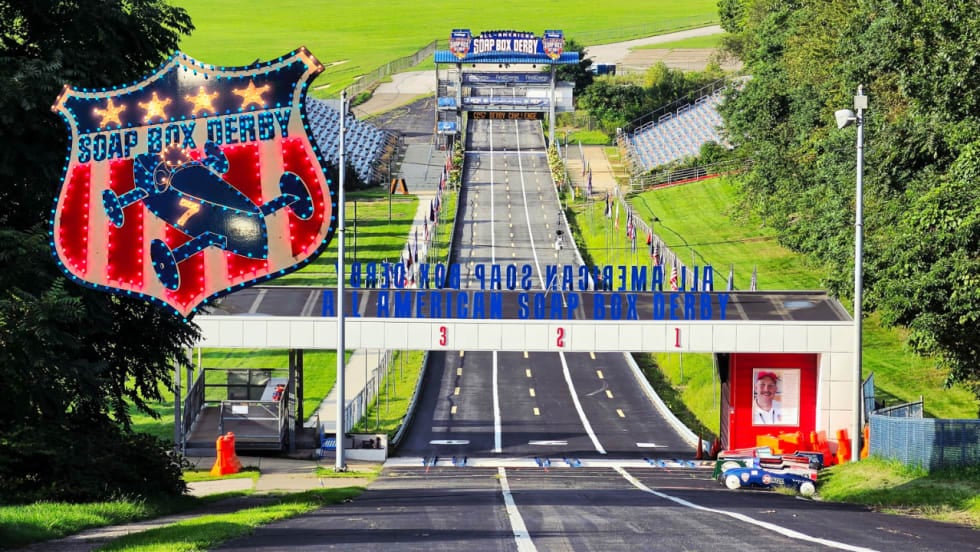
If We Want the Next Generation in Automotive, We Have to Give Them a Reason to Care
The automotive industry talks constantly about its workforce shortage. But before we can recruit the next generation, we may need to do a better job giving kids a reason to care about automotive in the first place.
Read More →
Ram ProMaster City Under $40K, Truck Tariffs, and AI Maintenance Lead the News
A sub-$40K commercial van, tariff questions, AI-powered maintenance, and a new EV production strategy headline this week’s Truck Chat Cheat Sheet.
Read More →
Bob Adamsky Shares the Fleet Lessons You Usually Learn the Hard Way
After more than 30 years in fleet, Arrow International’s Bob Adamsky has learned that the job is about far more than vehicles. He shares the lessons he wishes every fleet manager could learn a little earlier.
Read More →