




How Adaptive Headlights Work
Adaptive headlight systems allow drivers to spot a difficult-to-see object on a dark, curvy road about a third of a second earlier than they would with conventional headlights, according to a study from the Insurance Institute for Highway Safety.

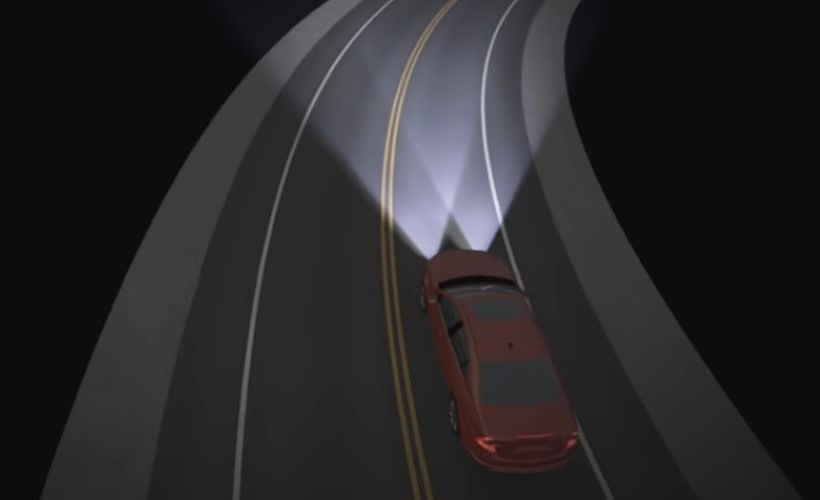
Adaptive headlight systems allow drivers to spot a difficult-to-see object on a dark, curvy road about a third of a second earlier than they would with conventional headlights.
Screenshot via IIHS.
Adaptive headlight systems allow drivers to spot a difficult-to-see object on a dark, curvy road about a third of a second earlier than they would with conventional headlights, according to a 2014 study from the Insurance Institute for Highway Safety.
What's more, 2012 research by the Highway Loss Data Institute showed that vehicles equipped with optional adaptive headlights had lower rates of insurance claims under most coverage types than the same vehicles without the technology.
Because they are proving to be a critical safety feature, it's no surprise that adaptive headlights are growing in popularity.
As a fleet owner or manager, it's important to understand the benefits of adaptive headlights and how they work.
Adaptive headlight systems pivot in the direction of travel when steering around curves or corners. Simply put, they swivel around curves in response to steering input. Adaptive headlights are comprised of several sub-components including:
Wheel speed sensors that monitor the speed of rotation of each wheel
Yaw sensors that track the vehicle's side-to-side movement when turning a corner
A steering input sensor that monitors the angle of the steering wheel
Small motors attached to each headlight.
The data from the sensors are interpreted by an electronic control unit (ECU), which determines the vehicle's speed, and the angle and length of the curve it is negotiating. The ECU then directs the motors attached to each headlight to move the beam to a specified degree for optimal lighting potential.
Most adaptive headlight systems can turn the headlights up to 15 degrees or more per side — better illuminating the road ahead.
Most systems also include a self-leveling system, which helps correctly position the headlights and prevents them from pointing too far up or down when driving on hilly terrain.
Adaptive headlights offer an additional safety benefit. The high beams stay active on both sides of a preceding car without glaring the driver. They also reduce glare for oncoming drivers as compared with traditional headlights.
Originally posted on Automotive Fleet
More Small Fleet

Why Fleet Managers Are Replacing Departmental Vehicles with Shared Motor Pools
Departmentally assigned vehicles often create hidden costs through underutilization, poor visibility, and increased administrative burden. This white paper explores how shared motor pool strategies help fleets reduce costs, improve accountability, and optimize vehicle utilization.
Read More →
Boosting Last-Mile Fleet Uptime, Safety, and Value with AI Vehicle Inspections
AI-powered inspections are transforming last-mile fleets by replacing manual checks with highly accurate automated scans that detect defects in seconds. By giving fleet operations visibility into the daily condition of their vehicles, you can identify trends over the vehicle’s lifecycle that enable improved procurement decisions, route management, driver training and accountability.
Read More →
Five Ways Seat Belts Help Prevent Injuries
There are five ways seat belts protect occupants from injuries, according to the Tennessee Department of Safety and Homeland Security.
Read More →
It’s here: The 2026 Fleet Technology Trends Report
What does AI mean for fleets? Get the answer — and learn other top tech trends.
Read More →
Small Fleets, Big Impact: How Independent Drivers Power Wreaths Across America
Check out how small fleets and independent drivers power Wreaths Across America each December and why their impact matters more than ever.
Read More →
VMS Survey Finds 65% of Small Fleet Managers Run Operations Alone
A new VMS survey shows small fleet managers are stretched thin, with most handling operations solo and eager to adopt digital tools for relief.
Read More →
Tips for Driving Safely on Halloween Night
This video features a reminder from the Connecticut Department of Transportation (DOT) and the Connecticut Police Chiefs Association, urging drivers to prioritize safety this Halloween.
Read More →
AI, Access, and Uptime: VMS’s Next Chapter with David Prusinski
VMS’s new Co-CEO, David Prusinski, shares how an AI-first approach will give small fleets and repair shops the tools to compete like big players.
Read More →
Fleet Managers Share Winter Prep Tips: It's Never Too Early!
Three fleets share best practices to prep vehicles for winter and prevent downtime when the cold sets in.
Read More →
Hot Weather Driving Tips for Fleet Drivers
As we head into another potentially extreme summer season, the risks for fleet drivers remain high, from engine strain and tire blowouts to unpredictable traffic patterns. An expert shares advice on how fleet drivers can boost their safety during the steamy summer months.
Read More →