





Related: Tour Company Turns Biofuels into a Business Advantage
Canadian Grocery Fleet Installs All-Electric Reefer Units in Sustainability Bid
Vancouver-based SPUD is adopting all-electric refrigeration technology that allows the delivery vehicle’s engine to be turned off during stops, which saves fuel and reduces CO2 emissions.
October 11, 2018
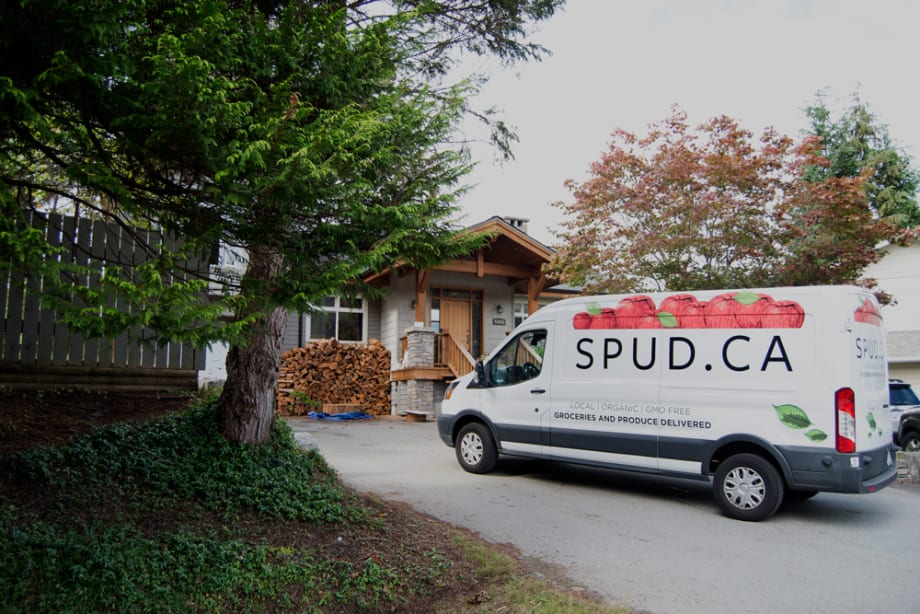
With a fleet of 60 vehicles — the company primarily runs Mercedes-Benz Sprinter vans — and 600 employees, SPUD makes upwards of 1,500 deliveries a day to homes and offices.
Photo via SPUD.
3 min to read
For mission-oriented businesses, demonstrating the company’s values at every step of the supply chain process is crucial to attracting new customers, retaining old ones, and standing apart in the industry. At Vancouver-based grocery delivery service SPUD, providing customers with healthy, locally sourced food is the main mission, and requires refrigeration units to achieve it.
Founded in 1997, SPUD delivers food from farms, ranches, fisheries, and bakeries to customers in the Vancouver, Victoria, Calgary, and Edmonton areas.
“We're very sustainable,” says Rick Hollingshead, SPUD’s facilities and fleet manager. “We're all about being green, and number one, helping people make healthy choices and live a healthier lifestyle [with] organic and non-GMO products.”
With a fleet of 60 vehicles — the company primarily runs Mercedes-Benz Sprinter vans — and 600 employees, SPUD makes upwards of 1,500 deliveries a day to homes and offices. Individual trucks and drivers typically make 35 to 60 deliveries daily.
In keeping with SPUD’s commitment to sustainability, Hollingshead decided to outfit his fleet with Volta Air’s Pluto all-electric reefer units about a year and half ago after being introduced to the product a trade show a few years prior.
With over 50 years of experience in the automotive and HVAC industry, Richmond, British Colombia-based Volta Air develops AC and transportation refrigeration that is meant to lower operational costs and reduce emissions.
“The current problem with day-to-day urban delivery of fresh and frozen products is that during the time a delivery vehicle is stopped, its engine needs to run continuously to keep the products fresh or frozen,” Volta Air CEO Kris Malek said in a statement.
According to Malek, using Volta Air’s all-electric refrigeration technology allows the delivery vehicle engine to be turned off during stops, which saves fuel and maintenance costs, and reduces CO2 emissions.
Hollingshead admits that when he first discovered Volta’s systems, he was “reluctant” to try them because the product was so new at the time. However, after further research and talking with Volta representatives in Vancouver, he felt confident enough to test out the reefer system in one of the company’s new vehicles.
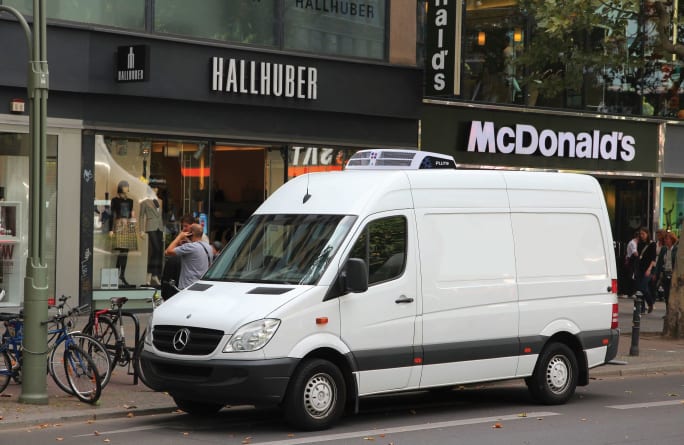
With the Volta Air Pluto units, the refrigeration system continues to run after the vehicle has been turned off, reducing emissions, lowering fuel spend, and ensuring fresh groceries.
Photo courtesy of Volta Air.
Following a successful trial, he decided to outfit all new vehicles with the units. Currently, SPUD has 12 vehicles equipped with the Volta Air Pluto system. “And, as far as I have any say in it, that's the only unit that we're going to continue to use… in any of our new trucks,” Hollingshead adds.
The traditional reefer units SPUD uses on its older vehicles syphon power from the vehicle’s engine, requiring drivers to leave their engines running while making deliveries to ensure food doesn’t spoil. Not only does this decrease fuel economy, but it increases emissions as well.
With the Volta Air Pluto units, the refrigeration system continues to run after the vehicle has been turned off, reducing emissions, lowering fuel spend, and ensuring fresh groceries. Aside from the amount saved by decreasing fuel consumption, the Volta units themselves are about half the price of traditional units, Hollingshead adds.
The 12-volt reefer units weigh about 97 pounds and are approved by the California Air Resources Board.
As SPUD’s operations continue to expand — the company recently partnered with Walmart to deliver groceries to its Vancouver area stores — maintaining that commitment to provide customers with local, organic food will be top priority, and promoting sustainable fleet practices will naturally follow.
By 2022, Hollingshead estimates his fleet will number upwards of 120 vehicles, the majority of which will be fitted with all-electric reefer units.
Within the next three to five years, all-electric units are expected to penetrate 8% to 10% of the market, Malek said.
“That’s certainly not a majority, but still represents a huge market opportunity.”
Subscribe to Our Newsletter
More Small Fleet


Developing Budget-Friendly Driver Safety Programs
From driver training and safety meetings to one-on-one coaching and incentive programs, several small fleets share how they have developed a safety culture with their drivers using low- to no-cost resources.
Read More →
Sponsored•March 9, 2026
Boosting Last-Mile Fleet Uptime, Safety, and Value with AI Vehicle Inspections
AI-powered inspections are transforming last-mile fleets by replacing manual checks with highly accurate automated scans that detect defects in seconds. By giving fleet operations visibility into the daily condition of their vehicles, you can identify trends over the vehicle’s lifecycle that enable improved procurement decisions, route management, driver training and accountability.
Read More →

Five Ways Seat Belts Help Prevent Injuries
There are five ways seat belts protect occupants from injuries, according to the Tennessee Department of Safety and Homeland Security.
Read More →
Sponsored•January 19, 2026
Basic Tracking vs Next Generation Fleet Technology
Fleet software is getting more sophisticated and effective than ever, tying big data models together to transform maintenance, safety, and the value of your existing tech stack. Fleet technology upgrades are undoubtedly an investment, but updated technology can offer a much higher return. Read how upgrading your fleet technology can increase the return on your investment.
Read More →
Sponsored•January 14, 2026
It’s here: The 2026 Fleet Technology Trends Report
What does AI mean for fleets? Get the answer — and learn other top tech trends.
Read More →
Small Fleets, Big Impact: How Independent Drivers Power Wreaths Across America
Check out how small fleets and independent drivers power Wreaths Across America each December and why their impact matters more than ever.
Read More →
VMS Survey Finds 65% of Small Fleet Managers Run Operations Alone
A new VMS survey shows small fleet managers are stretched thin, with most handling operations solo and eager to adopt digital tools for relief.
Read More →
Tips for Driving Safely on Halloween Night
This video features a reminder from the Connecticut Department of Transportation (DOT) and the Connecticut Police Chiefs Association, urging drivers to prioritize safety this Halloween.
Read More →
AI, Access, and Uptime: VMS’s Next Chapter with David Prusinski
VMS’s new Co-CEO, David Prusinski, shares how an AI-first approach will give small fleets and repair shops the tools to compete like big players.
Read More →