




5 Keys to Managing Effective Fleet Supplier Relationships
Working with vendors is a significant part of a fleet manager’s job. Here are several tips for effectively managing those relationships.


how do fleet managers strike the right balance to maximize relationships with suppliers?
Photo courtesy of Pexels
Fleet managers deal with suppliers to procure a wide range of products and services, including vehicles, parts, financing, maintenance, specialty equipment, fuel, fleet management services, and technology.
The benefits are clear when the relationship goes well: responsiveness, on-time deliveries, preferential treatment with product specification and availability, and advantageous pricing.
Yet, these relationships often require a balancing act between two seemingly conflicting interests. As Mike Butsch, fleet manager, P&H Mining/Joy Global, aptly put it, “The suppliers are in the relationship to make money; our job in fleet management is to minimize their profit margins while still keeping them interested enough to do business with you.”
So, how do fleet managers strike the right balance to maximize relationships with suppliers? Here are five keys to keep in mind:
1. Open, honest, ongoing communication.
What defines an “effective” supplier relationship? “The underpinnings of the relationship would have to be mutual trust and respect,” said John Rencher, fleet manager, City of Ft. Lauderdale, Fla. “Over time, you become familiar with one another and know each other’ needs. They know how you operate so they can come to you with solutions. There have to be open lines of communication.”
Yet, as Rencher acknowledged, “open communication” is often easier said than done, especially early in the relationship. “I know that from a negotiation standpoint, you have to sometimes hold your cards close to your vest,” Rencher said. “But, after the contract has been signed, the cards can’t be close to the vest anymore. We have to have open and honest communication moving forward.”
Rencher recommended scheduling regular meetings with suppliers when practical. For example, he meets with the City’s vehicle maintenance supplier, either in person or on the phone, almost daily. This hands-on approach not only helps Rencher manage the contract in a way that ensures attainment of certain key performance indicators (KPIs), it also cultivates rapport and trust between the two parties.
“I hate adversarial relationships with suppliers. We put everything out on the table: What I’m looking for and what their needs are. And, we don’t nitpick each other because that will kill the relationship,” Rencher said.
2. Collaboration.
Butsch at P&H Mining/Joy Global advises fleet managers to participate in client advisory programs their suppliers offer. This gives them more influence over product development and raises their profile with the supplier.
“The thing we always try to do is not necessarily slant a product or service for just our particular need,” Butsch said. “We’re always looking to give insight into a broader-based solution that more people would want. So, it’s a two-way street to develop that relationship. There needs to be a benefit for both you and the vendor.”
3. Accountability.
Rencher points to the City’s contract with its vehicle maintenance supplier as a prime example of accountability in action. The contract puts the onus on both the City and vendor to keep costs in line. If the budget is exceeded, the vendor must pay back 50-percent of the “loss.” But, the vendor also gets a piece of the upside, with a bonus of 50-percent of any cost savings achieved for the City.
“Last year, we ended under budget by $198,000. So, both the City and vendor received nearly $100,000 in ‘shared savings,’ ” Rencher said. “I have KPIs that I look at on a daily
basis and on a weekly basis, so I know what I’m doing and where we’re heading to ensure we’re on track when managing a contract.”
4. Relationships with higher-level contacts.
What do you do when the contact person with a supplier keeps changing? “You often see a lot of employee turnover, whether it’s at a dealership or upfitter or another supplier,” Butsch said. “I get involved early and try to reach the highest person within the organization that we can get to. Those relationships are really key to maintaining continuity with service levels — but, it’s also essential especially when you’re trying to do something that is a little out of the ordinary. When you have this relationship established at a higher level, it tends to go much easier for you to get something done that is a little different than the supplier’s typical offering.”
5. Clear expectations.
What if things aren’t going well with a supplier? When should a fleet manager pull the plug on the relationship and move on?
“When there’s a reduction in delivery of service — a lack of concern or response over poor performance, poor delivery — I’d walk away,” Butsch advised. “I think it’s important to understand that anybody can have a hiccup — when there’s a new system to put in place, for example. But, when the relationship stops being a two-way street and it becomes more about the vendor, that’s the time when you take a step back and say, ‘Look, this just isn’t working for me.’ If there is a breakdown, communicate what you need. Establish a plan and timeline — and if they don’t meet that, then pull the plug.”
Said Rencher: “If they don’t keep their word; if they have trouble meeting the contracted stipulation; or if they flat out lie to you — that’s when you need to pull the plug. Integrity is like a forest. It takes a lifetime to grow, but you can burn it to the ground in a matter of hours. Without integrity, the relationship can’t work.”
The Bottom Line
How can fleet managers strike the right balance between their interests and those of their suppliers? Butsch summed it up: “I think you need to be fair with your vendors. I think you need to be reasonable. Yet, at the end of the day, you still have a job to do. Be reasonable with your expectations about what needs to happen. Communicate clear timelines, with clear consequences.”
More Operations
Did You Know What You Don't See May Be Costing You Big?
As more employees choose personal vehicles (including hybrids and EVs) for business use, companies face new challenges around visibility, insurance, liability, and cost control.
Read More →
Veteran Voices in Fleet | How Military Service Shapes Fleet Leaders
Across every perspective, one message is clear: the experiences gained through military service continue to influence how veterans contribute to the fleet industry every day.
Read More →
The Fleet Lessons That Don’t Show Up on a Spreadsheet
From index cards to predictive maintenance, Robert Martinez shares the hard-earned leadership lessons that shaped nearly 40 years in fleet.
Read More →
People, Leadership & the Skilled Trades Opportunity | Weekly Cheat Sheet
People, data, leadership, and the skilled trades opportunity. See what's shaping fleets today in this week's Truck Chat Weekly Cheat Sheet.
Read More →
Everyone Thinks They’re a Fleet Manager
From oil changes to procurement decisions, fleet work is often underestimated by the very people who depend on it most. Bob Stanton makes the case for why communication, not just technical expertise, is one of the most important leadership skills in fleet.
Read More →
Turning Connected Vehicle Data Into Decisions That Matter
Fleet leaders have more data than ever, but turning that data into clear, actionable decisions remains a challenge. This white paper shows how leading organizations are using connected vehicle data to improve safety, reduce costs, and optimize fleet performance. Learn how to turn insight into action across your fleet.
Read More →
From Military Service to Fleet Leadership | Shades of Fleet
Military service ends, but the lessons don't. Hear how veterans are shaping fleet leadership through adaptability, teamwork, and mission-driven thinking.
Read More →
Are You Tracking Your Fleet's True Total Cost of Ownership?
Bobit Business Media surveyed 190 fleet professionals and found that while most fleets are tracking costs, fragmented systems and data gaps are keeping true TCO visibility out of reach. With rising pressure to control spend in an increasingly volatile environment, the gap between what fleets think they know and what the data actually shows is wider than you might expect. See how your peers are managing costs today and where the industry still has room to improve.
Read More →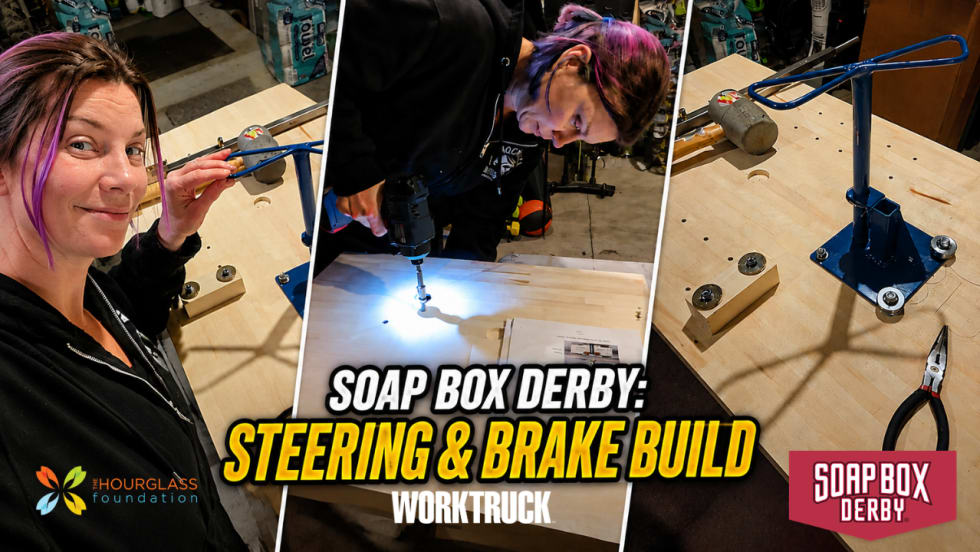
Behind the Scenes: Building a Soap Box Derby Car from Scratch Part 1
Follow along as the Soap Box Derby build continues with the platform, steering system, and brakes coming together ahead of race day.
Read More →
Disaster Prep, AI & Reliability in Fleet Management | Truck Chat May Recap
Disaster readiness, workforce pressure, reliability strategy, AI overload, and the changing role of fleet leadership are all colliding at once. This month’s Truck Chat Recap breaks down what fleets need to pay attention to now.
Read More →