




Daimler Truck North America Using BEVs for Logistics Chain
Daimler Truck North America now deploys medium- and heavy-duty Kenworth electric trucks within its logistics chain. Both the eCascadia and eM2 are delivering components for the truck manufacturer.

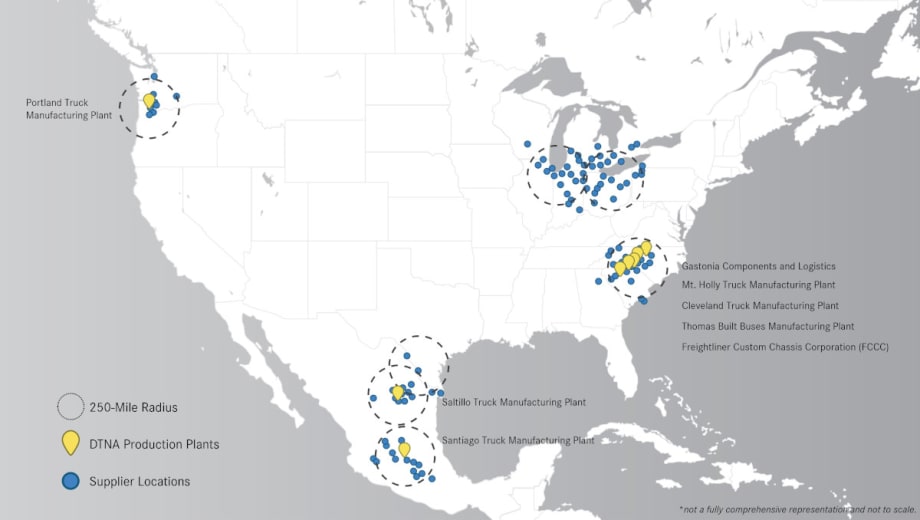
Daimler Truck North America is using Kenworth electric trucks to deliver within its logistics network in several areas of the US and Mexico.
Source: DTNA
Daimler Truck North America (DTNA) is expanding the use of electric trucks for logistics operations across multiple business units and regions, including North Carolina, South Carolina, Arizona, Ohio, Michigan, and Saltillo, Mexico to transport components to manufacturing plants and parts distribution centers (PDCs).
DTNA Using Medium- & Heavy-Duty Freightliners
DTNA started integrating Freightliner eCascadia battery electric semi-trucks, which were launched in 2022, into their logistics operation in the Pacific Northwest in December 2023, as well as Daimler Truck Mexico’s truck manufacturing plant in Santiago in January 2024.
For short-haul operations, DTNA will begin using its Freightliner eM2 electric box trucks that were introduced to customers last year.
DTNA’s Electrification Strategy
DTNA said its comprehensive strategy to expand the electrification within its own regional logistics networks includes serving its manufacturing plants and PDCs within a 250-mile radius strategically aligned with its supplier landscape.
Operating within these networks enables DTNA to fully utilize truck capacity and optimize multi-stop schedules, unlocking logistics efficiency.
DTNA leverages existing charging infrastructure, such as "Electric Island,” the nation’s first-of-its-kind commercial vehicles public charging station in Portland, Oregon, and plans to use future infrastructure, including facilities like:
Duke Energy’s Mount Holly Microgrid Center in the Carolinas
Michigan’s Mobility Charging Hub
DTNA also said it supports its strategic partners in their overall electrification journey by offering Detroit eConsulting services, including implementation of depot charging at their facilities.
"Our commitment to sustainability extends across our entire value chain. As we witness the adoption of electric vehicles, such as our Freightliner eCascadia and Freightliner eM2 trucks, within our logistics network, we are not only driving sustainability but also laying the groundwork for adaptable and robust electric logistics solutions,” said Jeff Allen, senior vice president of operations and specialty vehicles at DTNA.
DTNA Sustainability Goals
In line with its sustainability goals, DTNA aims to achieve carbon neutrality for all new products and services from direct suppliers in Europe, the United States, and Japan by 2039.
As early as 2020, the Portland Truck Manufacturing Plant, where the Freightliner eCascadia and eM2 are built, achieved CO₂-neutral production by reducing energy consumption and offsetting on-site emissions.
DTNA plans to achieve CO₂-neutral production at all its remaining truck manufacturing plants by 2025.
More Green Fleet

Fleet Forward Conference Introduces One-Day Passes for 2026
New one-day registration gives fleet professionals the flexibility to attend Tuesday, Wednesday, or Thursday, with passes available for $199 through Sept. 18.
Read More →
CALSTART Rebrands as Catalyst Mobility, Will Combine with Forth in 2027
CALSTART has rebranded as Catalyst Mobility and will combine with Forth at the start of 2027. The new organization said it is poised to become one of the world's largest, strongest, and most impactful clean transportation nonprofits.
Read More →
Electric Truck and Charging Programs to Boost Sustainability at NY & NJ Ports
Together, the Port Authority of New York and New Jersey and CALSTART will electrify drayage and terminal operations serving the East Coast’s busiest container port. A pair of incentive programs totaling $45 million has launched to accelerate adoption of zero-emission drayage trucks and terminal tractors.
Read More →
Xos Hub Surpasses One Gigawatt-Hour of Energy Delivered in the Field
A single Xos Hub has surpassed one gigawatt-hour of energy across more than 33,600 charging sessions in the field, demonstrating performance that supports Xos' expansion across new products and markets.
Read More →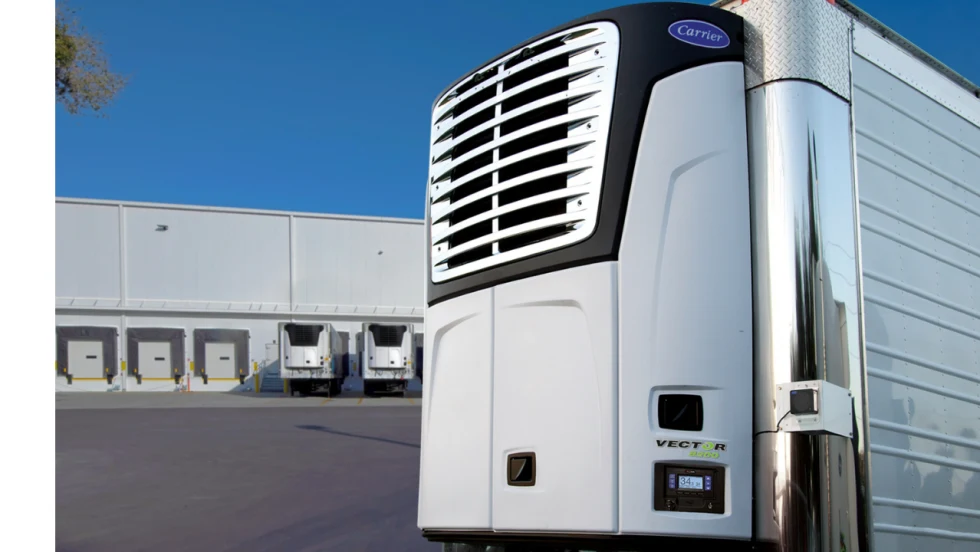
Carrier Transicold Launches All-Electric Vector 8200 TRU for Diesel-Free On-Site Cold Storage
Carrier Transicold’s first engineless multi-temperature TRU helps fresh- and frozen-food fleets add supplemental cold storage capacity during seasonal peaks.
Read More →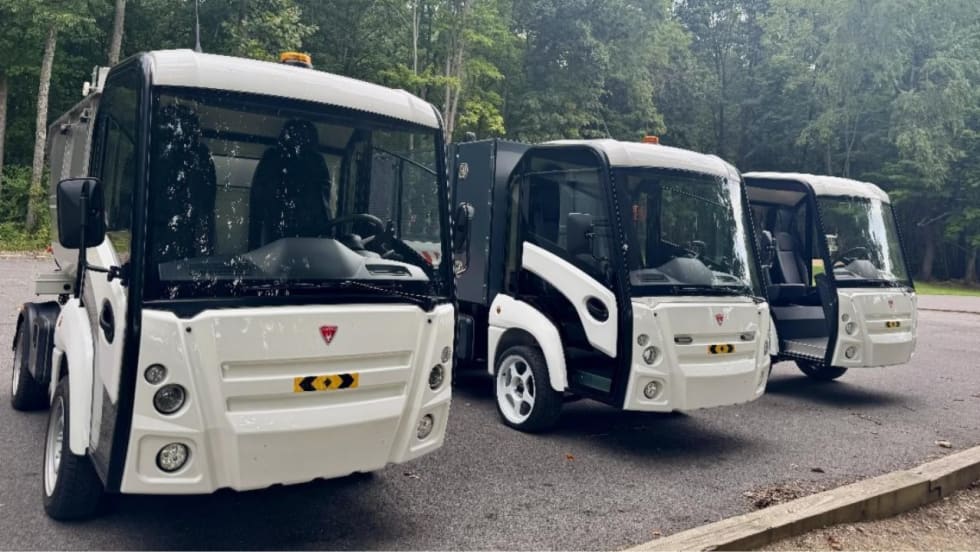
Narro Trucks Introduces Electric Utility Vehicle
Narro Trucks officially launched its operations on Aug. 20 and hosted a ride and drive to showcase its electric truck, which will be produced in Virginia.
Read More →
Samsung SDI Takes Full Control of GM Battery JV as Indiana Plant Pivots to Energy Storage
Samsung SDI is taking full control of its Indiana battery plant with GM, marking a major shift from the EV-focused joint venture Charged Fleet first covered in 2023.
Read More →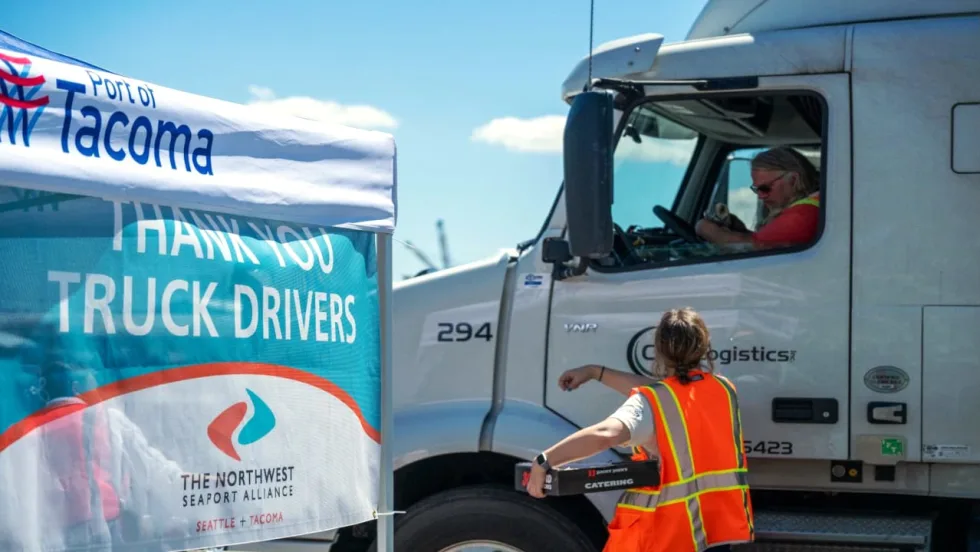
NWSA Taps CALSTART to Administer Zero-Emission Drayage Assistance Program
CALSTART will provide free technical assistance services to drayage fleets serving the Ports of Seattle and Tacoma and looking to transition to cleaner technologies and help decarbonize freight hubs.
Read More →
EV Fleet Reality Check: What Operators Wish They Knew Before Electrifying Their Work Vans
Electric work truck upfits bring new compatibility questions. Learn how parts availability, OEM guidance, power demands, and route planning can affect fleet performance.
Read More →
Peterbilt Expands Sourcewell Partnership with Electric Vehicle Lineup
Peterbilt Motors Company’s cooperative purchasing agreement with Sourcewell and its Canadian partner, Canoe Procurement Group, now includes including Peterbilt's battery-electric vehicle lineup.
Read More →