





Ready to Transform Your Fleet? Contact Mullen today.
Transforming the Commercial Electric Vehicle Market
Mullen Automotive is working to transform the commercial vehicle industry with a fully electric lineup and the first-of-its-kind electric light-duty cargo van in the U.S.
June 1, 2023
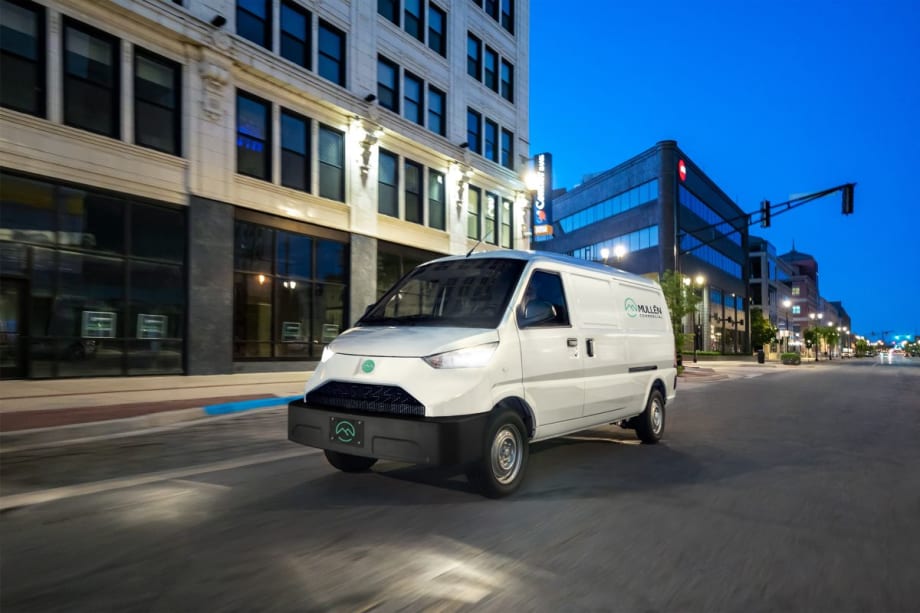
Mullen Automotive announced a partnership with Global EV Technology, Inc. and EV Technologies, LLC, with initial development for improving energy management technology in electric vehicles for greater range and vehicle performance.
Photo: Mullen Automotive
3 min to read
In 2014, Mullen Automotive set out to create clean and scalable electric vehicles and energy solutions.
Recognizing the impacts of global fossil fuel dependence, Founder & CEO David Michery launched with the intent to accelerate electrification and the adoption of electric vehicles.
“We’ve developed a complementary portfolio of products including a variety of both commercial and retail vehicles, including our Class 1 Cargo Van, the Mullen ONE, Class 3 Low-Cab-Forward (LCF), the Mullen THREE, Mullen FIVE, MullenGT, and our sister brand Bollinger’s B1, B2, B4, B5, and B6,” said John Schwegman, chief commercial officer at Mullen Automotive.
Mullen Tackles Commercial Electric Vehicles
As electrification needs and requirements evolved over the last decade, Mullen saw a gap in the industry for commercial and government fleets.
“Unlike traditional OEMs with a focus on retail, we recognize that fleets are struggling to obtain their requested orders due to allocation of vehicles,” Schwegman explained. “With unmet needs and our products perfectly suited for the commercial market, Mullen is strategically aligned to assist fleets in meeting mandated electrification requirements and enrichen their electric vehicle portfolios.”
Schwegman added that filling these gaps and immediately reducing carbon emissions is why Mullen launched its “Fleet-First Strategy” targeting commercial production.
“We are excited to launch and bring to market two commercial products this year, our all-electric Class 1 Cargo Van and our all-electric Class 3 Low-Cab-Forward,” he said.
As Mullen commences production of its commercial vehicles, the company is also developing solutions to support end-users. Mullen’s advanced in-house telematics includes maintenance alerts, real-time vehicle location, driver safety monitoring, and battery tracking.

UNC Charlotte has now purchased 15 Campus EV cargo vans, fulfilling UNC’s second order commencing on May 1, 2023. UNC’s first order of seven Mullen EV cargo vans were delivered in March 2023.
Photo: Mullen Automotive
Partnering Strategically & Commercial Production Prep
Mullen recognizes that strategic partnerships and acquisitions accelerate the timeline to shared goals and increase manufacturing capacity.
“Today, Mullen has two manufacturing facilities with plenty of capacity to produce both our commercial and retail vehicles. By investing in a complimentary commercial brand, Bollinger Motors, our vehicle line expands across the entire light- and medium-duty truck industry covering Classes 1 through 6,” Schwegman explained.
Mullen Commercial has also teamed up with Loop Global to provide a complete EV ecosystem with a range of readily available charging infrastructure solutions and Loops’ EVFaaS, an electric-vehicle-as-a-service program.
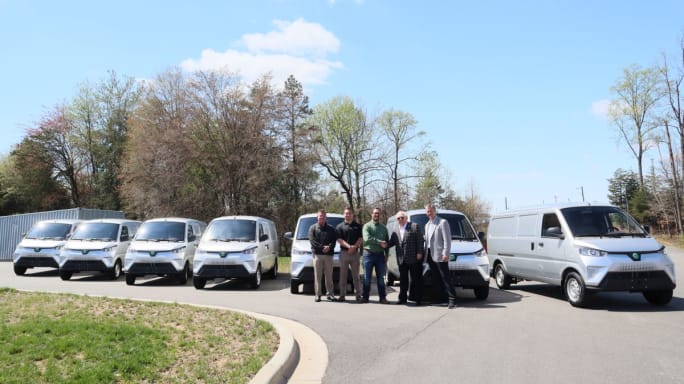
Randy Marion Automotive Group is one of the early supporters of Mullen, recently placing a 1,000-vehicle order for the Mullen Three.
Photo: Mullen Automotive
Demonstrations, Pilots & Fleet Deliveries
Today, Mullen is in the pilot and delivery phase with several customers.
“We are thrilled to have our first deliveries earlier this year in March. We have an inventory of Campus Delivery vans at our dealer partner, Randy Marion Automotive Group, and vehicles delivered to customers, including University of North Carolina – Charlotte and MGT Leasing,” Schwegman noted. “The demand for our commercial vehicles has been strong, leading to a line-up of pilot programs and individualized demonstrations.”
Currently, Mullen has pilot programs ongoing and targeted with British Airways, Unifi Aviation, LLC, Phenix Truck Bodies and Equipment, Hub Truck, Fluid Truck, and several universities.
“We’ve also recently added the availability of the Mullen THREE pre-production units for customer demos and test drives. With our first-mover advantage in the Class 1 and Class 3 EV segments, we are excited about our two key launches in 2023,” he added.
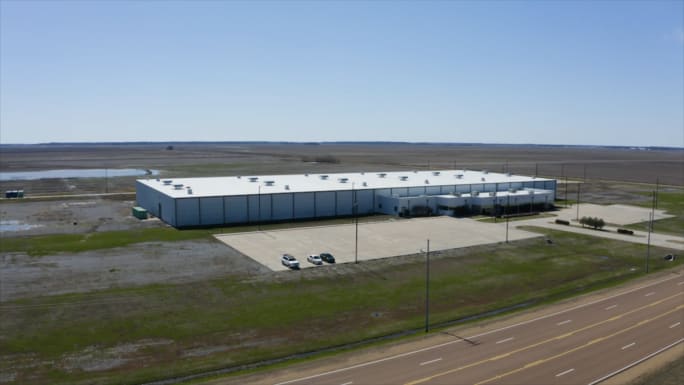
In 2021, Mullen Technologies purchased an electric vehicle manufacturing facility in Tunica, Mississippi.
Photo: Mullen Automotive
Looking Toward an Electrified Commercial Future
Mullen Automotive is laser-focused on ramping up production, launching commercial products, and filling the gaps nationwide in commercial and government fleets.
“We are incredibly excited to be transforming the industry as we bring our commercial products to market this year. Not only are our vehicles entirely electric; our Class 1 Cargo Van is the first of its kind in the U.S. market,” Schwegman said. “As other OEMs have exited the small van space, we see that the market requires commercial vehicles of all sizes.”
One of Mullen’s main goals is connecting with key fleet customers, fleet management companies, government entities, and upfitters.
“As we target our next milestones, Mullen plans to develop variants of our current portfolio and expand product lines,” Schwegman concluded.
Subscribe to Our Newsletter
More Vehicle Insights
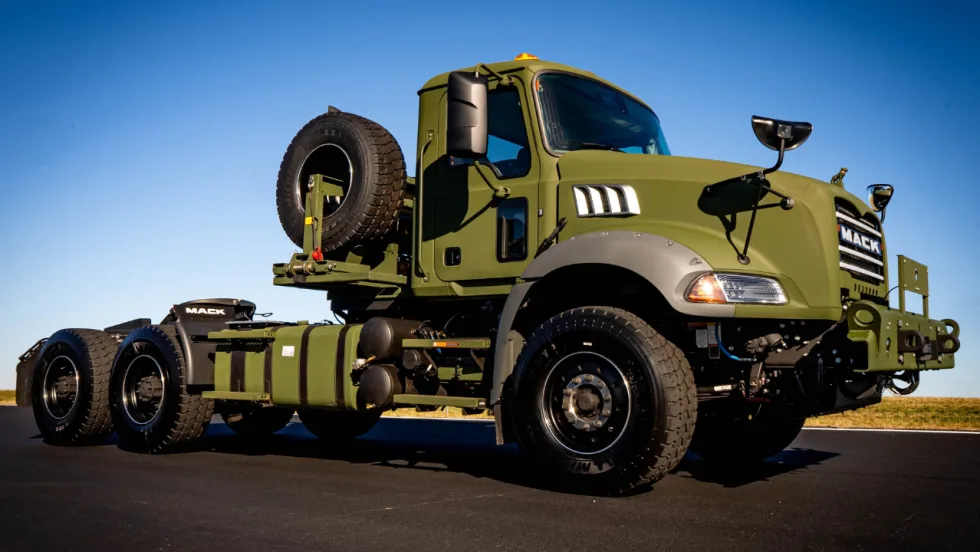
Mack Defense to Spotlight Common Tactical Truck Line Haul Hybrid Tractor During AUSA 2026
Mack Defense was awarded a contract to design, build, and deliver prototype vehicles for the U.S. Army’s Common Tactical Truck (CTT) program. It will show off its line-haul hybrid tractor prototype, based on the Mack Granite, at the 2026 United States Army (AUSA) Annual Meeting and Exposition.
Read More →
Advance Produces 20,000th Front-Discharge Mixer
Advance celebrated the production of its 20,000th front-discharge mixer, a Commander Series FD4000 mixer. Jack Willard first developed the original Rite-Way Truck in 1964, and then Advance was established in 1972.
Read More →
GM Launches Clean Sheet Duramax 8.3L Turbo-Diesel V8 for 2027 HD Pickups
General Motors previewed key updates for its 2027 HD pickup lineup, which will now include a new Duramax 8.3L Turbo-Diesel, electric power steering, and electronic brake boost.
Read More →
GMC Sierra 1500 Fleet Guide Specs Capability and 2027 Model-Year Updates
The next-generation 2027 GMC Sierra 1500 brings new V-8 engines, more standard safety technology, updated trailering tools, and a work-focused Pro trim. Here’s what fleets need to know.
Read More →
Mack Defense Achieves Cybersecurity Maturity Model Certification Level 2
After an assessment conducted by an authorized Certified Third-Party Assessment Organization (C3PAO), Mack Defense has achieved Cybersecurity Maturity Model Certification (CMMC) Level 2.
Read More →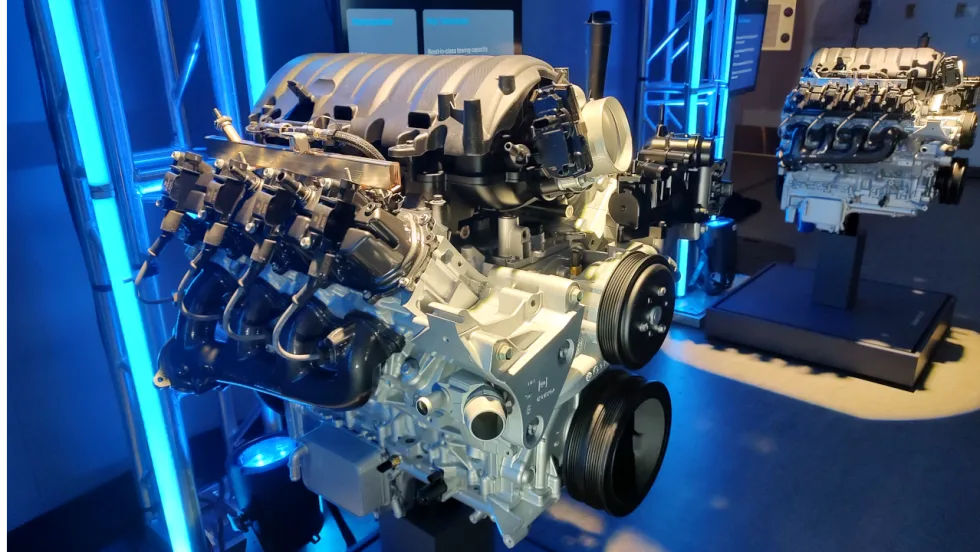
GM Unveils New Sixth-Generation Small Block Engines for 2027 Light-Duty Pickups
General Motors unveiled two new small-block engines, backed by extensive real-world validation and more than 70 years of small-block V8 manufacturing experience, as part of the engine portfolio for the 2027 Chevrolet Silverado 1500 and GMC Sierra 1500.
Read More →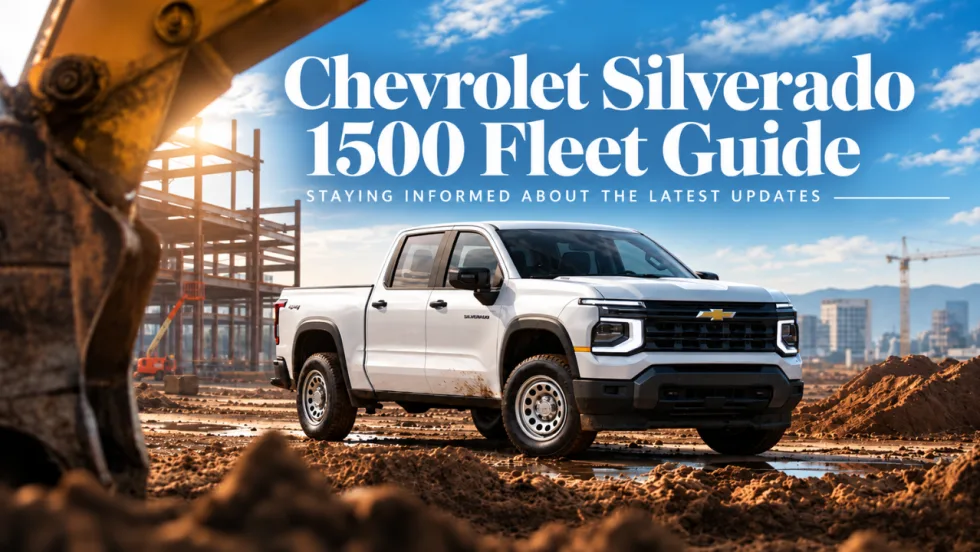
Chevrolet Silverado 1500 Fleet Guide Specs Capability and 2027 Model-Year Updates
The next-generation 2027 Chevrolet Silverado 1500 brings new V-8 engines, updated technology, expanded safety features, and a fleet-focused Work Truck. Here’s what commercial fleets need to know so far.
Read More →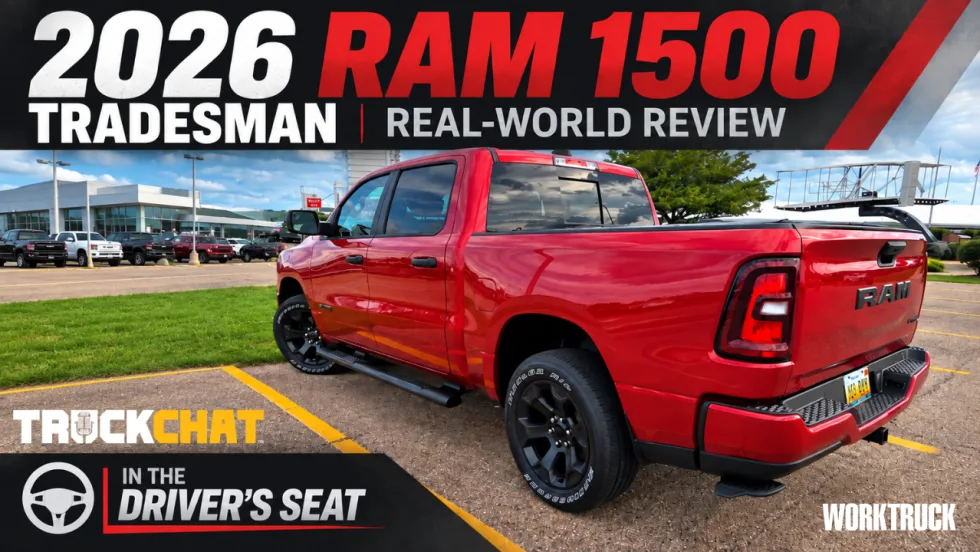
2026 Ram 1500 Tradesman Put to a Real-World Fleet Test
A few days behind the wheel of a 2026 Ram 1500 Tradesman turned into a test of visibility, parking, work-ready features, and even severe-weather driving.
Read More →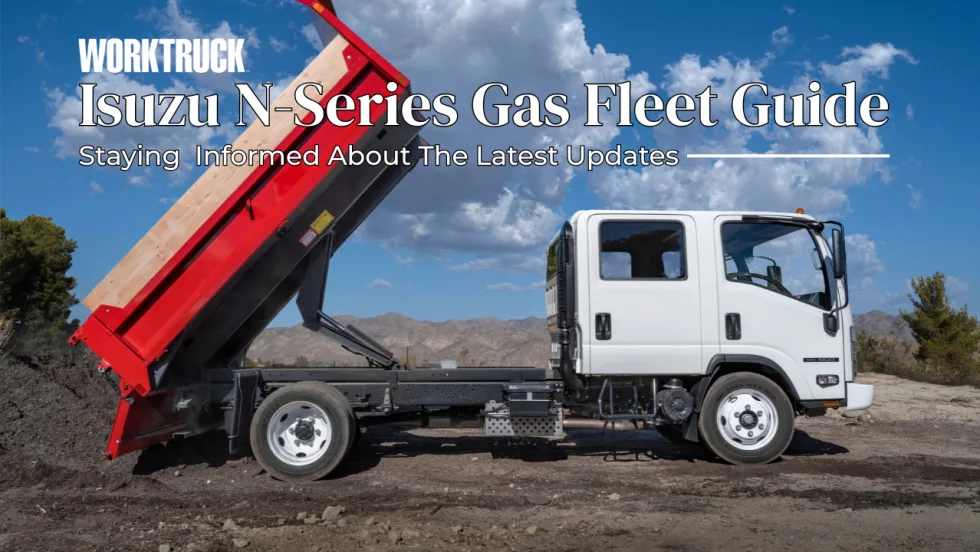
Isuzu N-Series Gas Fleet Guide: Specs, Capability and 2027 Model-Year Updates
Explore Isuzu Truck North America’s N-Series Gas fleet specs, engine performance, GVWR and payload capability, configurations, chassis dimensions, work-focused features, and 2027 model-year information.
Read More →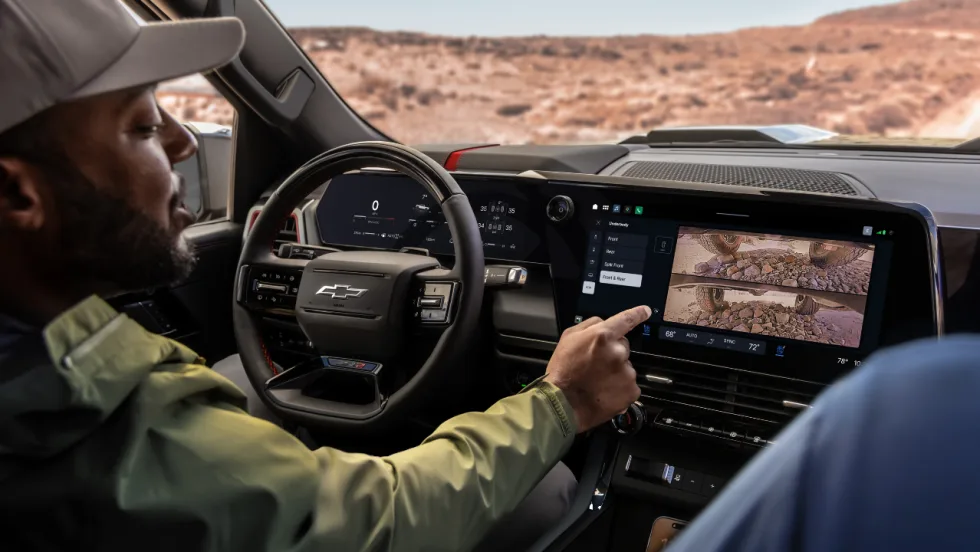
GM Brings New Truck Focused Interface to 2027 Silverado and Sierra
GM's new pickup interface puts trailering data, camera views, vehicle controls, and smartphone integration closer to the driver in the 2027 Silverado and Sierra.
Read More →