





Dig Deeper: 2022 Toyota Tundras Raise More Than $1.2M for Paralympic Fund
Toyota Teams Up for the Bees
Toyota donated $400,000 to the National Environmental Education Foundation (NEEF) and the Pollinator Partnership (P2) that will be used to enhance 26,000 acres of pollinator habitat across North America over the next five years.
May 14, 2022
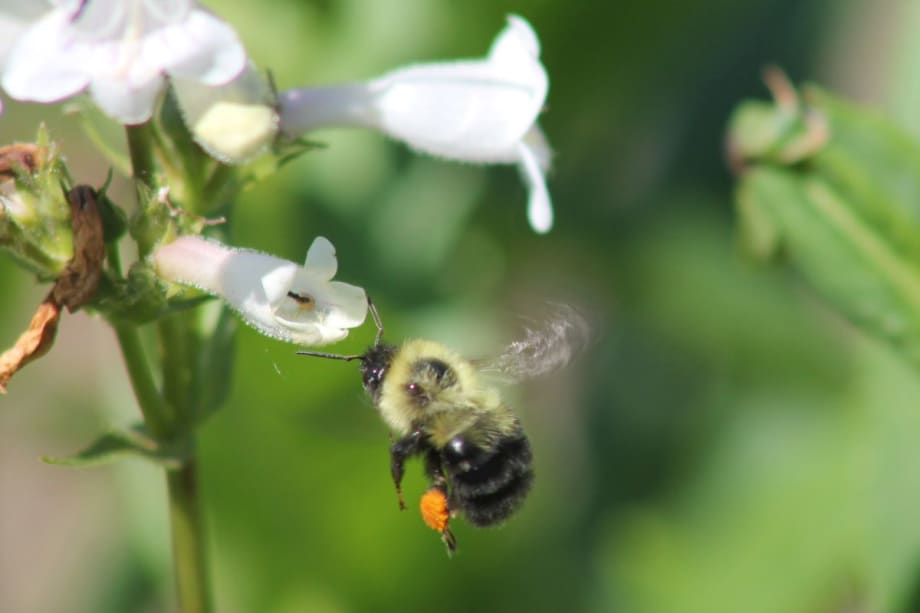
Seventeen Toyota sites across North America have already planted pollinator gardens to nurture monarch butterflies and other pollinator species along the monarch migration path. This adds to these efforts.
Photo: Toyota
3 min to read
Pollinators put food on our tables. One out of every three bites we eat comes to us courtesy of pollinators such as bees, butterflies, moths, flower flies, beetles and bats. Toyota donated $400,000 to the National Environmental Education Foundation (NEEF) and the Pollinator Partnership (P2) that will be used to enhance 26,000 acres of pollinator habitat across North America over the next five years.
“Toyota believes in supporting pollinator populations because they are so critical to our food system,” said Becky Martin, manager of environmental sustainability at Toyota. “We are working with NEEF and P2 to enhance 26,000 acres of habitat, which is the same size as our land footprint in North America, with experts in pollinator conservation.”
The nonprofit NEEF will develop and administer the 2022 Biodiversity Conservation Grant Program, which will fund projects to create, improve and protect habitats for butterflies, bees, bats and others. The organization will select the grantees, manage the payments and work with the grantees during the life of their project. NEEF will also be responsible for evaluating and reporting back to Toyota on the projects and their impacts.
“NEEF will also work with Toyota to provide hands-on volunteer activities to allow Toyota team members and their families to actively participate in pollinator enhancement projects supported by the grant program,” said Tony Richardson, program director for Public Lands Engagement at NEEF. “There is an incredible demand for this type of support and incredible work going on throughout the country.”
P2 will distribute native wildflower seeds to qualified applicants to plant in prairies, meadows, gardens or other habitats that already have flowering vegetation. Adding flowering plants boosts the overall health and diversity of the habitat. Recipients of the seeds include private landowners, non-profits and local, state and federal government agencies. Thus far, P2 has supported 76 project sites across 13 states, Mexico and Canada totaling 1500 acres.
“About 75% of crop plants require or benefit from pollination and ecosystems would seriously decline or go extinct without pollinators,” commented Kelly Rourke, executive director of P2. “Pollinators play a necessary role in the reproduction of up to 90% of flowering plants around the world.”
P2 is partnering with the World Wildlife Fund Mexico to support their ongoing reforestation work in the Monarch Butterfly Biosphere Reserve (MBBR), located on the border of the central Mexico states of Michoacan and Estado de Mexico. Funding from this program is being used to support the production of 40,000 tree seedlings, including 20,000 oyamel firs and 20,000 Mexican pines, which monarchs use for their overwintering ground. These trees will be used to reforest around 100 acres of land.
In Canada, P2 is working with Pollinator Partnership Canada (P2C) to support habitat restoration on smaller parcels in British Columbia that will be used for community education and engagement.
Biodiversity is one of Toyota’s four environmental sustainability focus areas in North America. Biodiversity refers to the variety and interdependence of species and ecosystems and the natural patterns they form. Toyota’s biodiversity strategy is based on harnessing the knowledge of experts to help protect species, restore habitats and expand the reach of Toyota’s efforts to achieve broader positive conservation results.
Seventeen Toyota sites across North America have already planted pollinator gardens to nurture monarch butterflies and other pollinator species along the monarch migration path. In addition, Toyota has also worked with the Suppliers Partnership for the Environment to launch the Pollinator Project Challenge. Participating automakers and suppliers across North America have planted more than 200 pollinator gardens during the period from 2020-2021.
More Operations

Family Ties Inside the Fleet Families Building Careers Across Generations
Three fleet families share what it really takes to work together, learn across generations, and keep business from following them home.
Read More →
Shades of Fleet Call for Voices: Fleet's Hidden Heroes
Fleet’s hidden heroes are often the ones keeping everything moving behind the scenes. September’s Shades of Fleet is looking for dispatchers, coordinators, parts specialists, and other support pros to share their stories.
Read More →
Truck Centers, Inc. Celebrates National Truck Driver Appreciation Week with $1,000 Fuel Card Giveaways
During National Truck Driver Appreciation Week, Truck Centers, Inc. is offering customers a chance to fuel up for free. Customers at all Truck Centers locations can enter to win one of four $1,000 fuel cards from Sept. 14 - 18.
Read More →
Fleet Guides, AI Time-Savers, Truck Tariffs & Fuel Strategy Lead the News
This week’s Truck Chat Cheat Sheet covers new fleet vehicle guides, practical AI use cases, U.S.-Canada truck production, mixed-energy strategy, and more.
Read More →
What Fleet Employers Are Missing When Hiring Veterans
What if some of the strongest candidates for fleet are already out there, but their experience is written in a language our industry does not always recognize?
Read More →
Automotive Fleet Opens 2026 Personal Use Survey for Commercial Fleet Managers
Less than two weeks left! Commercial and corporate fleet managers are invited to share how their organizations handle company vehicle personal-use policies, charges, and driver eligibility.
Read More →
What Resilient Fleets Do Differently When Conditions Change
Fleet resilience is about more than reacting to disruption. Lauren Fletcher talks with AP Fleet’s Alex Coveney about flexibility, planning, scaling, and what helps fleets adapt when business conditions shift.
Read More →
If We Want the Next Generation in Automotive, We Have to Give Them a Reason to Care
The automotive industry talks constantly about its workforce shortage. But before we can recruit the next generation, we may need to do a better job giving kids a reason to care about automotive in the first place.
Read More →
Ram ProMaster City Under $40K, Truck Tariffs, and AI Maintenance Lead the News
A sub-$40K commercial van, tariff questions, AI-powered maintenance, and a new EV production strategy headline this week’s Truck Chat Cheat Sheet.
Read More →
Bob Adamsky Shares the Fleet Lessons You Usually Learn the Hard Way
After more than 30 years in fleet, Arrow International’s Bob Adamsky has learned that the job is about far more than vehicles. He shares the lessons he wishes every fleet manager could learn a little earlier.
Read More →