




GM’s Tonawanda Plant Retooled for High-Tech Engines
Some of General Motors’ advanced manufacturing techniques to produce the all-new, Gen 5 Small Block engine family are microscopic, but they have a huge impact on the 75-year-old Tonawanda Engine Plant, where about 1,500 jobs have been created and retained since 2009.
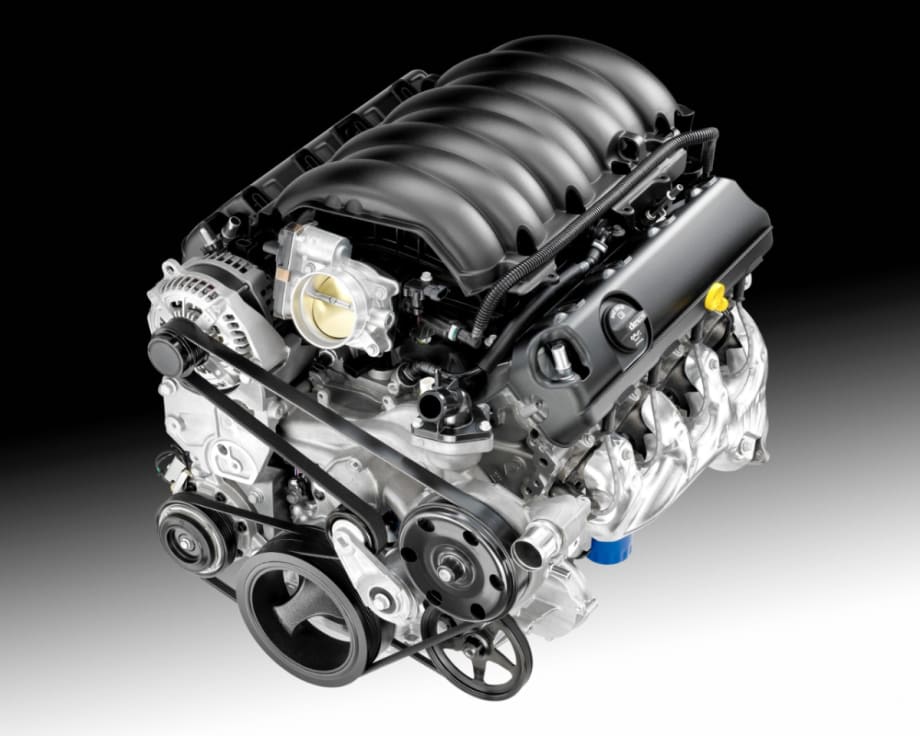
2014 Small Block Gen 5 5.3L V-8 AFM VVT DI (L83) for Chevrolet Silverado and GMC Sierra.
Some of General Motors’ advanced manufacturing techniques to produce the all-new, Gen 5 Small Block engine family are microscopic, but they have a huge impact on the 75-year-old Tonawanda Engine Plant, where about 1,500 jobs have been created and retained since 2009.
As a result of GM’s $400 million investment, Tonawanda will eventually produce four versions of the Gen 5 Small Block – a 4.3L V-6, 5.3L V-8 and two variants of a 6.2L V-8. When the plant is at full production, it will produce more than 1,000 engines daily. The new family of engines will power nine GM models by 2015, starting with the all-new 2014 Chevrolet Silverado and GMC Sierra pickups, and the all-new 2014 Chevrolet Corvette Stingray.
2014 Small Block Gen 5 5.3L V-8 AFM VVT DI (L83) for Chevrolet Silverado and GMC Sierra.
“The Gen 5 Small Block is a cornerstone of GM’s powertrain strategy and its production at Tonawanda affirms the commitment to one of the highest-skilled workforces in the industry,” said Steve Finch, plant manager. “We have invested 40,000 hours and $1.8 million in training the workforce to build these engines with uncompromising quality, and we’ve added some of the most flexible equipment ever used in the industry to make sure we can meet market demand.”
Said Bob Coleman, shop chairman of UAW Local 774: “We have hired more than 1,000 people in the last year. They are trained by a joint team and learn the Tonawanda culture during an intensive two-week orientation. I believe we have the finest engine builders in GM. Receiving almost $1 billion of new investment since 2010 proves that GM has the confidence in this workforce, as do I.”
Manufacturing highlights include:
New coordinate measuring machines that check machining with greater speed and accuracy, including a Zeiss position check machine that examines more than 11,000 data points within 2.5 microns and a Hummel surface finish machine that checks surface finish textures at less than a micron – less than 0.001 millimeter or 0.000039 inch
A new Track and Trace system that collects all machining and assembly data for each engine, helping ensure top quality builds.
A new, smart automated cylinder head assembly system helps ensure more precise assemblies. It can assemble 48 parts in 40 seconds.
A fuel system connection inspection that uses helium to detect even the most minute of leaks – less than one part per billion – for the high-pressure direct injection system on each engine
The capability of boring any number of cylinders through the same machine without stopping
A new machine featuring three synchronistic robots that performs inspections and checks simultaneously for any engine – including thread check, plug assembly and leak test. Previously, checks were handled one at a time and separate lines were required for six- and eight-cylinder engines.
The technologies and training enable Tonawanda to build all Gen 5 variants on the same assembly line. All feature advanced technologies – including direct injection, Active Fuel Management, continuously variable valve timing and an advanced combustion system – which enable the engines to make more power with greater efficiency.
The new 5.3L V-8 offered in the 2014 Silverado and Sierra trucks, for example, is the most efficient V-8 in the segment, rated at 23 mpg on the highway (2WD), while the 455-horsepower 6.2L LT1 V-8 found in the 2014 Corvette Stingray makes it the most efficient sports car on the market, with an EPA-estimated 29 mpg on the highway. Gen 5 Small Block engines are marketed as EcoTec3 in trucks.
“The Gen 5 Small Block engines are among the most advanced and high-tech in the world and Tonawanda is now one of the most technologically advanced manufacturing facilities to support them,” said Finch. “From the machining operations and the flexibility for building variants on the same line to state-of-the-art quality advances, Tonawanda’s manufacturing capabilities are second to none.”
Construction on the Tonawanda facility started in 1937 and production began on March 22, 1938. It is known throughout automotive collector and enthusiast circles as the birthplace of some of the most historic high-performance engines for vintage Chevrolet muscle cars and Corvettes. It is also the birthplace of the Small Block engine, which went into production in 1955. Tonawanda this year will build its 71-millionth engine. The start of Gen 5 production has contributed to the workforce more than doubling in size from its low in 2009.
More Operations

How Cardless Fuel Payments Benefit Commercial Fleets
Is it time for fleets to move beyond plastic fuel cards? David Abraham of WEX explains how cardless fuel payments can help reduce fraud, simplify driver transactions, and improve efficiency by allowing drivers to pay for fuel using their smartphones.
Read More →
Good Fleet Leadership Starts With the People You Already Have
From developing future leaders to listening to employees, discover how better leadership can help work truck fleets retain talent and build stronger teams.
Read More →
ATRI Names Next President and CEO
Page Siplon, a longtime transportation and logistics industry executive, has been chosen as the next president and CEO of the American Transportation Research Institute (ATRI).
Read More →From Our Partners
Basic Tracking vs Next Generation Fleet Technology
Sponsored by AT&T Business

5 Facts Every Fleet Manager Should Know About Embedded Telematics
Sponsored by Stellantis/Mobilisights

How AI Video Telematics Boosts Driver Safety and Helps to Avoid Unnecessary Costs
Sponsored by Verizon Connect

Charting the 8 Bottom-Line Benefits of Workforce Optimization
Sponsored by Verizon Connect

Coltrain Onsite Fleet Care Sponsors 2026 Cure Bowl to Support Cancer Research
The mobile fleet maintenance provider is supporting the annual college football bowl game, which has helped raise $6.83 million for cancer research since 2015.
Read More →
Racing Lessons, Electric Fleet Growth, and Ghostbusters Lead This Week's Work Truck News
Racing lessons for fleets, Republic Services' electric truck expansion, 40 years of fleet wisdom, truck trivia, autonomous yard trucks, and more headline this week's Truck Chat Cheat Sheet.
Read More →
A buyer's guide to fleet management software in 2027
Buying fleet management software in 2027 means looking beyond features and price. As fleet operations, technology and expectations evolve, this guide explores what today’s fleet professionals should consider when choosing a system that can deliver value now and adapt to what comes next.
Read More →
How to Build a Lasting Fleet Career by Staying Curious and Connected
Tina Kourakos never planned on a career in fleet. More than 30 years later, she says curiosity, strong relationships, and a willingness to keep learning helped turn an unexpected assignment into a career spanning fleet management and OEM leadership.
Read More →
Think You Know Trucks? Take Our 19-Question Fleet Trivia Challenge
From chicken lights to diesel engines and trucking history, test your knowledge with 19 questions from the 2026 Work Truck Exchange and Heavy Duty Trucking Exchange.
Read More →
Where’s My Truck: Inside the Fleet Logistics Work Nobody Sees
Shades of Fleet video thumbnail featuring Lauren Fletcher beside the text “The People Behind the Process, Keeping Fleets Moving,” with fleet vehicles and logistics imagery in the background.
Read More →
Work Truck Seeks Fleet and Industry Insights on 2026 Trends and 2027 Forecasts
Work Truck is seeking insights from fleet leaders and industry partners on the trends that shaped 2026 and what commercial fleets should prepare for in 2027. Participate today!
Read More →