




How the Digger Derrick Has Transformed Over 75 Years
Today, digger derricks are an essential tool for utility line construction. Here’s how they’ve evolved over the past 75 years, from a new invention to a critical part of any utility fleet.
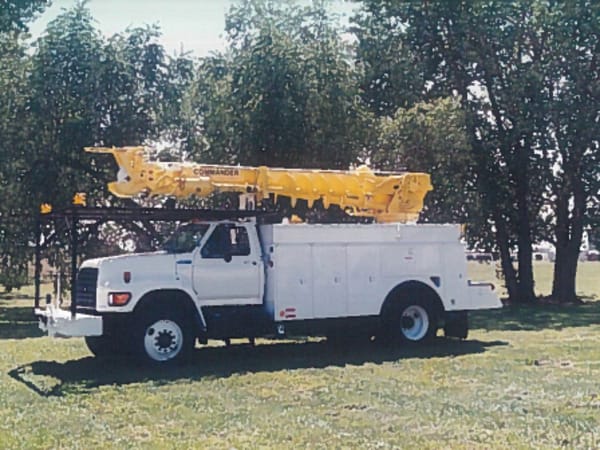
In 1997, Terex purchased Tel-E-lect, which became the foundation for Terex Utilities. Pictured: an early 1990s model.
Photo courtesy of Terex
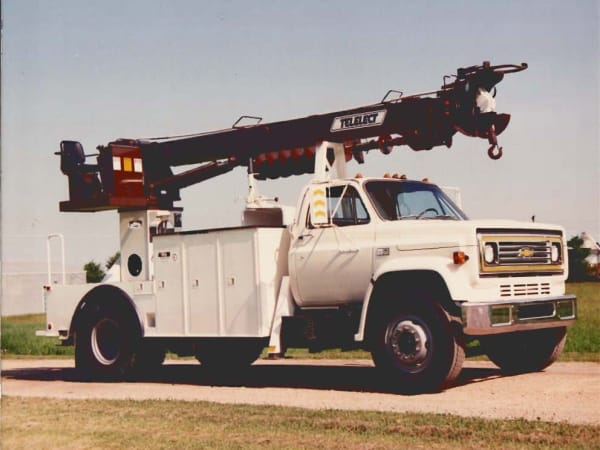
Digger derricks in the 1970s were engineered with strong-box-constructed booms and dual-lift cylinders, which continued in 1980s models (like the one pictured) and continues to serve as the standard today.
Photo courtesy of Terex
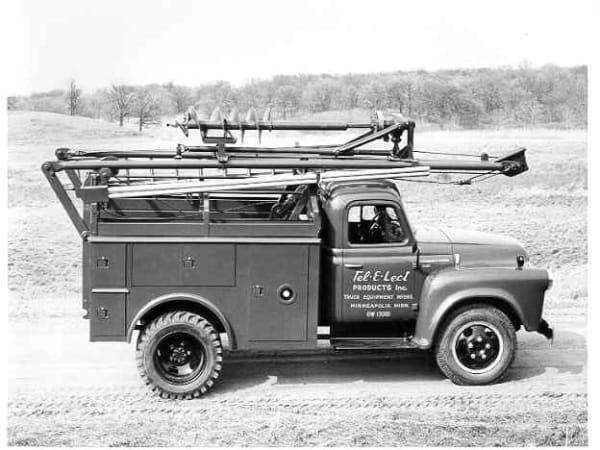
The digger derrick traces its roots to the 1940s. Before digger derricks, power line construction was a manual process, where crews dug holes using shovels and hand augers.
Photo courtesy of Terex
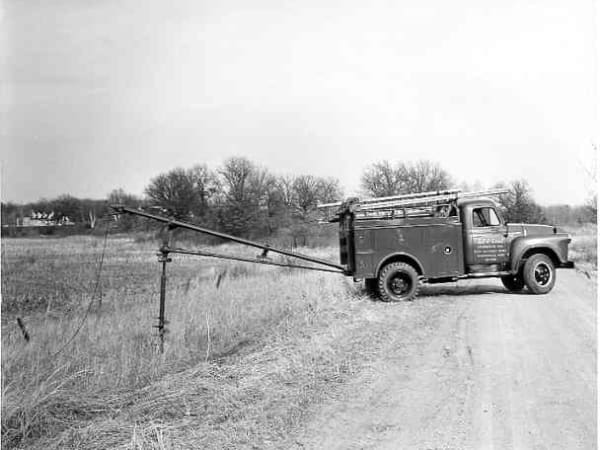
Leroy Lindquist, owner of the Minnetonka Manufacturing Company, worked with Northwestern Bell Telephone Company to develop a machine run by power take-off (PTO) on a truck’s transmission to dig holes for telephone poles more quickly.
Photo courtesy of Terex
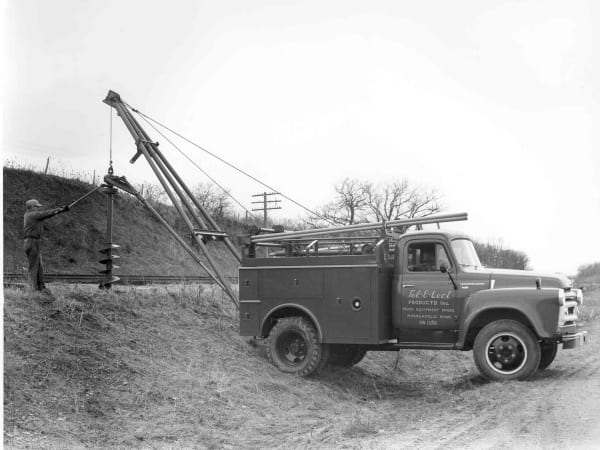
The first Tel-E-lect trucks (designed for Telephone and Electric companies) utilized the truck’s differential to mechanically turn an auger, which was suspended from the end of an A-frame boom and raises and lowered by the truck winch line to drill a hole.
Photo courtesy of Terex
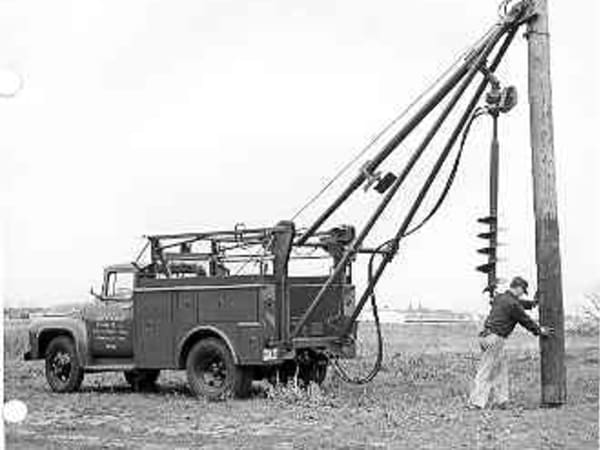
The digger derrick caught on, and mass production of the machine took off in the 1950s.
Photo courtesy of Terex
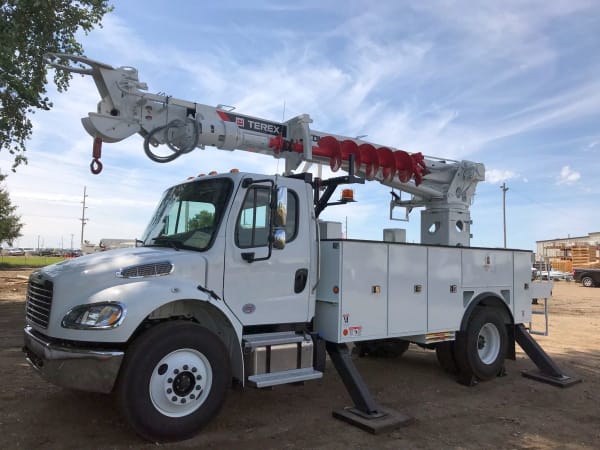
Today’s digger derricks have sheave heights up to 100 feet and winch capacities of 50,000 pounds.
Photo courtesy of Terex
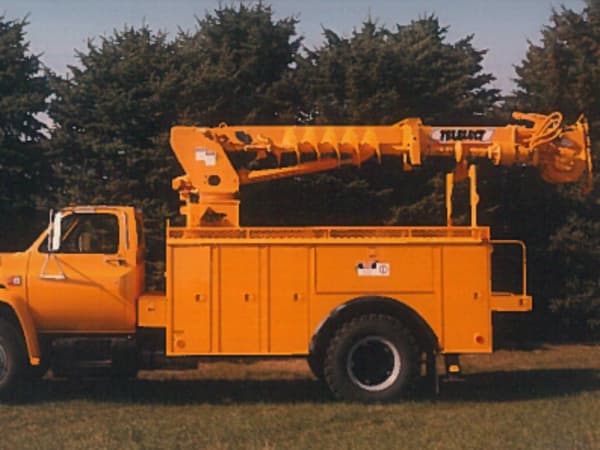
In the 1960s and 1970s, hydraulic digger derricks were introduced, and designed to be mounted on a smaller, lighter, and more maneuverable chassis. Pictured: a 1970s model.
Photo courtesy of Terex
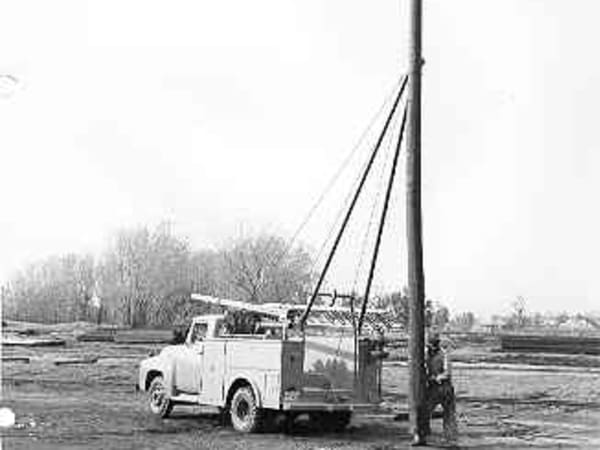
Key innovations during the 1950s and 1960s include the Rite-Way auger storage bracket, pole-grabbing (PG) winch, and hydraulic collector block.
Photo courtesy of Terex