




Frito-Lay to Replace its Diesel Fleet with Zero-Emission Vehicles in Modesto, Calif.
PepsiCo’s Frito-Lay division plans on reducing its greenhouse gas emissions 20% by 2030 through the replacement of all its existing diesel-powered freight equipment with zero-emission and near-zero emission technologies at its Modesto, Calif. manufacturing site.

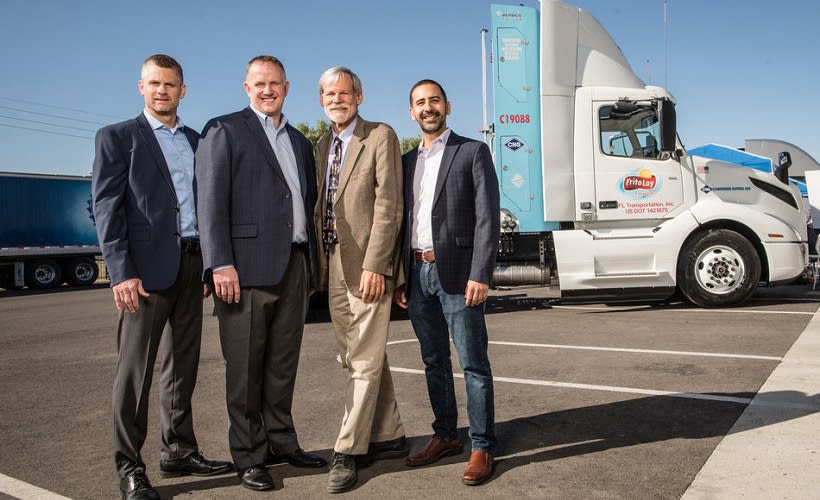
From left to right are Matt Fenton, senior site director, Frito-Lay Modesto; Mike O'Connell, vice president, supply chain, PepsiCo; Dr. Alexander Sherriffs, board member California Air Resources Board (CARB) and San Joaquin Valley Air Pollution Control District (SJVAPCD); and Samir Sheikh, executive director, SJVAPCD.
Photo courtesy of Frito-Lay North America.
PepsiCo’s Frito-Lay division plans on reducing its greenhouse gas emissions 20% by 2030 through the replacement of all its existing diesel-powered freight equipment with zero-emission and near-zero emission technologies at its Modesto, Calif. manufacturing site.
This Zero- and Near Zero-Emission Freight Facility Project will transform the 500,000-square-foot site to integrate an array of commercially available and pre-commercial ZE and NZE technologies in numerous applications, according to the company. Among them will be fleet vehicles and supporting infrastructure, on-site renewable energy generation, and energy storage systems. The Modesto project will also contribute to emerging technologies by funding data collection and reporting of the project results.
The project is part of California Climate Investments (CCI), a statewide program that puts billions of Cap-and-Trade dollars to work reducing greenhouse gas emissions, strengthening the economy, and improving public health and the environment — particularly in disadvantaged communities. CCI funding is awarded by several state agencies including the California Air Resources Board (CARB), according to a release.
The $30.8 million Modesto project is expected to be completed in 2021. The current ZE and NZE project is a continuation of the Modesto facility's widespread sustainability initiatives and commitment to environmental stewardship.
The project is the result of a partnership with the San Joaquin Valley Air Pollution Control District (SJVAPCD), which received a grant from CCI – matched by investments from Frito-Lay and American Natural Gas (ANG), as well as in-kind contributions from Café Coop – to support the Modesto sustainability initiative.
PepsiCo's sustainability goals reflect the United Nations' 2030 Agenda for Sustainable Development and call to combat climate change and its impacts, according to the company. This project marks another important milestone as PepsiCo works toward the goal of reducing absolute GHG emissions across its value chain.
Contributors to the Zero- and Near-Zero Emission Freight Facility Project includes: ANG; BYD Motors LLC; Café Coop; CALSTART; University of California, Riverside CE-CERT; ChargePoint; Crown, Gladstein Neandross & Associates (GNA); Meritor; Peterbilt; Project Clean Air; SJVAPCD; Tesla and Volvo.
Originally posted on Automotive Fleet
More Sustainability
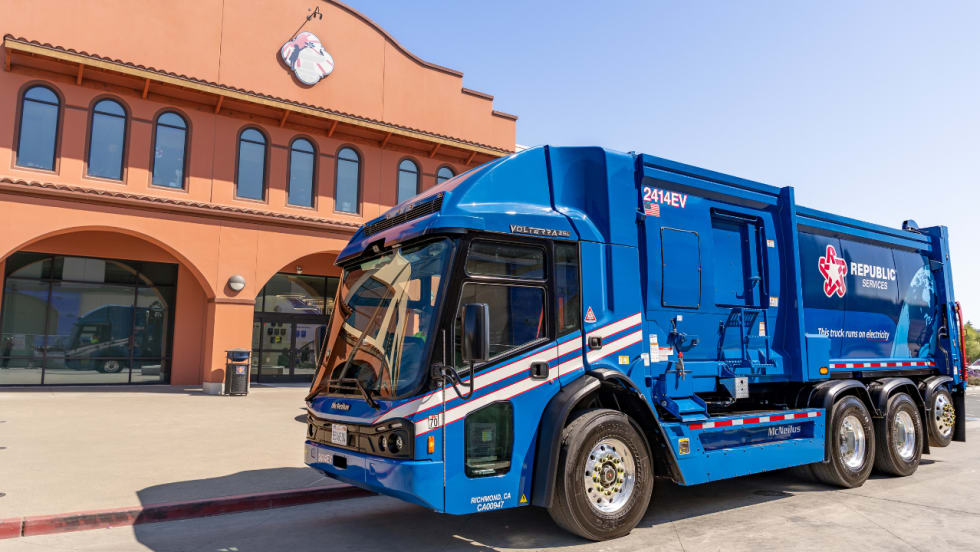
What Republic Services Learned Moving Electric Trucks Beyond the Pilot
With 250 electric refuse trucks now in service, Republic Services is learning that scaling a new powertrain depends as much on routes, drivers, technicians, and daily operations as it does on the truck itself.
Read More →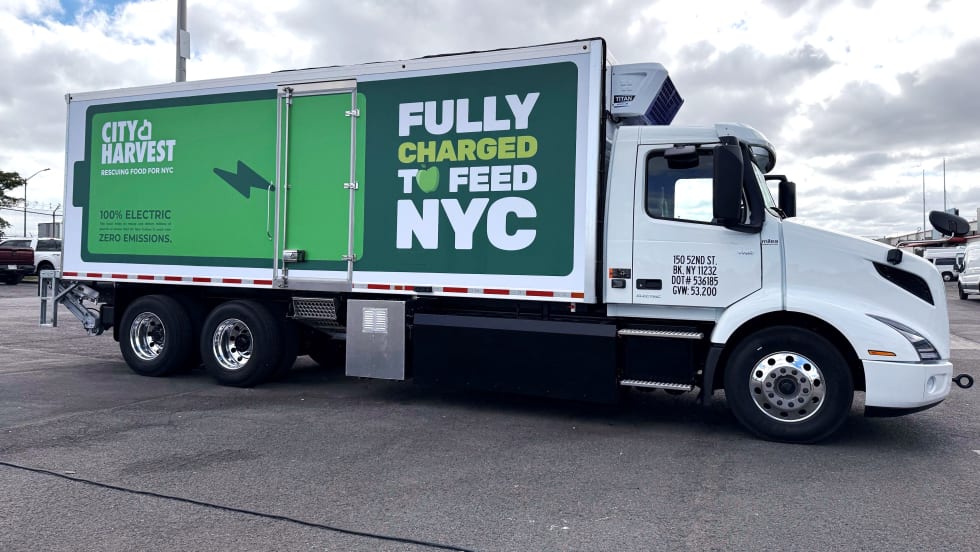
City Harvest Begins Using Volvo VNR Electric Trucks to Rescue Food Across New York City
Volvo Trucks North America and the Bronx Is Breathing project team handed over three new Volvo VNR Electric trucks to City Harvest, which will use the trucks to rescue and deliver food throughout the Bronx and across all five boroughs of New York.
Read More →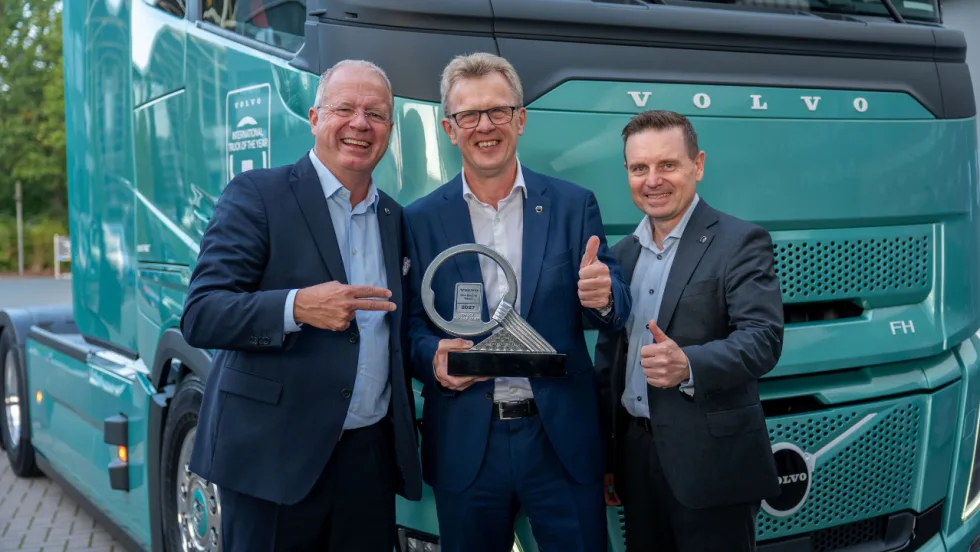
Volvo Trucks Wins International Truck of the Year 2027 for its Global Electric Range
Volvo Trucks' global heavy-duty electric range has been named International Truck of the Year 2027. Since 2019, more than 7,000 electric Volvo trucks have driven more than 310 million miles worldwide.
Read More →


Fleet Forward Conference Introduces One-Day Passes for 2026
New one-day registration gives fleet professionals the flexibility to attend Tuesday, Wednesday, or Thursday, with passes available for $199 through Sept. 18.
Read More →
CALSTART Rebrands as Catalyst Mobility, Will Combine with Forth in 2027
CALSTART has rebranded as Catalyst Mobility and will combine with Forth at the start of 2027. The new organization said it is poised to become one of the world's largest, strongest, and most impactful clean transportation nonprofits.
Read More →
Electric Truck and Charging Programs to Boost Sustainability at NY & NJ Ports
Together, the Port Authority of New York and New Jersey and CALSTART will electrify drayage and terminal operations serving the East Coast’s busiest container port. A pair of incentive programs totaling $45 million has launched to accelerate adoption of zero-emission drayage trucks and terminal tractors.
Read More →
The Smart Way to Build a Mixed-Energy Fleet Isn’t About Picking a Side
Mixed-energy fleets aren’t about picking a winning fuel. Sarah Booth of WEX explains how vehicle data, duty cycles, charging strategy, and real-world costs can help fleets choose the right energy source for each job.
Read More →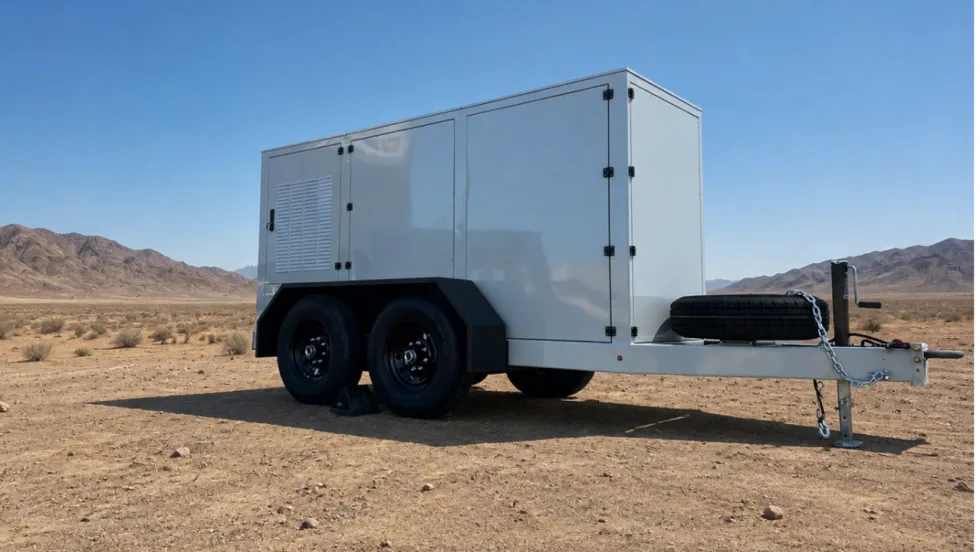
Xos Hub Surpasses One Gigawatt-Hour of Energy Delivered in the Field
A single Xos Hub has surpassed one gigawatt-hour of energy across more than 33,600 charging sessions in the field, demonstrating performance that supports Xos' expansion across new products and markets.
Read More →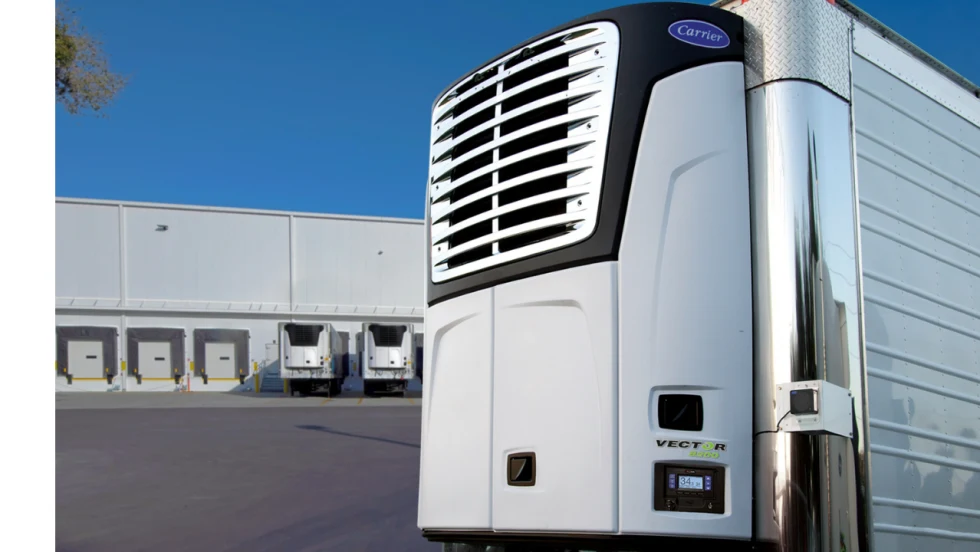
Carrier Transicold Launches All-Electric Vector 8200 TRU for Diesel-Free On-Site Cold Storage
Carrier Transicold’s first engineless multi-temperature TRU helps fresh- and frozen-food fleets add supplemental cold storage capacity during seasonal peaks.
Read More →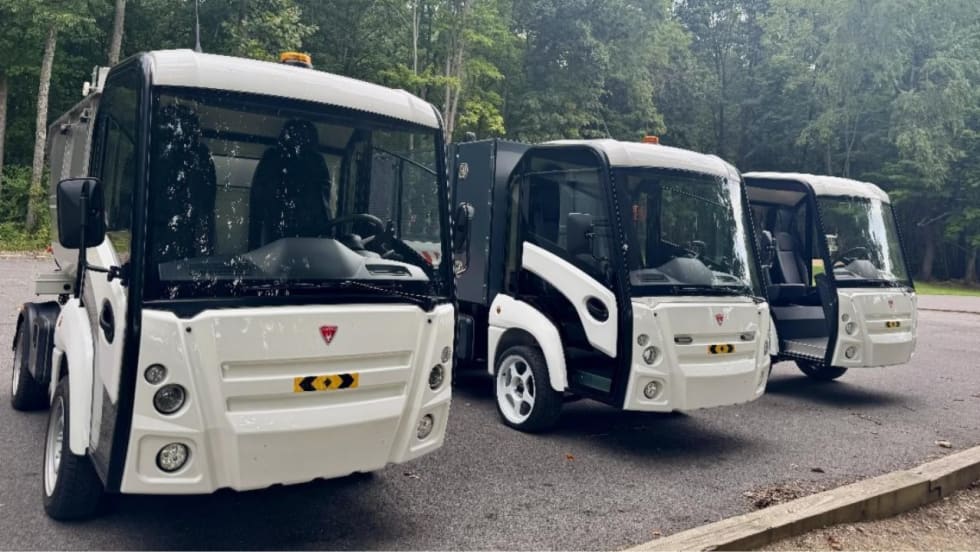
Narro Trucks Introduces Electric Utility Vehicle
Narro Trucks officially launched its operations on Aug. 20 and hosted a ride and drive to showcase its electric truck, which will be produced in Virginia.
Read More →