




Adventure Medics Spares No Expense Composing a Safe Fleet
The company invests in procuring vehicles that will be ready to save lives at any moment.

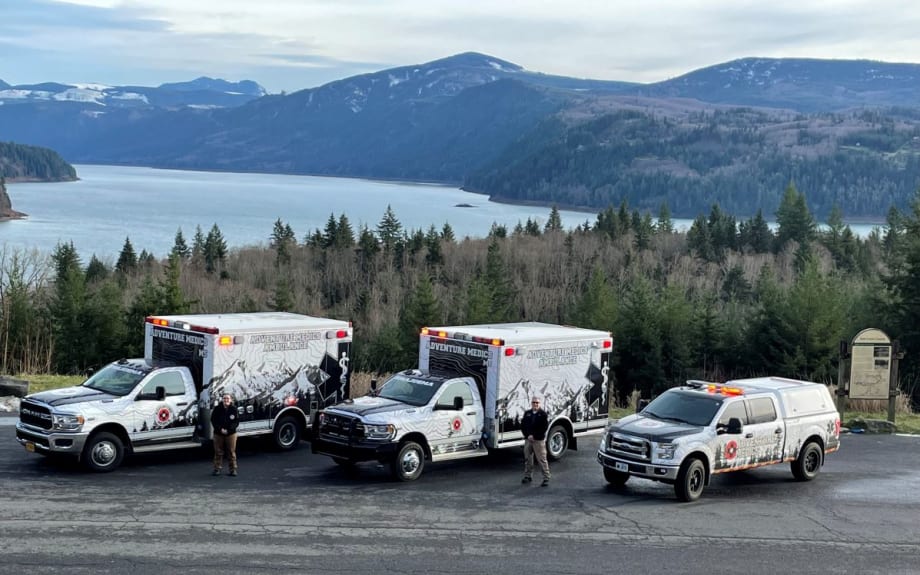
The Adventure Medics fleet is normally comprised of 33 vehicles, including 15 trucks, six ambulances, and 12 UTVs.
Photo: Adventure Medics
When lives are on the line, the worst thing that can happen is a vehicle breakdown. This is why Matt Sabelman, founder and CEO of Adventure Medics, takes great care in selecting and purchasing newer, properly upfitted equipment he and his team can rely on in the course of their hectic jobs.
Prepared for Anything
Adventure Medics is a diverse private emergency medical company with multiple divisions ranging from wildland fire, government contracting, classes, ambulance transport, and event medical. The wildland division sends out paramedics and EMTs in 4x4 trucks, ambulances, mobile medical bases, and UTVs. It supports wildland firefighters in the event of a medical emergency. The company has two specialized four-person rescue teams called Rapid Extraction Module Support (REMS) teams. They use high angle rescue equipment, vehicle extrication, and Advanced Life Support (ALS) medical equipment.
Adventure Medics covers 250-300 events in Oregon and Washington. From 5K races to 30,000 person festivals, the company provides medical and vehicle support to safely reach, treat, and transport potential patients.
Fleet at the Ready
The fleet is normally comprised of 33 vehicles, including 15 trucks, six ambulances, and 12 UTVs. During the wildland fire season, Adventure Medics leases an additional six to 12 Ram 2500s.
These vehicles are used to respond to emergency medical calls and haul equipment. Sabelman said the top three features he looks at when purchasing vehicles include GVWR, GCWR, and fuel economy.
“The towing/weight capacity is used to safely calculate what our trucks can haul, including trailers and rescue equipment. Since we are traveling to multiple states in response to wildland fires, fuel economy helps our bottom line,” he stated.
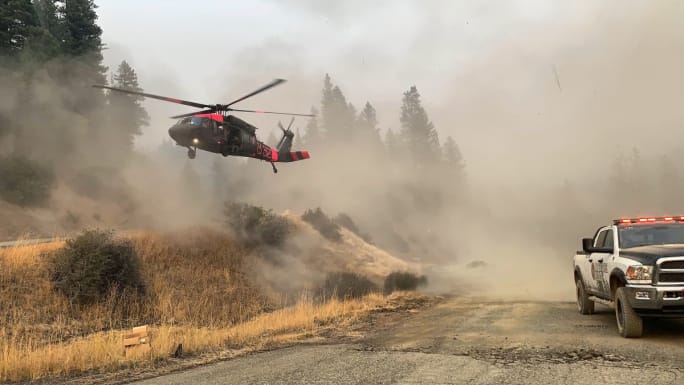
The company’s vehicles are used to respond to emergency medical calls and haul equipment.
Photo: Adventure Medics
Essential Pandemic Support
The company is currently working on expanding its ambulance operations in Washington state, and has also tripled its staff, equipment, and vehicles available for wildland fire support.
“I am most proud of our support in distributing COVID-19 vaccines in 2021. In conjunction with the US Forest Service, we hired over 150 new employees and established vaccine administration sites in 40 different locations across eight different states,” he noted.
During the pandemic, the company experienced how real supply chain issues are and was forced to wait up to eight months for parts. New trucks are also in high demand, which has forced the price of used vehicles sky high. Because used vehicles are becoming more expensive than new vehicles, Sabelman suggested fleets start planning early for purchasing needs.
Unstoppable Despite Challenges
The top three challenges the fleet currently faced include low inventory of new trucks, the unavailability of and/or long wait time for parts for repairs, and increasing fuel prices.
“To mitigate some of these challenges, we try to purchase vehicles earlier than needed. We also do our best to buy newer or brand-new vehicles to help eliminate the need for costly or impossible repairs. As a backup plan, creating partnerships with rental and lease companies has helped us obtain vehicles. We look for vehicles with excellent fuel economy and/or use strictly diesel vehicles,” he explained.
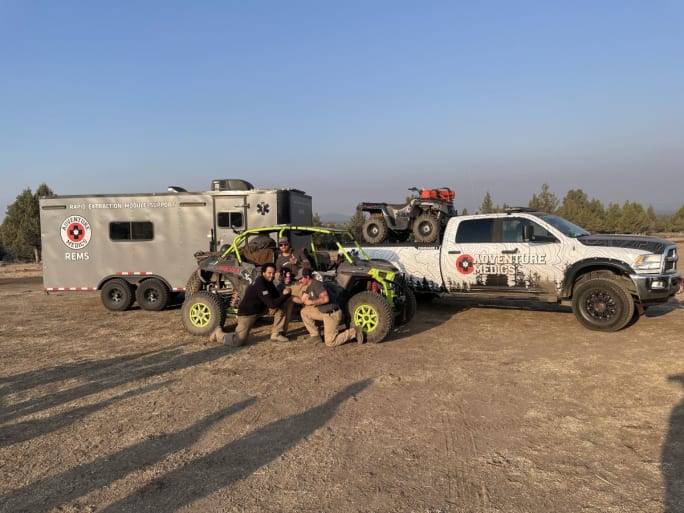
The company is currently working on expanding its ambulance operations in Washington state, and has also tripled its staff, equipment, and vehicles available for wildland fire support.
Photo: Adventure Medics
Cheaper Isn’t Always Better
The biggest change the company made was realizing cheaper is not always better. During the initial first few years of the business, Sabelman purchased used vehicles and ambulances.
“While this saved a lot of money in the beginning, we quickly realized how costly it was in the long run with repairs and loss of work due to breakdowns. My advice would be to bite the bullet and purchase new or close to new vehicles. Have a mileage cap for replacement and budget the replacement cost into your monthly planning,” he stated.
Sabelman said he’s also excited to partner with Samsara for vehicle tracking and diagnostic purposes. The technology enables the company to track its entire fleet live, as well as record any accidents. So far, he’s pleased with its efficacy and customer service.
Passion for Paramedic
Sabelman got his start as a street paramedic, and wanted to elevate the standards of emergency medicine in the field. In order to do that successfully and grow as a company, the business has developed a larger fleet.
“One of my favorite parts of my job is providing fun and exciting work to our employees. They truly enjoy what they do and have equipment and vehicles they can be proud of. My advice to others during this trying time is don’t give up, plan early, and consider changing the way you do business to help mitigate wear and tear on your vehicles,” he stated.
More Operations

Family Ties Inside the Fleet Families Building Careers Across Generations
Three fleet families share what it really takes to work together, learn across generations, and keep business from following them home.
Read More →
Shades of Fleet Call for Voices: Fleet's Hidden Heroes
Fleet’s hidden heroes are often the ones keeping everything moving behind the scenes. September’s Shades of Fleet is looking for dispatchers, coordinators, parts specialists, and other support pros to share their stories.
Read More →
Truck Centers, Inc. Celebrates National Truck Driver Appreciation Week with $1,000 Fuel Card Giveaways
During National Truck Driver Appreciation Week, Truck Centers, Inc. is offering customers a chance to fuel up for free. Customers at all Truck Centers locations can enter to win one of four $1,000 fuel cards from Sept. 14 - 18.
Read More →
Fleet Guides, AI Time-Savers, Truck Tariffs & Fuel Strategy Lead the News
This week’s Truck Chat Cheat Sheet covers new fleet vehicle guides, practical AI use cases, U.S.-Canada truck production, mixed-energy strategy, and more.
Read More →
What Fleet Employers Are Missing When Hiring Veterans
What if some of the strongest candidates for fleet are already out there, but their experience is written in a language our industry does not always recognize?
Read More →
Automotive Fleet Opens 2026 Personal Use Survey for Commercial Fleet Managers
Less than two weeks left! Commercial and corporate fleet managers are invited to share how their organizations handle company vehicle personal-use policies, charges, and driver eligibility.
Read More →
What Resilient Fleets Do Differently When Conditions Change
Fleet resilience is about more than reacting to disruption. Lauren Fletcher talks with AP Fleet’s Alex Coveney about flexibility, planning, scaling, and what helps fleets adapt when business conditions shift.
Read More →
If We Want the Next Generation in Automotive, We Have to Give Them a Reason to Care
The automotive industry talks constantly about its workforce shortage. But before we can recruit the next generation, we may need to do a better job giving kids a reason to care about automotive in the first place.
Read More →
Ram ProMaster City Under $40K, Truck Tariffs, and AI Maintenance Lead the News
A sub-$40K commercial van, tariff questions, AI-powered maintenance, and a new EV production strategy headline this week’s Truck Chat Cheat Sheet.
Read More →
Bob Adamsky Shares the Fleet Lessons You Usually Learn the Hard Way
After more than 30 years in fleet, Arrow International’s Bob Adamsky has learned that the job is about far more than vehicles. He shares the lessons he wishes every fleet manager could learn a little earlier.
Read More →