




New Report Summarizes Car-Truck Contribution/Fault in Serious Crashes
A new report released by the American Trucking Associations (ATA) summarizes the car-truck relative contribution/fault findings of several large-scale studies.
A new report released by the American Trucking Associations (ATA) summarizes the car-truck relative contribution/fault findings of several large-scale studies.
"The principal policy reason for evaluating relative contribution, and the nature of errors that increase crash risk, is to design and implement cost-effective truck safety programs that yield the greatestsafety benefits," ATA President and CEO, Bill Graves said. "In the context of prevention and countermeasures, it's critical to understand relative contribution since cars are involved in the majority of truck crashes.
"Every crash, and every fatality and injury, suffered on our nation's highways is a tragedy," Graves said. "Preventing them from happening requires a proper understanding of the causes of these crashes. It is also tragic that carriers and drivers across this country are saddled with guilt and blame for many crashes they could do nothing to prevent."
ATA's paper cites studies by the University of Michigan, the National Highway Traffic Safety Administration, AAA and the Federal Motor Carrier Safety Administration, all of which show that many, many crashes involving a commercial truck and a smaller vehicle were initiated or caused by the driver of the smaller vehicle.
"Trucks and truck drivers are out on America's roads with one goal: the safe and efficient delivery of the goods they are hauling," Graves said. "They understand they bear a great responsibility to keep our roads safe for all motorists, and they should not continue to be penalized by their government for the unsafe actions of other motorists when it's plainly evident that the professional driver did not cause or could not have avoided a crash."
"It is imperative that FMCSA institute a fair process to address the question of crash accountability in its Compliance, Safety, Accountability monitoring system," Graves said.
ATA, along with its great partners Mack and Michelin, will continue to do as much as it can to prevent car-truck crashes through its longstanding Share the Road program. For information on ATA's Share the Road program, please click here.
Summary of Findings
University of Michigan Transportation Research Institute (UMTRI): UMTRI is a leader in truck-related crash research. The highlighted study assigns driver factors to 8,309 fatal car-truck crashes as a proxy for fault.
Car drivers were assigned factors in 81% of crashes versus 27% of truck drivers.
The totals are greater than 100% because 10% of crashes assigned both the car and truck driver factors.
Cars were the encroaching vehicle in 89% of head-on crashes, 88% of opposite-direction sideswipes, 80% of rear-end crashes, and 72% of same-direction sideswipes—obvious indicators of fault.
National Highway Traffic Safety Administration (NHTSA): Tasked with “reducing deaths, injuries and economic losses resulting from motor vehicle crashes,” NHTSA has undertaken extensive research on the topic.
Their 2003 study assigned causal driver factors in 10,092 fatalities.
Cars were assigned driver factors in 91% of head-on crashes, 91% of opposite-direction sideswipes, 71% of rear-end crashes, and 77% of same-direction sideswipes
Trucks were the encroaching vehicle in 98% of backing accidents (represents less than 1% of sample set)
AAA Foundation for Traffic Safety: The foundation’s mission is “to identify traffic safety problems, foster research that seeks solutions and disseminate information and educational materials.” This study, one of more than 250 projects they’ve funded to discover the causes of crashes, examined 10,732 fatal accidents.
36% of car drivers were cited for two or more unsafe acts
11% of truck drivers were cited for two or more unsafe acts
Federal Motor Carrier Safety Administration (FMCSA): FMCSA is the primary regulating agency for the trucking industry whose stated mission is “to prevent commercial motor vehicle-related fatalities and injuries.”
Two studies are noted below.
Annual Large Truck and Bus Crash Facts: Cites driver factors in 6,131 car-truck fatal crashes
• 2007: 85% of cars were assigned driver factors versus 26% of trucks
• 2008: 85% of cars were assigned driver factors versus 26% of trucks
• 2009: 81% of cars were assigned driver factors versus 22% of trucks
Large Truck Crash Causation Study (LTCCS): A more thorough analysis of a smaller data set of 221 fatal accidents
• 77% percent of cars were assigned with driver factors
• 23% of trucks were assigned with driver factors
To read a summary of ATA's findings, click here, or to read the whole report, click here.
Related Content:
American Trucking Associationsis the largest national trade association for the trucking industry. Through a federation of 50 affiliated state trucking associations and industry-related conferences and councils, ATA is the voice of the industry America depends on most to move our nation's freight. Follow ATA on Twitteror on Facebook.Good stuff. Trucks Bring It!
Originally posted on Automotive Fleet
More Safety

J. J. Keller Safety Professional of the Year Awards Nominations Now Open
J. J. Keller & Associates is accepting nominations for the 2026 J. J. Keller Safety Professional of the Year (SPOTY) Awards. Winners will receive prize packages valued at up to $47,200.
Read More →
ASE Aligns Automotive Service Professionals Month With Spring and Fall Vehicle Maintenance Campaigns
ASE will move Automotive Service Professionals Month to April and October beginning in 2026-2027, aligning recognition with Car Care Month events.
Read More →
Turning Connected Vehicle Data Into Decisions That Matter
Fleet leaders have more data than ever, but turning that data into clear, actionable decisions remains a challenge. This white paper shows how leading organizations are using connected vehicle data to improve safety, reduce costs, and optimize fleet performance. Learn how to turn insight into action across your fleet.
Read More →

Driver Retention: Motive Automates Driver Coaching & Driver Rewards
New automated rewards and recognition capabilities from Motive can help organizations engage drivers, reinforce positive behavior, and reduce turnover. AI Coach has also been updated to deliver personalized feedback across safety, fuel, and compliance.
Read More →
Experts Forecast Broader Impact of Wildfires in 2026
This year’s wildfire season will likely be more intense than in 2025. The 2026 wildfire forecast from AccuWeather is for fewer fires, but even more acreage will be impacted this year.
Read More →
A Walkthrough of the DataQs Process
Bad data on your carrier record can cost you. Here’s how DataQs helps fleets challenge errors before they hit CSA scores, insurance, and your bottom line.
Read More →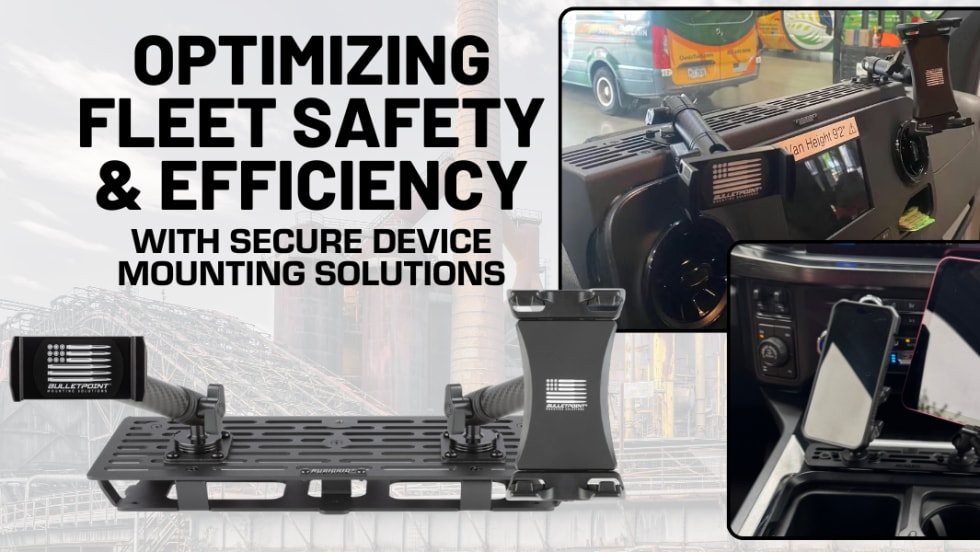
Optimizing Fleet Safety with Secure Device Integration
Unsecured devices are a hidden liability. Learn how precision-engineered mounting solutions enhance driver safety, streamline workflows and protect your technology.
Read More →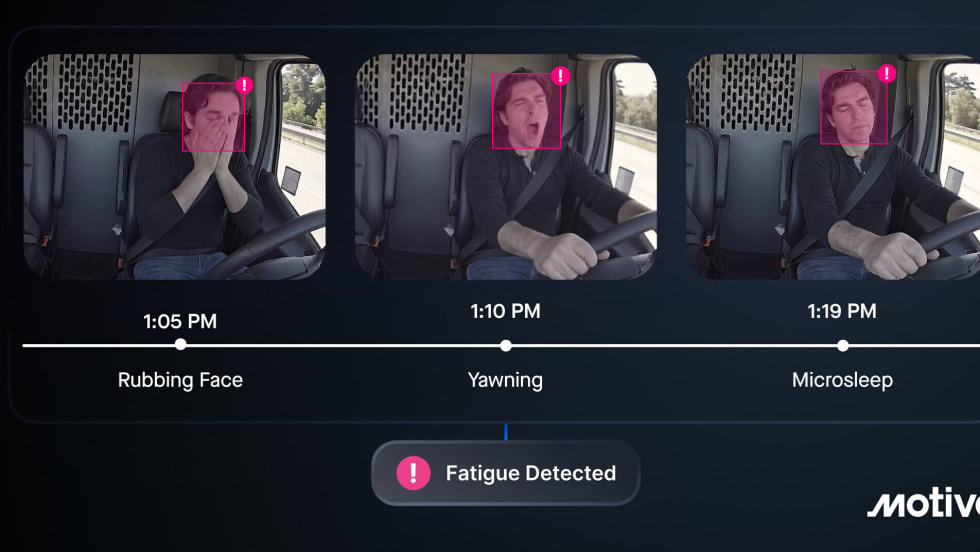
Motive Launches New Edge AI Capabilities to Help Prevent Collisions and Capture Critical Incidents in Real-Time
New AI models from Motive can detect signs of fatigue and eating, plus capture low-severity collisions often missed by telematics.
Read More →
Pro-Vision Acquires Convoy Technologies to Expand Fleet Safety and Video Solutions
Pro-Vision has acquired Convoy Technologies in a deal it said will broaden customer relationships and add specialized vehicle video capabilities for commercial fleets.
Read More →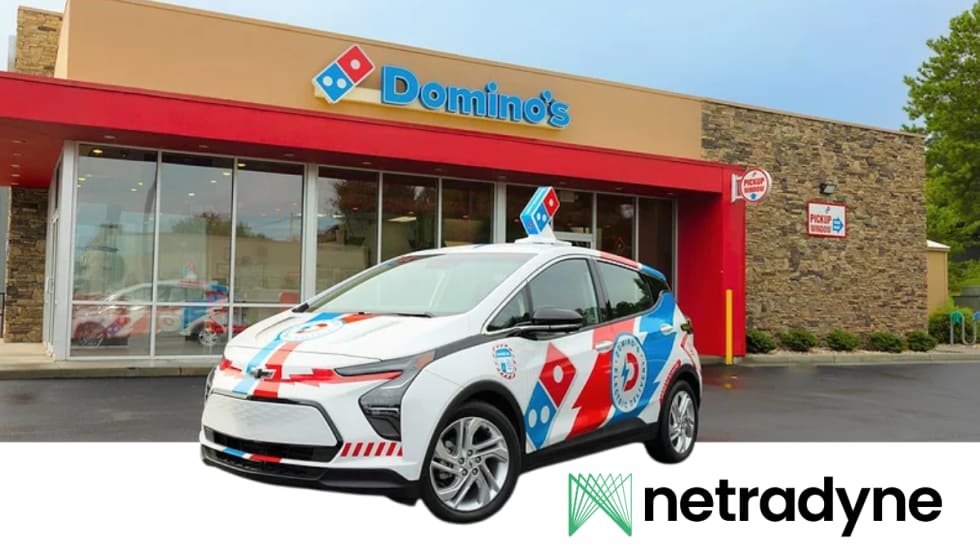
Netradyne Delivers 66% Reduction in At-Fault Crashes Across Domino's Franchise Network
Five Domino's franchises and more than 1,000 vehicles are now running on Netradyne's AI-powered fleet safety and performance platform. Designed for fleets that use personal or non-owned vehicles, FlexMount allows drivers to quickly install and remove Driver-i.
Read More →