





Want More? Heavy Payloads and Commercial EV Range — a Real-World Test
How to Determine a Truck’s Maximum Net Payload
With increased upfitting of trucks to specific job applications, fleet managers may have a more difficult time selecting the right chassis to handle the load. A simple formula can help avoid this difficulty.
September 1, 2007
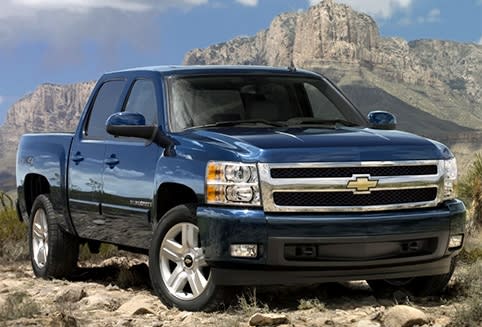
Trucks come in a variety of weight capabilities. Use of a simple formula can assist fleet managers in selecting the right chassis components when net payload is reduced by the addition of an upfitted body, racks, and other equipment.
Photo: General Motors
4 min to read
Fairytales are hard to shake and can be misleading. Light truck designations of 1/2-ton, 3/4-ton, and 1-ton are still in use despite having little relevance to payloads and capability.
When a truck leaves the factory, there is little question about what it is rated to carry — the gross vehicle weight rating (GVWR) appears on the plate attached permanently to the vehicle. GVWR, however, includes everything: truck chassis, body, driver weight, all fluids topped off, spare tire, aftermarket upfittings, glove box contents, and net payload.
Net payload isn’t shown separately. In fact, some manufacturers refer to “payload” as including a body installed by somebody else on chassis-cab models.
It is suggested the use of a simple formula to determine net payload capacity after allowing for everything installed on a truck. The formula was published for NTEA members to use when installing bodies and equipment to customer chassis, but it can also be used by fleet managers to specify new equipment.
Selection of a Full-Size 125-Inch Wheelbase Truck | 1/2-ton | 1/2-ton | 3/4-Ton | 1-Ton | 1-Ton |
|---|---|---|---|---|---|
Base | Max | Base | Base | Max | |
Vehicle GVWR (lbs.) | 4,900 | 6,000 | 6,600 | 7,100 | 8,600 |
Curb Weight (lbs.) with all the factory options | 4,144 | 4,181 | 4,223 | 4,734 | 4,854 |
Upfitted Materials (lbs.) | 780 | 780 | 780 | 780 | 780 |
Completed Vehicle Curb Weight (lbs.) | 4,924 | 4,961 | 5,003 | 5,514 | 5,634 |
Driver and Passenger (lbs.) | 300 | 300 | 300 | 300 | 300 |
Total Vehicle Weight (lbs.) (including passengers) | 5,224 | 5,561 | 5,303 | 5,814 | 5,934 |
Maximum Net Payload (lbs.) | -324 | 730 | 1,297 | 1,286 | 2,666 |
Once the maximum net payload is determined, a weight distribution must be calculated to determine that the manufacturer’s gross axle weight ratings (GAWR) are not exceeded. These ratings are shown on the manufacturer’s plate affixed to the vehicle, and they also appear in truck data books.
When using this formula, factory data books are the best source for chassis and factory option weights, but be sure to allow 150 lbs. for each occupant provided with a seat belt. (Sometimes factories include occupants in option and chassis weights.)
Also, supplier catalogs often publish body and body option weights.Using the example of a Class 2 truck in Chart 1, payload capacity would be reduced by 1,200 lbs. of body and body options added after the chassis was produced.
The GAWR is determined by the lowest-rated capacity of the tires, brakes, wheels, suspension, and axle assembly. When fully loaded, the weight of the completed vehicle must not exceed the GVWR, and the weight must be distributed so that the GAWR of each axle is not exceeded.
How to Calculate Maximun Net Paylod
Chassis-Cab GVWR =10,000 lbs.
Chassis Curb Weight with All Options + 4,200 lbs.
Body and Equipment Weight + 1, 200 lbs.
Completed Vehicle Cub Weight = 5,400 lbs.
Driver and Passengers (150 lbs. each) +450 lbs.
Total Vehicle (Including passengers) = 5,850 lbs.
Maximum Net Payload (10,000 lbs.-5,850 lbs.) = 4,150lbs.
How to Select the Right Van
The equation illustrates how a fleet manager can use the NTEA formula for selecting the right van chassis for several alternatives of a popular 125-inch wheelbase van. These vans are offered as several models and GVW may often be boosted with heavy-duty options for each model.
Each vehicle was equipped with recommended aftermarket bins and shelving for a plumbing and heating contractor, provided a roof carrier for conduits, a storage box for the driver, and included a passenger seat. Also included were a spare tire and wheel and a larger than standard fuel tank. The only comfort added was air conditioning. All vehicles are base sizes, except the V-8 maximum one-ton version.
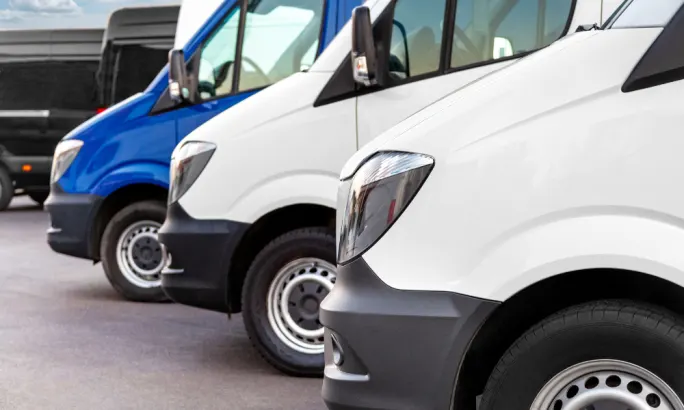
Selecting the right van for your fleet is crucial.
Photo: Work Truck
According to the chart, the base 1/2-ton model would be overloaded before any cargo was added and a maximum spec 6,000 lb. 1/2-ton would have a net capacity of only 730-lbs. — too little to be of much value to a plumber. If the user could live with just under 1,300- lbs. net payload, then either a 6,600-lb. GVW 3/4-ton or a 7,000- lb. GVW one-ton could do the job. (Fleet managers usually know what kind of load they carry).
Maybe 1,300 lbs. is inadequate, in which case, the best option is the 8,600-lbs. 1-ton version, with a maximum net payload of 2,666 lbs. If that isn’t enough payload, other types of vehicles should be considered, such as, a van cutaway with dual rear wheels, a forward-control chassis, or perhaps a chassis-cab Class 3 and Class 4 truck with aftermarket body.
Subscribe to Our Newsletter
More Upfitting
Re-rating Gross Vehicle Weight Ratings (GVWR): Why and How it's Done
Sometimes, it is not in a fleet’s best interests to have a vehicle at a given GVWR. Changing the GVWR to a special value can be done, but the process is complicated.
Read More →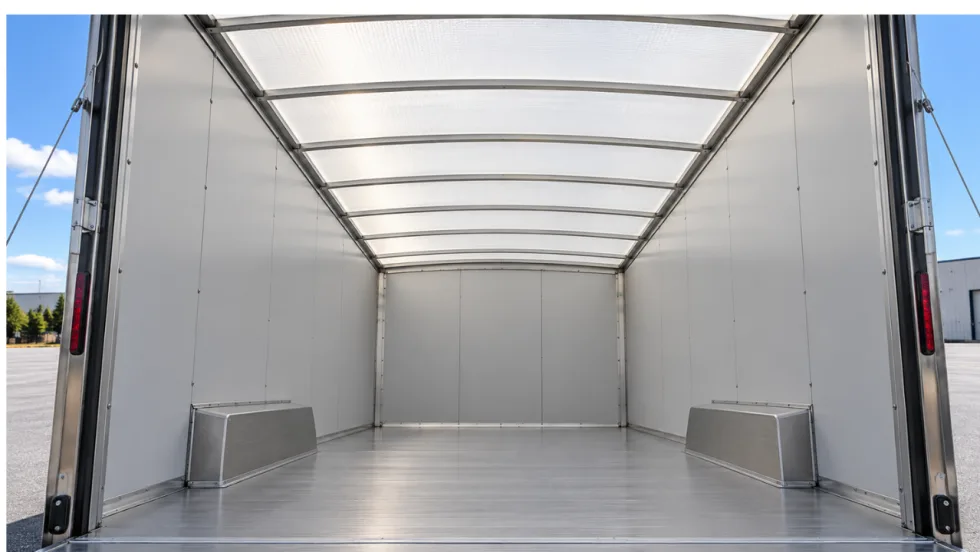
Tekmodo Introduces CargoBright Brand of Translucent Roofs
CargoBright is designed to diffuse daylight across the cargo area while performing as a working vehicle roof. Its reinforced composite construction is designed for impact, abrasion, moisture exposure, and UV exposure.
Read More →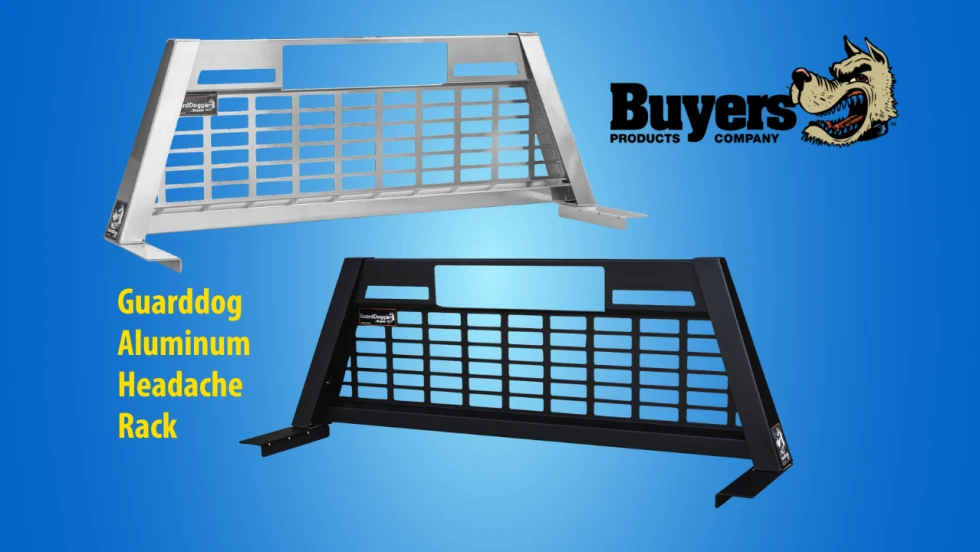
Buyers Products Expands Popular GuardDogg Headache Rack Line
Buyers Products’ aluminum GuardDogg headache rack is now available to contractors, construction crews, and utility fleets that want to reduce vehicle weight without sacrificing functionality.
Read More →

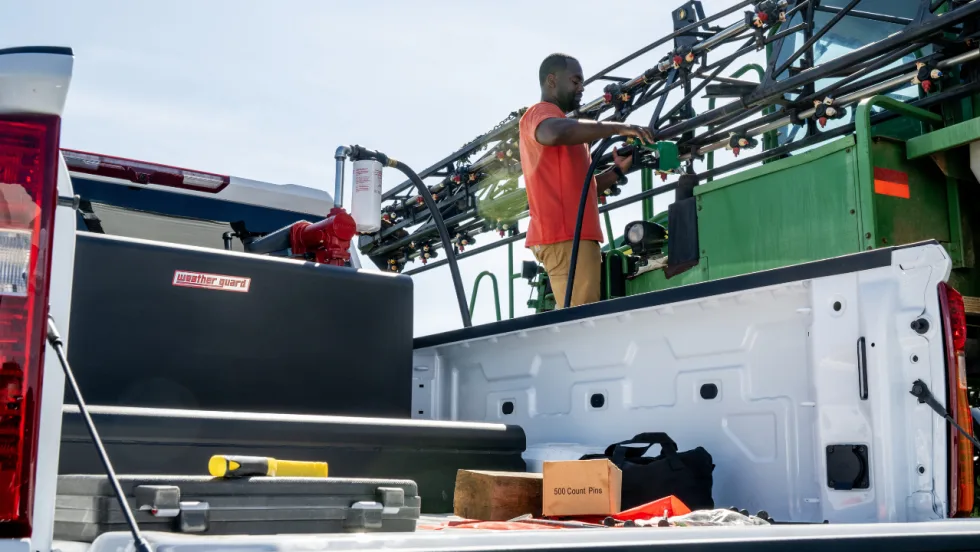
New Weather Guard Transfer Tank Engineered to Reduce Downtime and Improve Fleet Productivity
Weather Guard completely redesigned its line of transfer tanks to improve durability, simplify installation, and keep equipment running in demanding field conditions.
Read More →
How Machine Lifts Drive Safety & Efficiency for Fleets
What is a machine lift, what fleets need them, and how do they improve safety and drive efficiency? What advantages do they have over ramps and liftgates?
Read More →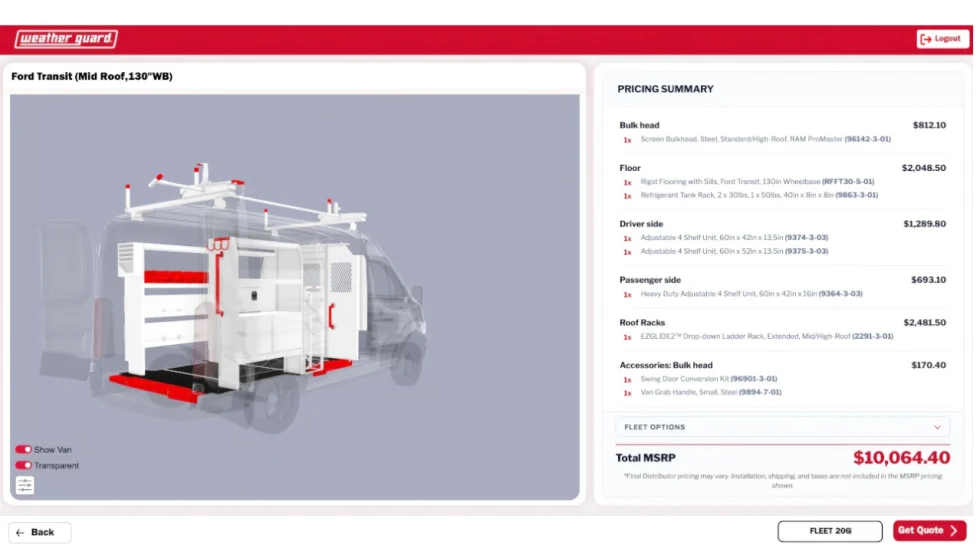
New Weather Guard Configurator Simplifies Planning and Design of Van Upfits
The Weather Guard Configurator combines vehicle-specific product compatibility with real-time 3D visualization to streamline design, quoting, and ordering for fleet managers, upfitters, and professional users. The latest version is now available for vans, with truck upfitting being added in early 2027.
Read More →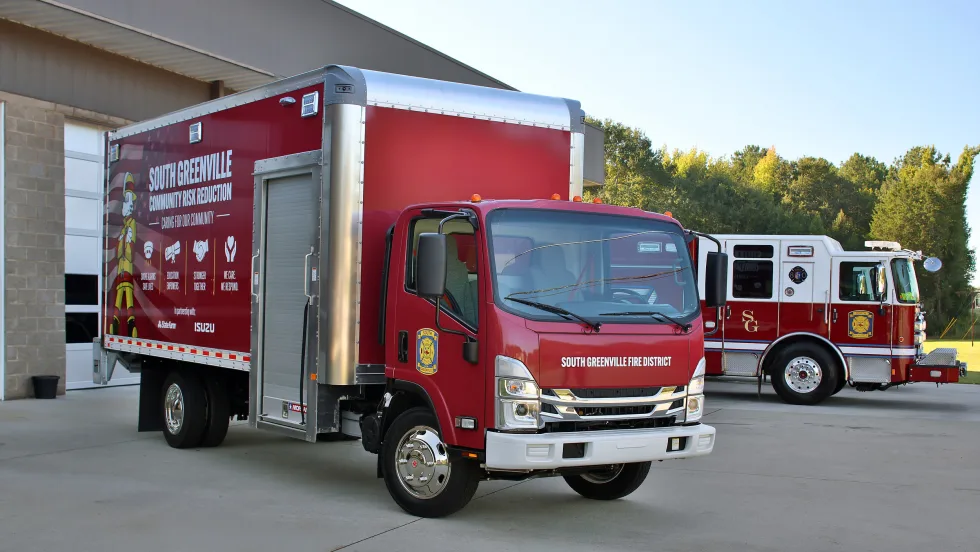
Isuzu Donates New N-Series NRR Truck to South Greenville Fire District to Support Community Outreach
Isuzu North America Corporation donated a new Isuzu N-Series NRR, equipped with a Morgan truck body and a Palfinger liftgate, to support fire safety education, community engagement, and outreach programs throughout Southern Greenville County, South Carolina.
Read More →
M.H. Eby Announces Bostick Truck Center as Michigan Distributor
Bostick Truck Center in Pontiac, Michigan, is now the official distributor for Eby Truck Bodies in Michigan. It will have access to Eby’s Ford, GM, and Ram chassis pool programs.
Read More →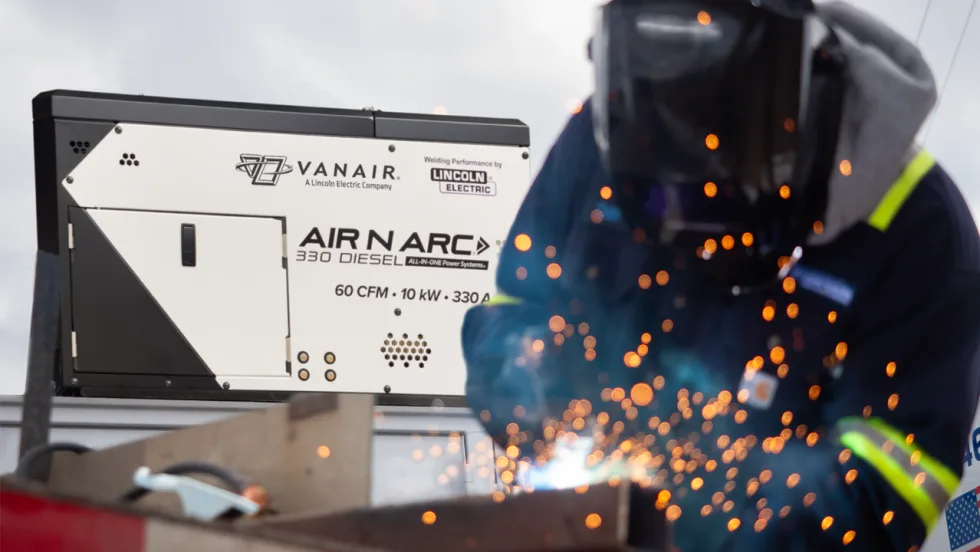
Multitasking: Vanair’s Air N Arc 330 Diesel 60 CFM All-In-One Power System
The Air N Arc 330 Diesel 60 CFM from Vanair consolidates a welder, generator, rotary screw air compressor, battery booster, battery charger, and EV charger into a single 750-pound enclosure driven by one 24.8-horsepower Kubota diesel engine.
Read More →
Buyers Products Awarded Sourcewell Cooperative Purchasing Contract for Snow & Ice Equipment
Buyers Products has been awarded a Sourcewell contract for a wide range of winter maintenance equipment and accessories, including snowplows, municipal plow systems, wing plows, spreaders, and more.
Read More →