




Fleet 101: All About Truck Tires
When Do DOT Mandates Apply When Using Trailers?
Extra weight from trailer add-ons may push otherwise underweight vehicles over the DOT-exempt weight limit.
November 1, 2007
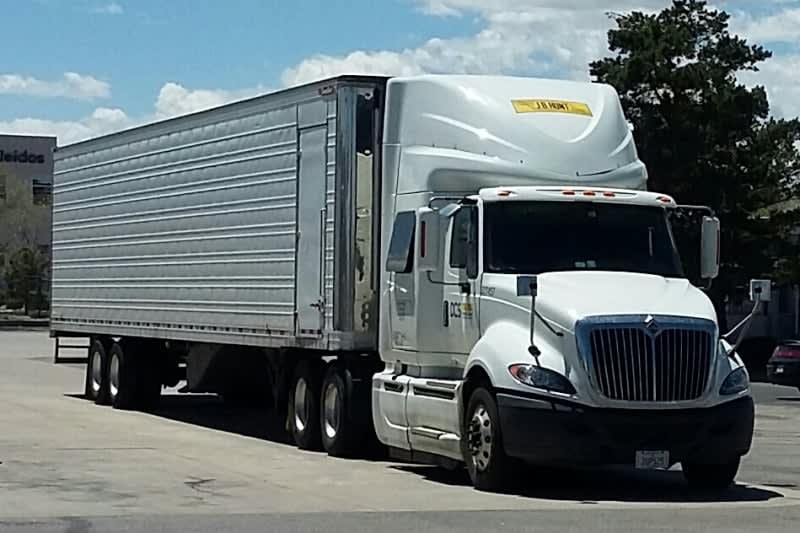
As soon as you tow anything, even a small trailer, DOT mandates may apply if the GCWR is greater than 10,000 pounds. Keep in mind the regulations are not only applicable to large trucks.
Photo: J.B. Hunt.
6 min to read
When a Midwestern company bought an out-of-stock Ford F-350 Duallie to pull a small pickup truck trailer full of training materials, it hardly considered the truck falling subject to U.S. Department of Transportation (DOT) mandates and federal safety regulations.
The company was used to operating a large fleet of mostly cars, so commercial truck regulations were never a big concern.
Even the company’s Ford Explorer Sport Tracs used to tow trailers fall under the weight limit, which exempts them from DOT commercial operating requirements.
But, after having a driver of its Ford F-350 stopped in Nebraska, pulled over to a weight station for a DOT inspection, and cited for failing to have a DOT number/decal, the company’s fleet manager learned how easy it is to cross the line into regulation territory.
How Do You Know You Need a DOT Number?
So, what went wrong? Did the fleet need a DOT number?
“We dug into it, got online with the DOT, and started entering all the information required,” said the fleet manager. “I had to learn all the requirements and regulations for log-keeping, hours on the road, and so forth."
Such experiences aren’t unique. Many fleet managers, particularly those with insurance companies and pharmaceuticals who typically operate cars, are caught off guard when they first begin purchasing due to DOT regulations for pickup trucks and trailers.
How to Determine DOT Trailer Regulatory Compliance
What are the DOT regulations related to commercial motor vehicles? What DOT mandates are important to know about?
"Many companies have one of two common misconceptions," said the former DOT Compliance and Driver Safety Programs Manager for Sprint Nextel Corp., in Overland Park, Kan., Julie Timberlake. "They may think because they’re not hauling cargo, it’s not a commercial motor vehicle or it’s exempt from regulations because it’s too small."
As soon as you tow anything, even a small trailer, if the GVWR is greater than 10,000 pounds, it becomes a commercial vehicle because of its combination weight rating.
Timberlake added that big trucks are pretty self-explanatory in terms of their regulatory requirements, but a lot of people don’t understand that with 1/2- or 3/4-ton commercial vehicles, the gross combination weight rating (GCWR) comes into play.
As soon as you tow anything, even a small trailer, if the gross vehicle weight rating (GVWR) is greater than 10,000 pounds, it becomes a commercial vehicle because of its combination weight rating.
At that point, companies are required to obtain a DOT number and follow guidelines as set forth by the Federal Motor Carrier Safety Administration (FMCSA).
The driver must have a medical exam, for example, documented on a DOT form. In addition, employers need to keep a driver file, including items such as a certificate of road test evaluation, background check on moving violations, and a log of hours spent on the road.
Employers also must provide documented driver training on various regulations. If the vehicle carries something as seemingly harmless as spray paint or bug/insect repellent, for example, that qualifies as hazardous material, requiring specialized driver training every three years.
These are just some of the numerous requirements outlined by the FMCSA in its regulations for commercial vehicles. Complete details are available online at the FMCSA website.
Who Do DOT Regulations Apply To?
The DOT regulations apply to:
Vehicles with a GVWR or gross combination weight rating (GCWR) of more than 10,000 lbs.
Vehicles with a GVWR of more than 26,000 lbs., which require commercial driver license (CDL) to avoid CDL driver disqualifications.
Vehicles hauling hazardous materials, whether operating across state lines or totally within one state.
Trucks or for-hire small buses designed to carry more than 16 people, including the driver.
The regulations are lengthy and potentially confusing. For example, operators can drive 3/4- or 1/2-ton pickups without requiring a DOT sticker, if there is no trailer attached. But adding a trailer may put it over the 10,001-pound GCWR regulation limit.
For that reason, Sprint Nextel, for example, uses magnetic DOT number decals that it attaches only when it is using a pickup truck trailer.
“If you’re not towing, the GCWR is not in effect, and you don’t have to display any signage. And the DOT won’t bother you,” said Timberlake.
On days that any of its vehicles meet the definition of a commercial motor vehicle, the company also requires that drivers conduct a pre-trip inspection and be satisfied the truck is in safe operating condition, as specified by Sections 396.13 and 392.7 of the FMSCR.
The driver must also document a post-trip inspection, in accordance with Section 396.11.
The next time the pickup truck is used, the report must be maintained and reviewed, prior to operating the vehicle, even if days, weeks, or months have elapsed.
What Are the Regulations When Crossing State Lines?
Even though DOT regulations only apply to vehicles crossing state lines, some states such as California and North Carolina, also have in-state commercial truck requirements. Do you know what the regulations are for the states you operate in?
California regulations are very stringent, exceeding even those of the federal government. They require those who operate a commercial vehicle with trailers over 10,001-pounds GVWR, for example, to have a CDL. They’re also very confusing.
According to Timberlake: “If you’re crossing state lines, you’re responsible to know any of the rules of that state, over and above the federal regulations.”
The information is typically available online from the state’s department of motor vehicles, which is usually the governing administration. In some states, it’s available from the highway patrol.
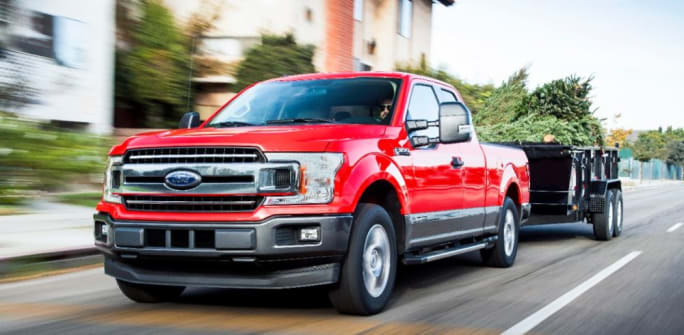
While big trucks are pretty self explanatory in terms of their regulation requirements, many people don’t understand that with a 1/2-ton (such as the Ford F-150) or 3/4-ton truck, the gross combination weight rating (GCWR) comes into play.
Photo courtesy of Ford Motor Co.
Breaking Down Truck Trailering Regulations
What are the DOT requirements for trailers? Even savvy operators can be caught off guard by federal regulation governing truck trailer brakes, for example.
Section 393.42 on the FMSCR Web site notes a requirement for the trucks and trailers to have a common braking system for all wheels. Basically, that means when an operator steps on the brakes they must apply pressure to all truck and trailer wheels at the same time.
One fleet operator interviewed by Work Truck noted that many of the company’s trailers were originally equipped with surge brakes.
Surge brakes, unlike electrical brakes, operate under inertia. Typically, surge brakes are incapable of providing DOT’s one-brake-for-all-wheels requirement.
After discussion among its supervisors, the company took the action needed to retrofit the trailers. It decided to retrofit its fleet with electrical brakes. Such a retrofit costs about $600 and can be done in a few hours.
The confusion surrounding the brake systems resulted from the company’s departments not taking the FMCSRs into consideration prior to ordering semi truck trailer ors pickup truck trailers. A fleet official within the company created an internal fact sheet for departmental supervisors, which explained the surge brake issue in layman’s terms:
Electric brakes use a single valve to control braking on all the vehicle’s truck/trailer wheels.
A small brake control box, typically mounted under the dash, controls the amount of braking pressure and how quickly it’s applied after the operator steps on the brakes.
DOT requirements and regulations really have a major impact on vehicle spec’cing, the company’s fleet manager noted.
And in that respect, it pays to thoroughly study the guidelines and consider all the ways in which an operator’s trucks might be used in the future before spec’ing them.
Subscribe to Our Newsletter
More Operations
If We Want the Next Generation in Automotive, We Have to Give Them a Reason to Care
The automotive industry talks constantly about its workforce shortage. But before we can recruit the next generation, we may need to do a better job giving kids a reason to care about automotive in the first place.
Read More →
Ram ProMaster City Under $40K, Truck Tariffs, and AI Maintenance Lead the News
A sub-$40K commercial van, tariff questions, AI-powered maintenance, and a new EV production strategy headline this week’s Truck Chat Cheat Sheet.
Read More →
Bob Adamsky Shares the Fleet Lessons You Usually Learn the Hard Way
After more than 30 years in fleet, Arrow International’s Bob Adamsky has learned that the job is about far more than vehicles. He shares the lessons he wishes every fleet manager could learn a little earlier.
Read More →
Why Fleet Leaders Have to Keep Asking Why
What if the biggest fleet improvements start with one simple question? After decades managing budgets, policies, technology, teams, and some of the largest fleet operations in the business, Jeff Hurrell shares why fleet leaders should keep asking “why” before deciding what comes next.
Read More →
Drones, EV Reality, Truck Production & Smarter Fleet Operations Lead This Month
August’s biggest work truck stories go beyond the vehicle, from disaster-response drones and EV reality checks to truck production, roadside uptime, and smarter fleet operations.
Read More →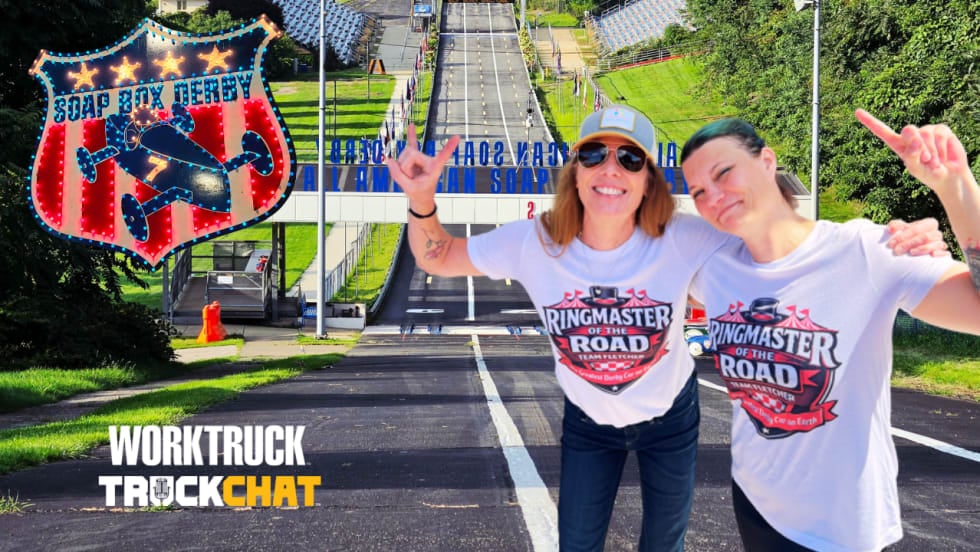
Team Fletcher Takes 2nd Overall at the Corporate Soap Box Derby
Team Fletcher came to Akron as a rookie and left with a win over Team Brown, a second-place overall finish, and $22,000 raised for The Hourglass Foundation. See how race day unfolded.
Read More →
Shades of Fleet Call for Voices: Fleet's Hidden Heroes
Fleet’s hidden heroes are often the ones keeping everything moving behind the scenes. September’s Shades of Fleet is looking for dispatchers, coordinators, parts specialists, and other support pros to share their stories.
Read More →
What is the WEX NAM Summit?
What makes the WEX NAM Summit different from other fleet industry events? It's a meeting of the minds that brings fleet and mobility leaders together to discuss emerging trends, AI, new solutions, best practices, and the future of the industry.
Read More →
With 293% 3-Year Revenue Growth, Fleetworthy is One of the Fastest-Growing Private Companies in the U.S.
Fleetworthy has been named to 2026 Inc. 5000 list of fastest-growing private companies for the second consecutive year. It ranked No. 2 overall in the Albany-Schenectady-Troy, New York metro area.
Read More →
EV Fleet Reality, Ford Fathom, Robots, and Smarter Fleet Tech Lead the News
EV fleet lessons, Ford’s new Fathom electric truck, robots, manufacturing shifts, and smarter fleet technology headline this week’s Truck Chat Cheat Sheet.
Read More →